

EmblemHealth Medicare refers to the Medicare Advantage, Medicare Supplement and Part D prescription options that EmblemHealth, a health insurer based in the New York area, offers to people who qualify for Medicare. Before you consider any carrier, confirm that its plans are sold in your county, because Medicare plans are approved and priced by service area. If you live in Greensboro, High Point, Winston-Salem, Kernersville or elsewhere in the Triad, you will want to verify availability and network access before you compare costs.
This guide explains the plan types, what Medicare costs in 2026, how eligibility works and how to decide between the main coverage paths.
What EmblemHealth Medicare Includes
EmblemHealth Medicare plans fall into three groups: Medicare Advantage plans, Medicare Supplement plans and prescription drug coverage. Each one works differently, and they are not interchangeable.
- Medicare Advantage (Part C): An alternative way to receive Medicare benefits through a private plan. These plans bundle hospital and medical coverage and often add drug coverage and extras such as dental or vision. EmblemHealth’s Medicare Advantage overview describes provider networks, copays and extra benefits, and it should be checked for current availability in your location.
- Medicare Supplement (Medigap): Plans that pay some of the costs Original Medicare leaves behind, such as coinsurance and deductibles. EmblemHealth lists a Medicare Supplement Plan N that covers Part B coinsurance after the Part B deductible, with a listed $20 office-visit copay and up to a $50 emergency-room copay, according to EmblemHealth’s Medicare Supplement page.
- Dual-eligible special needs plans: Medicare Advantage plans designed for people who qualify for both Medicare and Medicaid.
EmblemHealth is concentrated in the New York region, and many of its plan pages are written for that market. North Carolina residents should treat any carrier's materials as a starting point and confirm what is actually offered where they live.
Is EmblemHealth a Medicare Supplement?
EmblemHealth is an insurance company, not a Medicare Supplement itself, but it sells Medicare Supplement plans alongside its Medicare Advantage products. The distinction matters because the two plan types cannot be combined.
A Medicare Supplement works with Original Medicare. You keep Parts A and B, and the supplement pays a share of what Medicare does not. A Medicare Advantage plan replaces Original Medicare's delivery of benefits with a private plan that has its own network, copays and rules. If you enroll in Medicare Advantage, you cannot also use a Medigap policy with it.
For a deeper side-by-side look, see this breakdown of Medicare Advantage vs. Medicare Supplement.
What Is Medicare in the US?
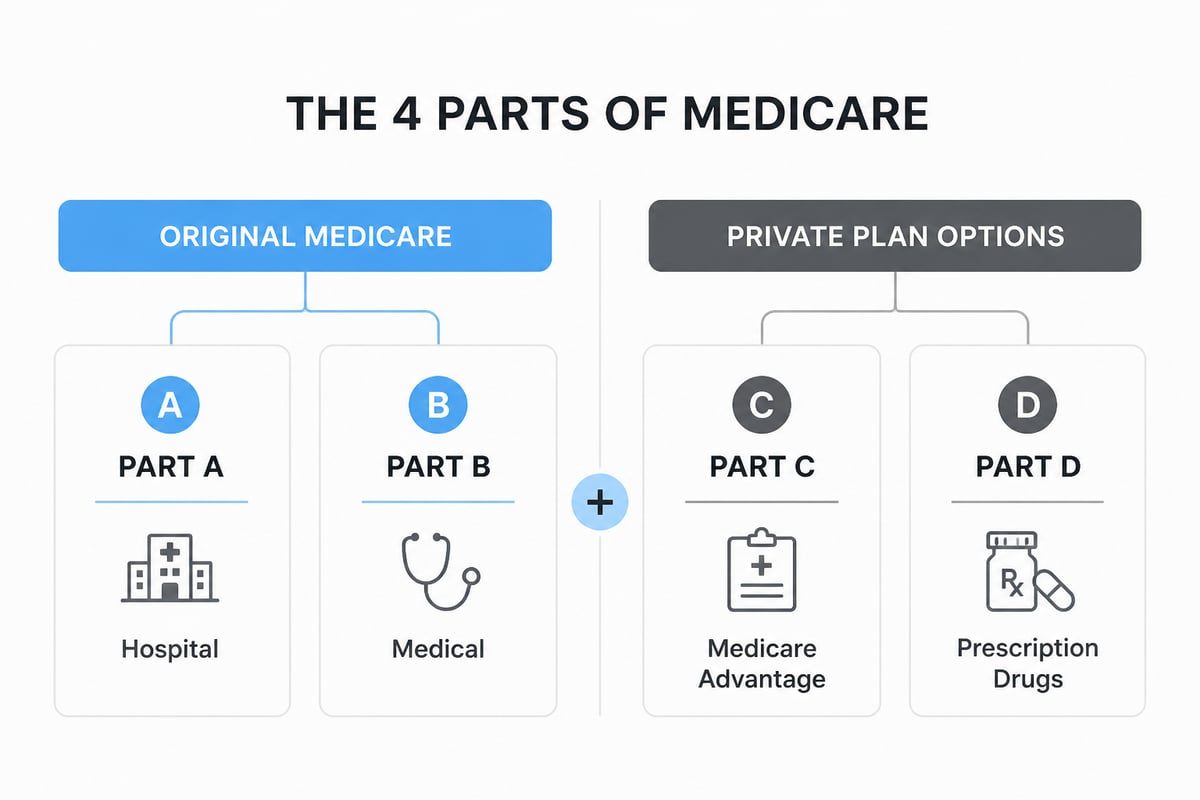
Medicare is the federal health insurance program for people 65 and older and for some younger people with qualifying disabilities. It is organized into parts, and understanding them first makes every plan comparison easier.
- Part A: Hospital insurance, including inpatient stays, skilled nursing facility care and some home health services.
- Part B: Medical insurance for doctor visits, outpatient care, preventive services and durable medical equipment.
- Part C: Medicare Advantage, offered by private insurers.
- Part D: Prescription drug coverage.
If these terms are new, the guide on the four parts of Medicare walks through each one in plain language.
Medicare Costs to Plan For in 2026
Whatever plan you choose, Original Medicare has costs that apply first, and the 2026 figures are higher than many new enrollees expect. According to CMS, the standard Part B monthly premium for 2026 is $202.90, and the annual Part B deductible is $283.
CMS also sets the 2026 Part A inpatient hospital deductible at $1,736 per benefit period. A benefit period begins when you are admitted to a hospital and ends after you have been out of the hospital or skilled nursing care for 60 days in a row, so more than one deductible can apply in a single year.
Higher-income enrollees may pay more through an income-related adjustment. The page on the Medicare surcharge explains how that works.
These costs matter for plan selection. A Medicare Supplement is designed to reduce exposure to deductibles and coinsurance. A Medicare Advantage plan typically replaces them with copays and an annual out-of-pocket maximum. Neither removes the Part B premium.
Which Medicare Plan Is Free at Age 65?
Part A is premium-free for most people at 65, but no complete Medicare plan is free. You qualify for premium-free Part A if you or your spouse paid Medicare taxes for at least 10 years (40 quarters). Part B carries a monthly premium, and Part D, Medigap and Medicare Advantage plans each add their own costs, even though some Medicare Advantage plans advertise a $0 plan premium.
A $0 premium Medicare Advantage plan still requires you to keep paying your Part B premium. It may also carry copays, a deductible and network restrictions that affect what you actually spend.
Who Is Eligible and When to Enroll
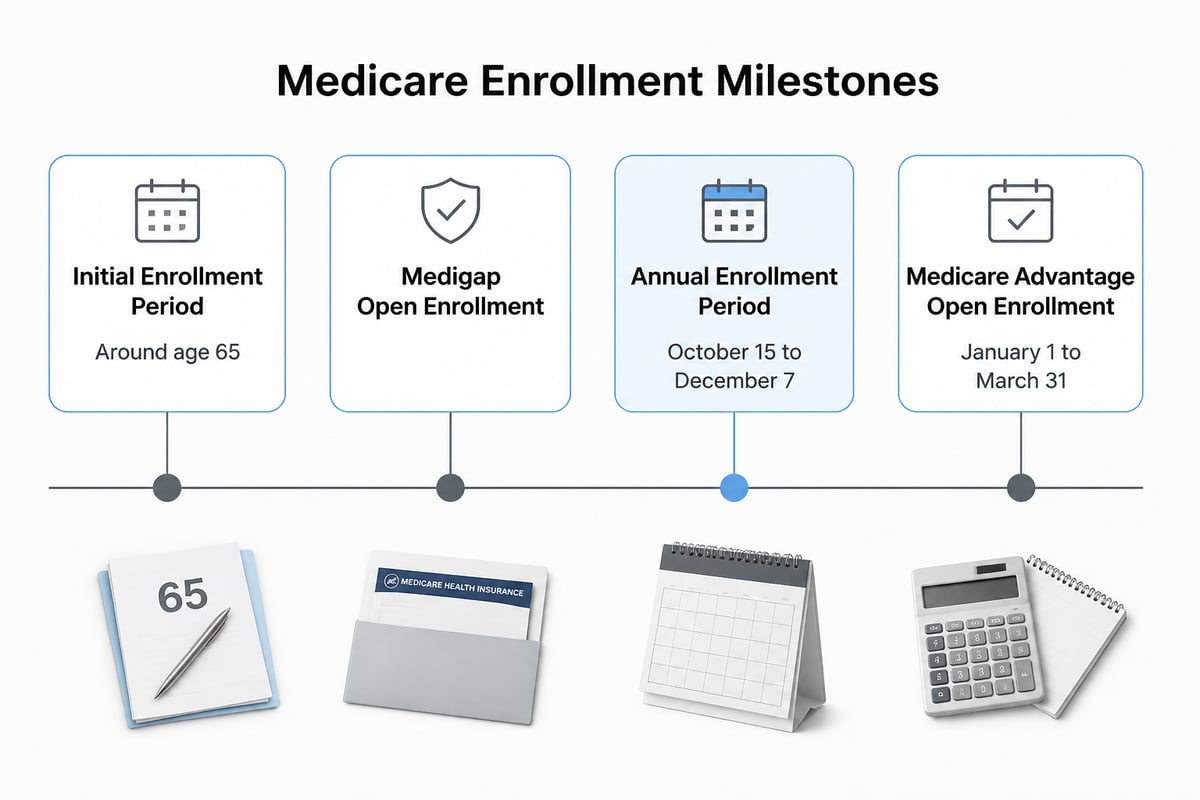
You are generally eligible for Medicare at 65 if you are a U.S. citizen or lawful permanent resident with five years of continuous residence. Your Initial Enrollment Period is a seven-month window: the three months before the month you turn 65, your birthday month and the three months after.
Missing that window can mean late-enrollment penalties for Part B and Part D that may last for as long as you hold coverage. If you are still working past 65 with employer coverage, different rules apply, so confirm your situation before you delay.
Key enrollment points to track:
- Initial Enrollment Period: Seven months around your 65th birthday.
- Annual Enrollment Period: October 15 to December 7 each year, when you can change Advantage and drug plans.
- Medicare Advantage Open Enrollment: January 1 to March 31, for people already in an Advantage plan.
- Medigap open enrollment: A six-month window that begins when you are 65 and enrolled in Part B, during which you generally cannot be turned down or charged more because of health conditions.
If you are approaching one of these windows, the Medicare open enrollment period page explains how each one works, and how to apply for Medicare covers the sign-up steps.
How to Evaluate Any Medicare Plan Before You Enroll
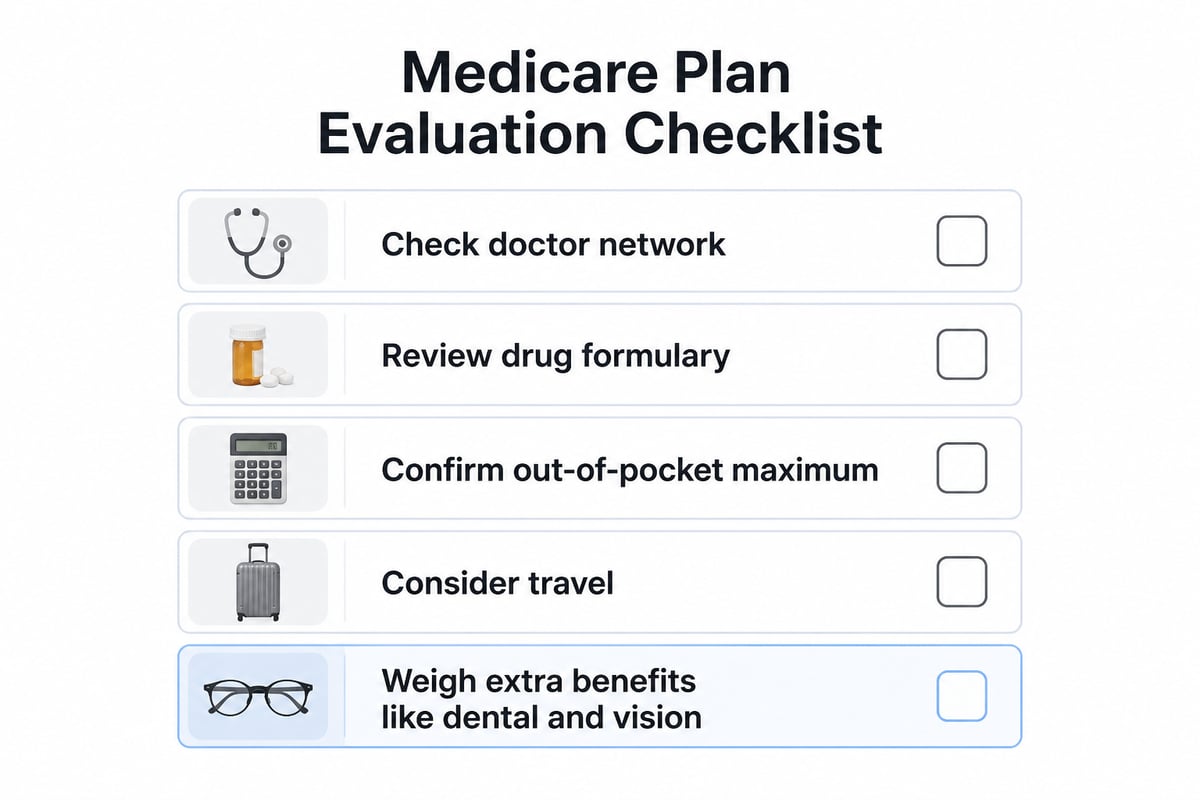
A sound comparison looks past the premium and tests the plan against how you actually use care. A practical approach is to work through these questions in order.
- Are your doctors in the network? Confirm each physician and hospital you use, in Greensboro, High Point, Winston-Salem or Kernersville, directly with the plan.
- Are your prescriptions covered? Check each drug against the plan's formulary and note the tier and cost.
- What is the maximum you could pay in a year? Medicare Advantage plans cap out-of-pocket spending. Original Medicare alone does not.
- Do you travel or spend part of the year elsewhere? Network-based plans can limit coverage outside your service area.
- What extra benefits will you really use? Dental, vision, hearing and fitness benefits have value only if you use them.
Plan documents let you verify these details before you commit. EmblemHealth’s Medicare forms and documents directory lists summaries of benefits and other plan materials, which is a useful way to confirm coverage in writing.
Medicare Advantage Market Trends and What They Mean for You
The number of Medicare Advantage options has begun to shrink, which makes it more important to check your plan every year. KFF reported that 3,719 Medicare Advantage plans were available nationwide for individual enrollment in 2025, fewer than in 2024.
Fewer plans means carriers can change networks, benefits and service areas from one year to the next. A plan that fit well last year may drop a hospital, adjust a copay or exit your county. This is why an annual review matters more than a one-time decision, and why prescription coverage should be rechecked each fall. The details of Part D plans and the coverage gap are covered in the donut hole guide.
Choosing Between Medicare Advantage and a Supplement in the Triad
The better fit depends on how you balance predictable monthly costs against flexibility in choosing providers. Neither path is right for everyone, and the decision is easier when you compare them on the same points.
| Factor | Medicare Advantage | Medicare Supplement |
|---|---|---|
| Works with | Replaces how you receive Original Medicare benefits | Works alongside Original Medicare |
| Provider access | Usually network-based | Any provider that accepts Medicare |
| Monthly cost | Often lower plan premium, plus Part B | Higher plan premium, plus Part B |
| Cost at the point of care | Copays and coinsurance, with an annual cap | Predictable, often minimal |
| Prescription coverage | Often included | Requires a separate Part D plan |
People who value low monthly costs and are comfortable with a network may lean toward Advantage. People who want the freedom to see any Medicare-participating provider and prefer fewer surprise bills often lean toward a supplement. If you are weighing the two, the guide to differences in Medicare plans lays out the tradeoffs in more detail.
Getting Local Help With EmblemHealth Medicare Questions
If you are comparing EmblemHealth Medicare options against what is sold in North Carolina, an independent agent can show you the full picture rather than one carrier's. Moser Insurance Group Inc works with multiple insurance carriers, so you can compare options in one place, and the team stays neutral and educates you so you can make an informed decision. It is one of the fastest growing independent insurance groups in Central North Carolina.
The team helps you narrow down which Medicare plan fits your needs, at no cost to you, and checks in during the year to review your plan and any Medicare changes. For people who want to see what is available locally, Medicare Advantage plans are a good starting point, and local pages cover Greensboro Medicare supplements and Medicare help in Winston-Salem. Moser Insurance Group Inc serves the Triad Area, including Greensboro, Kernersville, High Point and Winston-Salem.
You can reach the team by phone or text at 336-862-1763, by email at moserinsurancegroup@gmail.com, or through moserinsurancegroup.com.
FAQ
What is the mailing address for EmblemHealth claims?
Claims addresses vary by plan type and claim type, so use the address printed on your member ID card or in your plan documents. EmblemHealth also lists plan materials in its Medicare forms and documents directory. Sending a claim to the wrong address can delay payment.
Can I switch Medicare plans after I enroll?
Yes, but only during certain windows. Most people can change Medicare Advantage or Part D plans during the Annual Enrollment Period from October 15 to December 7, and people already in an Advantage plan can make one change between January 1 and March 31. Switching to a Medigap policy later may involve medical underwriting, so review that risk first.
Do I need Part D if my plan already covers prescriptions?
It depends on the plan. Many Medicare Advantage plans include drug coverage, so adding a separate Part D plan is usually not allowed or needed. If you have Original Medicare with a supplement, you generally need a standalone Part D plan to avoid a lifetime late-enrollment penalty.
Start by listing your doctors, your prescriptions and your must-have benefits, then check them against any plan you are considering before the next enrollment deadline. Moser Insurance Group Inc can compare carriers for you, explain the tradeoffs and recommend the plan that fits, and you can see its Medicare Advantage plans or reach the team at moserinsurancegroup@gmail.com. Whether you live in Greensboro, High Point, Kernersville or Winston-Salem, Call/Text Now (336) 862-1763 to talk through your options with no pressure.
Recent Comments