

Understanding your Medicare eligibility can feel overwhelming when you're approaching retirement or facing health challenges. Whether you're turning 65 in 2026 or dealing with a disability, knowing the specific requirements to qualify for Medicare helps you prepare financially and medically. Throughout the Triad Area, including Greensboro, Kernersville, High Point, and Winston Salem, thousands of individuals enroll in Medicare each year. This comprehensive guide breaks down the exact criteria, timing, and steps you need to secure your Medicare coverage.
Understanding the Basic Requirements to Qualify for Medicare
The foundation of Medicare eligibility rests on several distinct pathways. Most people qualify for Medicare based on their age, but disability and certain medical conditions create alternative routes to coverage.
Age-Based Eligibility at 65
The most common way to qualify for Medicare involves reaching age 65. However, simply turning 65 doesn't automatically guarantee coverage. You must also meet citizenship or residency requirements. Specifically, you need to be a U.S. citizen or a legal permanent resident who has lived in the United States continuously for at least five years.
Key age-based qualifications include:
- Being 65 years or older
- U.S. citizenship or lawful permanent residence for five consecutive years
- You or your spouse worked and paid Medicare taxes for at least 10 years (40 quarters)
- Meeting specific enrollment period deadlines
When you reach 65, your Initial Enrollment Period begins three months before your birthday month and extends three months after. This seven-month window represents your first opportunity to enroll without penalties.

Work Credit Requirements for Premium-Free Part A
Understanding work credits determines whether you'll pay premiums for Medicare Part A hospital insurance. Most Americans qualify for premium-free Part A because they or their spouse accumulated sufficient work credits through Medicare tax payments.
| Work Credits | Part A Premium Status | Monthly Premium (2026) |
|---|---|---|
| 40+ credits (10 years) | Premium-free | $0 |
| 30-39 credits | Reduced premium | Approximately $278 |
| Less than 30 credits | Full premium | Approximately $505 |
The Medicare eligibility and enrollment requirements specify that even if you don't have enough work credits personally, you may still qualify for Medicare through your spouse's work history. This includes current spouses, divorced spouses (if married for at least 10 years), and widows or widowers.
Qualifying for Medicare Through Disability
Age isn't the only pathway to qualify for Medicare. Individuals under 65 can access Medicare coverage if they meet specific disability criteria established by the Social Security Administration.
Social Security Disability Requirements
To qualify for Medicare based on disability, you must receive Social Security Disability Insurance (SSDI) benefits for 24 consecutive months. This waiting period begins from your established disability onset date, not from when you applied for benefits.
The 24-month requirement includes several important considerations:
- Trial work periods count toward your 24 months
- Continuing Disability Reviews don't restart your waiting period
- Supplemental Security Income (SSI) alone doesn't qualify you for Medicare
- SSDI benefits must be active throughout the waiting period
After completing the 24-month waiting period, your Medicare coverage begins automatically. You'll receive your Medicare card in the mail approximately three months before your coverage starts.
Medical Conditions That Waive the Waiting Period
Certain serious medical conditions allow you to qualify for Medicare immediately, bypassing the standard 24-month waiting period. These exceptions recognize the urgent and severe nature of specific health conditions.
Conditions with immediate Medicare eligibility:
- End-Stage Renal Disease (ESRD): Requiring regular dialysis or kidney transplant
- Amyotrophic Lateral Sclerosis (ALS): Also known as Lou Gehrig's disease
For ESRD patients, coverage typically begins the first day of the month after starting dialysis treatments. If you receive a kidney transplant before dialysis, coverage begins the month of hospital admission for the transplant.
ALS patients receive Medicare coverage immediately upon SSDI approval, with no waiting period required. This exemption acknowledges the progressive and debilitating nature of ALS.
Medicare Enrollment Periods and Deadlines
Knowing when you can enroll is just as critical as understanding whether you qualify for Medicare. Missing enrollment deadlines can result in coverage gaps and permanent premium penalties.
Initial Enrollment Period Timing
Your Initial Enrollment Period (IEP) provides a seven-month window surrounding your 65th birthday. Understanding this timeline helps you avoid late enrollment penalties and ensures continuous coverage.
The structure breaks down as follows:
- Three months before your birthday month
- Your birthday month itself
- Three months after your birthday month
When you enroll during your IEP affects when coverage begins. Enrollment during the three months before your birthday month ensures coverage starts on your birthday (or the first day of your birthday month if born on the first). Enrolling during your birthday month starts coverage the following month, and enrollment after your birthday month delays coverage further.

Special Enrollment Periods for Delayed Coverage
Many people delay Medicare enrollment because they maintain employer-based health coverage past age 65. If you qualify for Medicare but continue working with creditable employer coverage, you may be eligible for a Special Enrollment Period (SEP).
The SEP extends for eight months after your employment ends or your employer coverage terminates, whichever comes first. This prevents penalties for those who responsibly maintained creditable coverage.
Important SEP considerations:
- Employer must have 20 or more employees for coverage to be creditable
- COBRA continuation coverage doesn't qualify as creditable coverage for SEP purposes
- You must enroll within eight months to avoid penalties
- Retiree health coverage typically doesn't trigger an SEP
Learning about various Medicare enrollment periods helps you plan transitions between employer coverage and Medicare effectively.
Annual Election Period for Plan Changes
Once enrolled in Medicare, the Annual Election Period (also called Open Enrollment) runs from October 15 through December 7 each year. During this window, you can modify your Medicare coverage choices.
The Medicare Open Enrollment period allows several important changes:
- Switch from Original Medicare to Medicare Advantage
- Move between different Medicare Advantage plans
- Return to Original Medicare from Medicare Advantage
- Add, drop, or change Medicare Part D prescription drug coverage
- Add or drop a Medicare Supplement plan (if moving to Original Medicare)
Changes made during Open Enrollment take effect January 1 of the following year. This annual review opportunity ensures your coverage continues meeting your evolving healthcare needs.
Common Misconceptions About Medicare Qualification
Several widespread myths about Medicare eligibility create confusion for people approaching enrollment age. Clarifying these misconceptions helps you make informed decisions about your healthcare coverage.
Automatic Enrollment Doesn't Apply to Everyone
Many people assume they'll automatically qualify for Medicare and be enrolled when they turn 65. While this is true for some individuals, it's not universal.
Automatic enrollment occurs if you:
- Currently receive Social Security retirement benefits
- Receive Railroad Retirement Board benefits
- Are within four months of turning 65
If you're still working and haven't filed for Social Security benefits, you must actively enroll in Medicare. This often surprises people who expect the government to handle enrollment automatically.
Medicare and Social Security Are Separate
Although Medicare and Social Security both fall under federal programs, qualifying for one doesn't automatically mean you qualify for the other. You can qualify for Medicare at 65 even if you haven't started receiving Social Security retirement benefits.
Conversely, receiving Social Security retirement benefits doesn't automatically grant Medicare coverage if you don't meet Medicare's specific eligibility requirements. Each program has distinct qualification criteria, though they often overlap.
Regional Considerations for Triad Area Residents
Living in the Triad Area of North Carolina provides specific advantages when navigating Medicare enrollment. Greensboro, Kernersville, High Point, and Winston Salem offer numerous resources and healthcare providers accepting Medicare.
Understanding top Medicare Advantage plans available in your area helps you maximize your coverage options. Plan availability varies by ZIP code, making local expertise valuable when selecting coverage.
Local Medicare enrollment assistance is available through Moser Insurance Group Inc at 336-862-1763 or via email at moserinsurancegroup@gmail.com. Personal guidance helps you navigate the complexities of Medicare qualification and enrollment specific to North Carolina regulations.
Coverage Options Once You Qualify for Medicare
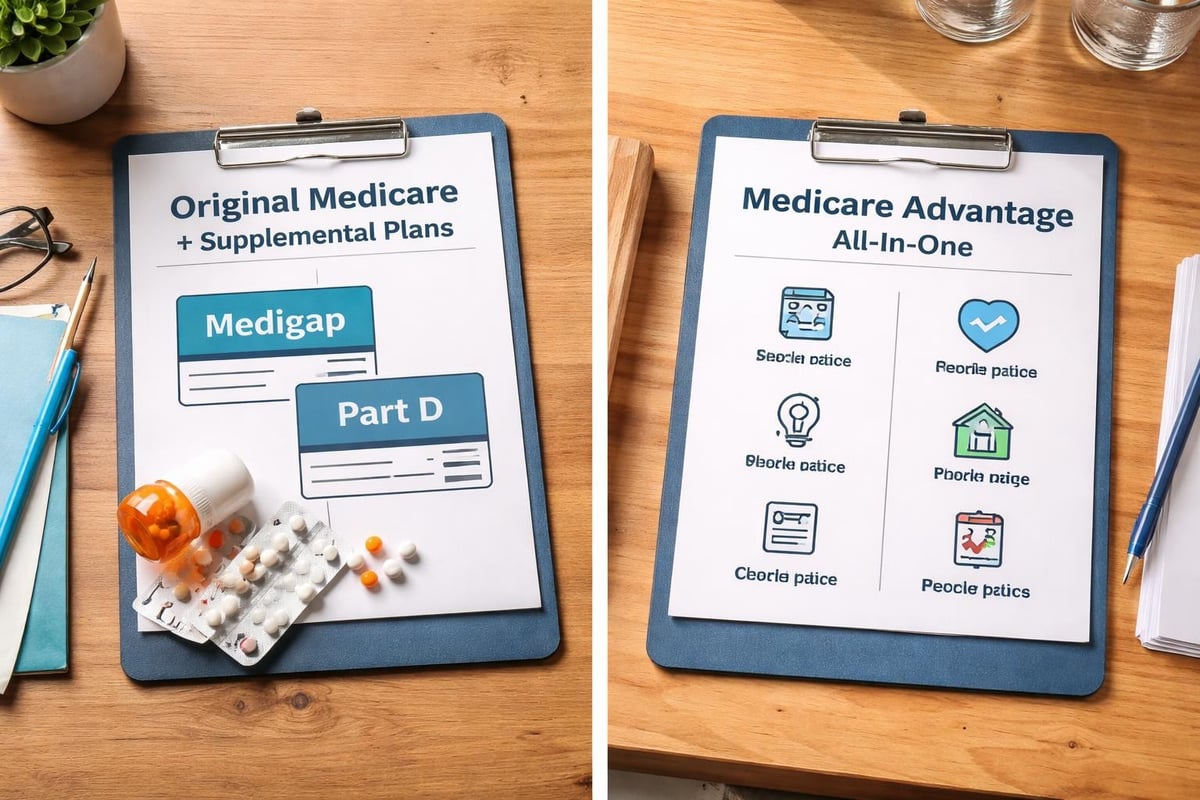
After you qualify for Medicare, understanding your coverage options determines how effectively your insurance meets your healthcare needs. The basic decision involves choosing between Original Medicare or Medicare Advantage.
Original Medicare Parts A and B
Original Medicare consists of Part A (hospital insurance) and Part B (medical insurance). When you join a Medicare plan, you're building a coverage foundation that may require additional supplementation.
Original Medicare coverage breakdown:
| Medicare Part | What It Covers | Typical Out-of-Pocket Costs |
|---|---|---|
| Part A | Hospital stays, skilled nursing, hospice, home health | Deductibles and coinsurance |
| Part B | Doctor visits, outpatient care, medical equipment, preventive services | Monthly premium, annual deductible, 20% coinsurance |
Original Medicare doesn't include prescription drug coverage or cap out-of-pocket expenses. Many beneficiaries add Part D prescription drug plans and Medicare Supplement plans to fill these gaps.
Medicare Advantage as an Alternative
Medicare Advantage (Part C) plans provide an alternative to Original Medicare by combining Parts A, B, and usually D into single plans offered by private insurers. These plans must cover everything Original Medicare covers but often include additional benefits.
Exploring 5-star Medicare Advantage plans helps you identify high-quality options in your area. Medicare Advantage plans typically include:
- Prescription drug coverage
- Annual out-of-pocket maximums
- Additional benefits like dental, vision, and hearing
- Fitness programs and wellness benefits
- Care coordination services
The trade-off involves using network providers and obtaining referrals for specialists. Understanding these differences helps you select coverage matching your healthcare preferences and budget.
Financial Assistance for Those Who Qualify for Medicare
Medicare qualification doesn't automatically mean affordable coverage. Several assistance programs help lower-income beneficiaries manage Medicare costs effectively.
Medicare Savings Programs
State-run Medicare Savings Programs pay some or all of Medicare premiums, deductibles, and coinsurance for eligible individuals. North Carolina residents can access these programs through their county Department of Social Services.
Four Medicare Savings Program types:
- Qualified Medicare Beneficiary (QMB): Pays Part A and B premiums, deductibles, coinsurance, copayments
- Specified Low-Income Medicare Beneficiary (SLMB): Pays Part B premiums only
- Qualifying Individual (QI): Pays Part B premiums, limited funding, first-come first-served
- Qualified Disabled and Working Individuals (QDWI): Pays Part A premiums for working disabled individuals
Income and asset limits determine eligibility for these programs. Learning about Medicare savings programs can significantly reduce your healthcare costs if you meet qualification standards.
Extra Help with Prescription Costs
The Low Income Subsidy (LIS), commonly called Extra Help, assists Medicare beneficiaries with Part D prescription drug costs. This federal program helps pay monthly premiums, annual deductibles, and copayments for medications.
Extra Help qualification depends on income and resources. For 2026, individuals with annual income below $22,590 and resources under $17,220 may qualify. Married couples have higher thresholds. Some people automatically qualify if they receive Medicaid or SSI benefits.
Preparing to Qualify for Medicare in 2026
Taking proactive steps before you qualify for Medicare ensures smooth enrollment and optimal coverage selection. Preparation prevents costly mistakes and coverage gaps.
Gathering Necessary Documentation
Before contacting Social Security or Medicare, compile essential documents that verify your eligibility. This preparation streamlines the enrollment process and prevents delays.
Critical documents include:
- Social Security card or proof of Social Security number
- Birth certificate or other proof of age and citizenship
- Work history documentation showing Medicare tax payments
- Current health insurance information and group numbers
- Spouse's information if qualifying through their work history
If you're turning 65 in 2026, start gathering these documents three to four months before your birthday to allow ample enrollment time.
Evaluating Your Healthcare Needs
Selecting the right Medicare coverage requires honest assessment of your current and anticipated healthcare needs. Consider these factors when planning your coverage:
- Current medications: How many prescriptions do you take regularly?
- Preferred doctors: Do you have specialists you want to continue seeing?
- Expected medical procedures: Are surgeries or treatments planned?
- Budget constraints: What monthly premiums and out-of-pocket costs can you afford?
- Travel habits: Do you winter elsewhere or travel frequently?
Reviewing Medicare Part D coverage options ensures your prescriptions remain affordable under your chosen plan. Prescription costs vary significantly between plans, making this analysis crucial for those with ongoing medication needs.
Getting Expert Help with Medicare Qualification
Medicare eligibility rules contain numerous exceptions, special circumstances, and technical details that challenge even informed consumers. Professional guidance helps you navigate these complexities confidently.
Working with a knowledgeable Medicare broker provides personalized assistance at no additional cost. Brokers receive compensation from insurance carriers, not beneficiaries, making their services free to you.
Benefits of professional Medicare assistance include:
- Personalized plan comparisons based on your specific medications and doctors
- Enrollment period tracking to ensure timely application submission
- Ongoing support as your healthcare needs change
- Local expertise about plan availability in Greensboro, Kernersville, High Point, and Winston Salem
- Problem resolution if issues arise with coverage or claims
For comprehensive Medicare and health insurance guidance, contact Moser Insurance Group Inc at 336-862-1763 or visit moserinsurancegroup.com to schedule a consultation.
Understanding Medicare Penalty Structures
Late enrollment penalties create permanent premium increases for those who delay Medicare enrollment without creditable coverage. Understanding these penalties motivates timely enrollment and proper planning.
Part B Late Enrollment Penalty
If you don't enroll in Medicare Part B when first eligible and don't have creditable employer coverage, you'll pay a late enrollment penalty. This penalty equals 10% of the standard Part B premium for each full 12-month period you were eligible but not enrolled.
Penalty calculation example:
If you delayed Part B enrollment for 30 months (2.5 years), your penalty would be 20% (two full 12-month periods). With the 2026 standard Part B premium at approximately $174.70, you'd pay an additional $34.94 monthly. This penalty continues for as long as you have Part B coverage.
Part D Prescription Drug Penalty
Similar to Part B, delaying Part D enrollment without creditable prescription coverage triggers permanent penalties. The Part D late enrollment penalty calculates differently, using 1% of the national base beneficiary premium multiplied by the number of full months without coverage.
For 2026, if the national base beneficiary premium is $34.70 and you went 24 months without creditable coverage, your monthly penalty would be approximately $8.33. This amount adds to your chosen Part D plan's premium permanently.
Understanding comprehensive Medicare ABCD coverage helps you avoid these costly penalties through timely enrollment decisions.
Navigating Medicare qualification requires understanding multiple pathways, deadlines, and coverage options that impact your healthcare and finances for years to come. Whether you qualify for Medicare through age, disability, or specific medical conditions, taking action during proper enrollment periods prevents penalties and ensures comprehensive coverage. Moser Insurance Group Inc serves individuals and families throughout the Triad Area with personalized Medicare guidance, helping you make confident decisions about your healthcare future. Contact us at 336-862-1763, email moserinsurancegroup@gmail.com, or visit Moser Insurance Group Inc to discuss your Medicare eligibility and coverage options with experienced professionals who prioritize education over pressure.
Recent Comments