

Understanding your health insurance options can feel overwhelming, especially when navigating terms like HMO and PPO. These two plan types represent different approaches to managing your healthcare, each with distinct advantages and considerations. Whether you're exploring Medicare Advantage options in the Triad Area or comparing coverage for your family in Greensboro, Kernersville, High Point, or Winston Salem, knowing the differences between hmo and ppo plans helps you make informed decisions about your healthcare future. At Moser Insurance Group Inc, we help individuals understand these choices without pressure, focusing on what matters most to you and your family.
What Are HMO Plans
Health Maintenance Organizations (HMOs) operate on a coordinated care model where your primary care physician serves as the central point for all your healthcare needs. This physician becomes your healthcare coordinator, managing referrals to specialists and ensuring all your medical services work together seamlessly.
Network Structure and Requirements
HMO plans require you to choose a primary care physician (PCP) from within the plan's network. Your PCP handles routine care and must provide referrals before you can see specialists. According to HealthCare.gov’s explanation of plan types, this coordinated approach helps control costs while maintaining quality care.
Key HMO characteristics include:
- Mandatory primary care physician selection
- Required referrals for specialist visits
- Limited coverage outside the network (except emergencies)
- Lower monthly premiums compared to other plan types
- Minimal paperwork and claims processing
The network limitation means you'll typically receive no coverage for out-of-network care unless facing a medical emergency. This structure keeps costs predictable but requires you to stay within your approved provider network.
Cost Structure in HMO Plans
HMO plans generally offer the most affordable premium options among health insurance choices. You'll pay lower monthly costs, and your out-of-pocket expenses remain predictable through fixed copayments for most services.
| Service Type | Typical HMO Cost Structure |
|---|---|
| Monthly Premium | Lower than PPO plans |
| Primary Care Visit | $10-$30 copay |
| Specialist Visit | $30-$50 copay |
| Emergency Room | $100-$250 copay |
| Out-of-Network Care | Not covered (except emergencies) |
When considering HMO plans for Medicare coverage, many residents in High Point and Winston Salem appreciate the straightforward cost structure that eliminates surprise bills.

Understanding PPO Plans
Preferred Provider Organizations (PPOs) offer greater flexibility in choosing healthcare providers and accessing specialists. These plans don't require you to select a primary care physician or obtain referrals, giving you direct access to any provider within or outside the network.
Network Flexibility and Provider Choice
The defining feature of PPO plans is freedom of choice. You can visit any healthcare provider you prefer, though staying within the preferred network saves money. WebMD’s comparison of HMOs and PPOs highlights this flexibility as the primary advantage for people who value autonomy in healthcare decisions.
PPO plan benefits include:
- No primary care physician requirement
- Direct access to specialists without referrals
- Coverage for out-of-network providers (at higher costs)
- Nationwide coverage while traveling
- Greater control over healthcare decisions
This flexibility particularly benefits people with chronic conditions requiring multiple specialists or those who prefer choosing their own doctors without network restrictions. For families in Greensboro and Kernersville, PPO plans offer peace of mind when traveling or seeking specialized care.
PPO Cost Considerations
PPO plans typically cost more than HMO plans, both in monthly premiums and potential out-of-pocket expenses. However, this higher cost buys flexibility and broader provider access. SmartAsset’s financial analysis shows that premium differences can range from 10% to 30% higher for PPO plans.
The cost structure involves deductibles and coinsurance rather than simple copayments. You'll pay a percentage of costs until reaching your annual deductible, then share costs through coinsurance percentages.
Key Differences Between HMO and PPO
Understanding the fundamental distinctions between hmo and ppo plans helps you align coverage with your healthcare priorities and budget. These differences extend beyond cost to include access, paperwork, and care coordination approaches.
Provider Networks and Access
Network design represents the most significant difference between these plan types. HMOs maintain tighter networks with stricter requirements, while PPOs offer broader access with tiered pricing.
Network comparison:
- HMO networks limit you to contracted providers in your area
- PPO networks include preferred providers nationwide
- Out-of-network coverage exists only in PPO plans (at reduced benefits)
- Specialist access requires HMO referrals but not PPO authorization
- Emergency care receives coverage under both plan types regardless of network
According to Independence Blue Cross’s plan comparison, network size and accessibility significantly impact member satisfaction and healthcare outcomes.
Referral and Authorization Requirements
The referral process distinguishes how you access specialized care under each plan type. HMO members must obtain primary care physician approval before seeing specialists, while PPO members schedule specialist appointments directly.
This difference affects both convenience and care coordination. HMO referrals ensure your PCP remains informed about all your treatments, creating continuity. PPO flexibility lets you act quickly when health concerns arise.

Cost Analysis: HMO and PPO Comparison
Financial considerations extend beyond monthly premiums to include deductibles, copayments, coinsurance, and out-of-pocket maximums. Ramsey Solutions’ cost breakdown emphasizes evaluating total annual healthcare costs rather than focusing solely on premiums.
Premium and Out-of-Pocket Expenses
Monthly premiums represent your guaranteed cost, but total expenses depend on how frequently you use healthcare services. HMO plans minimize both premiums and predictable copayments, while PPO plans charge higher premiums but offer service flexibility.
| Cost Component | HMO Plans | PPO Plans |
|---|---|---|
| Average Monthly Premium | $350-$450 | $450-$600 |
| Annual Deductible | $0-$1,000 | $1,000-$3,000 |
| Primary Care Copay | $15-$25 | $25-$50 or 20% coinsurance |
| Specialist Copay | $35-$50 | $40-$75 or 30% coinsurance |
| Out-of-Network Coverage | None | 50-70% after higher deductible |
| Out-of-Pocket Maximum | $6,000-$7,500 | $7,500-$9,000 |
These estimates reflect 2026 market averages and vary by location, age, and specific plan design. Residents in the Triad Area may find regional variations based on local provider agreements and market competition.
Hidden Costs and Savings Opportunities
Both hmo and ppo plans include less obvious cost factors that impact your total healthcare spending. HMO members save through lower premiums but may pay more if needing out-of-network emergency care while traveling. PPO members pay higher premiums but avoid surprise bills from accidental out-of-network care.
Consider these financial factors:
- Prescription drug costs vary significantly between plans
- Preventive care receives full coverage under both plan types
- Specialist visits may require multiple HMO copays (PCP then specialist)
- Out-of-network emergencies receive coverage but may involve balance billing
- Travel coverage works better with PPO nationwide networks
When evaluating Medicare Advantage plans, understanding these nuances helps you choose coverage matching your healthcare patterns and financial situation.
Choosing Between HMO and PPO Plans
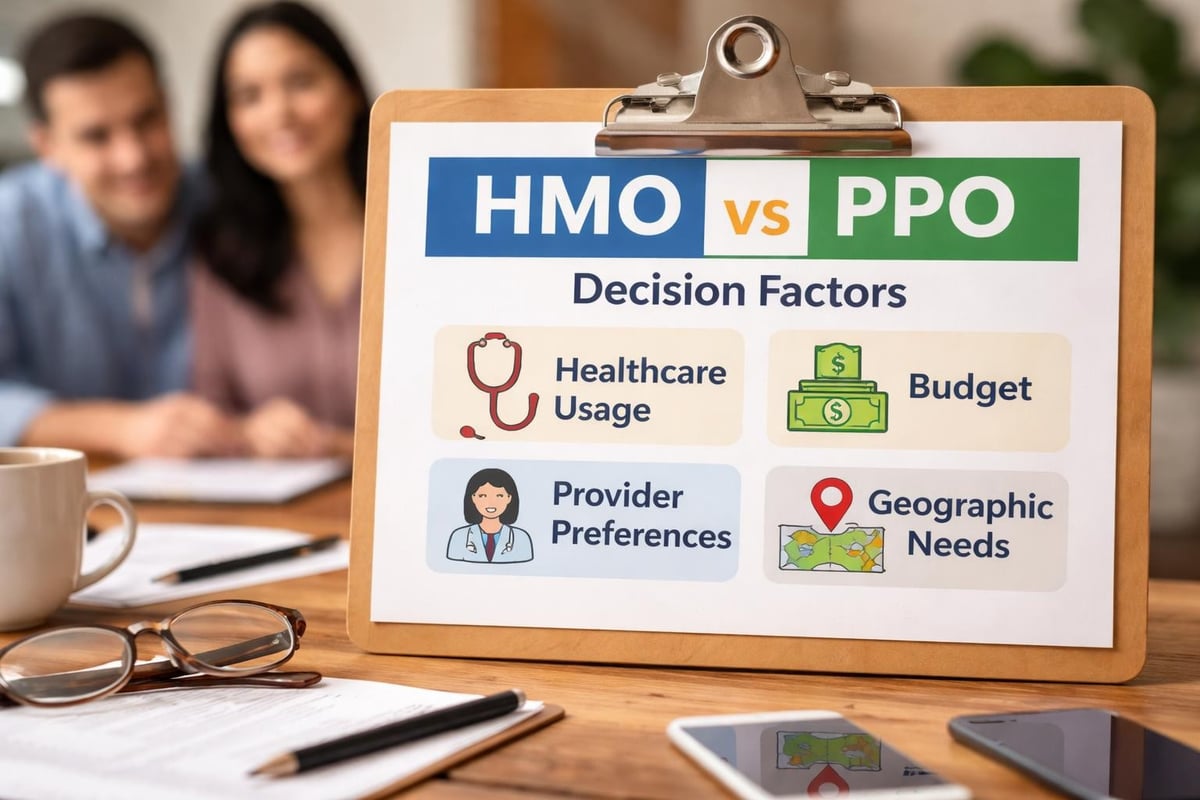
Your ideal plan type depends on personal healthcare needs, budget constraints, and lifestyle preferences. Neither option is universally superior; the right choice aligns with your specific circumstances.
Healthcare Usage Patterns
Frequent healthcare users benefit from different plan features than healthy individuals with minimal medical needs. Analyze your typical annual healthcare consumption to project costs under each plan structure.
High healthcare users should consider:
- Total annual specialist visits needed
- Ongoing prescription medication costs
- Chronic condition management requirements
- Preferred provider relationships
- Geographic flexibility needs
People managing multiple chronic conditions often prefer PPO plans despite higher premiums because direct specialist access and broader networks simplify complex care coordination. Meanwhile, healthy individuals might choose HMO plans to minimize fixed costs.
Geographic and Lifestyle Factors
Your location and travel patterns influence which plan type serves you best. Urban residents in Greensboro, High Point, and Winston Salem typically find robust HMO networks with excellent provider options. Rural residents may need PPO flexibility to access specialists in larger cities.
According to Medical Mutual’s plan comparison, geographic coverage areas significantly impact member satisfaction. Frequent travelers benefit from PPO nationwide networks, while homebodies may not value this feature.
Medicare Advantage HMO and PPO Options
Medicare beneficiaries encounter hmo and ppo plan types when exploring Medicare Advantage coverage. These plans combine Medicare Parts A and B benefits while adding features like prescription drug coverage, dental, and vision services.
Medicare Advantage Plan Structures
Medicare Advantage HMO plans follow the same coordinated care model as commercial HMOs, requiring primary care physician selection and specialist referrals. Medicare Advantage PPO plans offer network flexibility with some out-of-network coverage options.
Medicare Advantage considerations include:
- Most plans include Part D prescription coverage
- Additional benefits like dental, vision, and hearing aids
- Network providers must accept Medicare patients
- Plan availability varies by county and ZIP code
- Annual enrollment periods limit plan changes
For those turning 65 in Kernersville or elsewhere in the Triad Area, understanding Medicare Advantage options helps maximize benefits while controlling costs.
Comparing Medicare Advantage to Original Medicare
The choice between Medicare Advantage (HMO or PPO) and Original Medicare with a Medicare Supplement policy represents another critical decision. Medicare Advantage plans integrate all coverage into one plan, while Original Medicare plus Medigap offers maximum provider flexibility.
Medicare Advantage HMO plans typically cost less than Medicare Supplement policies but restrict provider choice. Medicare Advantage PPO plans balance cost and flexibility, falling between HMO and Medigap options. Oak Street Health’s cost analysis provides detailed Medicare-specific comparisons.
Network Quality and Provider Relationships
Network strength matters as much as network size when evaluating hmo and ppo plans. A smaller network of high-quality providers may serve you better than a massive network with inconsistent care quality.
Evaluating Provider Networks
Before selecting any plan, research the specific doctors, hospitals, and specialists included in the network. Contact your current providers to verify network participation and understand any access restrictions.
Network evaluation steps:
- Confirm your preferred doctors accept the plan
- Identify in-network hospitals in your area
- Verify specialist availability for your conditions
- Check prescription drug formularies
- Review provider directories for accuracy
Plan networks change annually, so verification during each enrollment period protects against surprise coverage losses. This diligence matters particularly for Medicare health care plans where provider relationships impact care quality.
Building Provider Relationships
HMO plans encourage strong primary care physician relationships through the coordinated care model. Your PCP becomes familiar with your complete health history, medications, and treatment preferences, enabling personalized care management.
PPO plans offer provider choice freedom but may result in fragmented care if you frequently switch doctors. However, this flexibility helps if you're dissatisfied with a provider or need specialized expertise unavailable in limited HMO networks.
Special Situations and Exceptions
Certain health situations and life circumstances make one plan type clearly superior to the other. Understanding these scenarios helps you choose appropriate coverage during enrollment periods.
Chronic Condition Management
People managing diabetes, heart disease, cancer, or other chronic conditions need coordinated specialist care. HMO plans excel at care coordination but may slow access during health crises requiring immediate specialist intervention. PPO plans offer faster specialist access but require more personal care coordination effort.
Chronic condition considerations:
- Diabetes management benefits from HMO care coordination
- Cancer treatment may need PPO specialist access flexibility
- Heart disease requires cardiologist relationships (verify network)
- Mental health services vary widely in coverage and access
- Rare conditions may require out-of-network specialists
Discuss your specific health needs with insurance professionals who understand local provider networks. Contact Moser Insurance Group Inc at 336-862-1763 or email moserinsurancegroup@gmail.com for personalized guidance on selecting appropriate coverage.
Family Coverage Considerations
Families face unique challenges when choosing between hmo and ppo plans. Different family members may have varying healthcare needs, making one-size-fits-all coverage difficult. Young children typically need pediatricians and occasional urgent care, while parents may require specialized care for chronic conditions.
Some families choose PPO plans for overall flexibility despite higher costs. Others select HMO plans to minimize premium expenses, especially when all preferred providers participate in the network. Evaluate total family healthcare usage patterns when comparing options.
Making Your Decision
Choosing between hmo and ppo plans requires balancing multiple factors including cost, convenience, provider preferences, and health status. No universal answer exists; your optimal choice depends on individual circumstances and priorities.
Decision Framework
Approach your plan selection systematically by documenting your healthcare priorities, budget constraints, and provider preferences. This structured analysis clarifies which plan features matter most to your situation.
Create your decision framework:
- Budget analysis: Calculate affordable monthly premiums and potential out-of-pocket costs
- Provider inventory: List current doctors, specialists, and preferred hospitals
- Healthcare forecast: Estimate upcoming procedures, treatments, or specialist needs
- Geographic assessment: Consider travel patterns and network coverage areas
- Prescription review: Verify medication coverage under each plan's formulary
Compare at least three plans of each type if available in your area. Request quotes through licensed insurance professionals who access multiple carriers and plan options. Visit moserinsurancegroup.com or call 336-862-1763 to explore coverage options available in Greensboro, High Point, Winston Salem, and throughout the Triad Area.
Enrollment Timing and Changes
Understanding enrollment periods prevents coverage gaps and ensures you can change plans when circumstances shift. Medicare Advantage plans allow annual changes during the October 15 through December 7 Annual Enrollment Period, while individual market plans use November 1 through January 15 Open Enrollment.
Key enrollment considerations include:
- Medicare Advantage Annual Enrollment Period (October 15 – December 7)
- Individual market Open Enrollment (November 1 – January 15)
- Special Enrollment Periods for qualifying life events
- Medicare Advantage Open Enrollment Period (January 1 – March 31)
- Initial Coverage Election Periods for new Medicare beneficiaries
Missing enrollment deadlines may force you to maintain unsuitable coverage for another year or face coverage gaps and potential penalties.
Getting Professional Guidance
Insurance decisions impact your health, finances, and peace of mind. Professional guidance helps you navigate complex plan differences, understand local network strengths, and select coverage matching your unique needs.
Working with Insurance Professionals
Licensed insurance agents access comprehensive plan information, carrier relationships, and enrollment expertise that simplifies your decision process. They compare multiple carriers and plan types, explaining differences in plain language without industry jargon.
Professional guidance benefits:
- Multi-carrier plan comparisons
- Network provider verification
- Prescription drug coverage analysis
- Cost projections based on your healthcare usage
- Enrollment assistance and ongoing support
Independent agents represent multiple insurance carriers, offering unbiased recommendations focused on your needs rather than specific company products. This independence ensures you see all available options in your area.
Local Support in the Triad Area
Residents throughout Greensboro, Kernersville, High Point, and Winston Salem benefit from working with local insurance professionals who understand regional provider networks, carrier availability, and community healthcare resources.
Moser Insurance Group Inc provides personalized insurance guidance throughout the Triad Area, helping individuals and families understand their options without pressure. We focus on education first, ensuring you feel confident in your insurance decisions. Contact us at 336-862-1763, email moserinsurancegroup@gmail.com, or visit moserinsurancegroup.com to discuss your coverage needs.
Understanding the differences between hmo and ppo plans empowers you to select health coverage that aligns with your healthcare needs, budget, and lifestyle preferences. Whether you prioritize lower costs with coordinated care or value provider flexibility with broader networks, both plan types offer viable solutions for different situations. At Moser Insurance Group Inc, we help individuals and families throughout Greensboro, High Point, Winston Salem, Kernersville, and the Triad Area understand their Medicare, health insurance, and life insurance options with clear guidance and personalized support. Call us at 336-862-1763 or email moserinsurancegroup@gmail.com to discuss which plan type best serves your unique healthcare situation.
Recent Comments