

United Health Medicare Advantage plans represent one of the most significant choices beneficiaries face when entering Medicare eligibility. As the nation's largest provider of Medicare Advantage coverage, UnitedHealthcare offers a comprehensive network of plans designed to bundle hospital care, medical services, and often prescription drug coverage into a single managed package. Understanding how these plans work, what they cover, and whether they align with your healthcare needs requires careful evaluation of benefits, costs, and network restrictions. In the Triad Area, including Greensboro, Kernersville, High Point, and Winston Salem, beneficiaries have access to multiple united health medicare advantage options that vary significantly in premiums, copayments, and coverage scope.
What Makes United Health Medicare Advantage Different
United health medicare advantage plans function as an alternative to Original Medicare, providing all Part A and Part B benefits through private insurance contracts approved by Medicare. Instead of receiving coverage directly from the federal government, beneficiaries enroll in plans managed by UnitedHealthcare, which assumes responsibility for coordinating care and processing claims.
The fundamental distinction lies in how these plans deliver healthcare services. Original Medicare operates on a fee-for-service model where beneficiaries can visit any provider accepting Medicare nationwide. Medicare Advantage requires members to use network providers and follow specific care coordination rules, similar to employer health insurance plans.
Core Plan Types Available
UnitedHealthcare structures its Medicare Advantage offerings across several distinct categories:
- HMO Plans require members to select a primary care physician and obtain referrals for specialist visits
- PPO Plans offer greater flexibility to see out-of-network providers at higher cost-sharing
- HMO-POS Plans combine HMO structure with limited out-of-network benefits for specific services
- SNP Plans serve beneficiaries with specific chronic conditions or dual Medicare-Medicaid eligibility
Each structure addresses different healthcare preferences and medical needs. Those who value provider choice and travel frequently may find Medicare Advantage plans constraining compared to alternatives, while others appreciate the coordinated care approach and predictable costs these plans provide.

Coverage Components and Benefit Structure
Every united health medicare advantage plan must cover all services included in Original Medicare Part A and Part B. Beyond this baseline, UnitedHealthcare frequently adds supplemental benefits that traditional Medicare does not provide, creating a more comprehensive coverage package for many beneficiaries.
Standard Medical Benefits
Hospital coverage under Part A includes inpatient care, skilled nursing facilities, hospice services, and some home health care. Medical coverage under Part B encompasses doctor visits, outpatient services, preventive care, durable medical equipment, and mental health services. United health medicare advantage plans deliver these benefits but structure cost-sharing differently than Original Medicare.
| Service Category | Original Medicare | Medicare Advantage Typical Structure |
|---|---|---|
| Hospital Stay | Part A deductible per benefit period | Fixed copay per day, usually lower initial cost |
| Doctor Visits | 20% coinsurance after Part B deductible | Fixed copay ($0-$40 depending on service) |
| Preventive Care | Typically $0 | Typically $0 |
| Lab Work | 20% coinsurance | Often $0 copay |
The copayment structure makes costs more predictable for routine services. However, beneficiaries should understand that united health medicare advantage plans include out-of-pocket maximums that cap annual spending, a protection Original Medicare lacks without separate Medicare Supplement Plans coverage.
Enhanced Benefits Beyond Original Medicare
According to UnitedHealthcare’s 2026 plan announcements, many plans continue to offer supplemental benefits including:
- Dental coverage for routine cleanings, fillings, and sometimes major work
- Vision services including eye exams and allowances for glasses or contacts
- Hearing aid benefits with varying allowance amounts
- Over-the-counter product allowances for health-related items
- Fitness memberships through programs like Renew Active
- Transportation services to medical appointments
These additional benefits address healthcare needs that frequently burden seniors financially when covered out-of-pocket. In the Triad Area communities of Greensboro, Kernersville, High Point, and Winston Salem, access to comprehensive dental and vision care through Medicare Advantage can eliminate the need for separate insurance policies.
Prescription Drug Coverage Integration
Most united health medicare advantage plans include integrated Part D prescription drug coverage, eliminating the need for standalone drug plans. This integration simplifies enrollment and creates a single point of contact for medical and pharmacy benefits management.
Formulary Structure and Cost Tiers
UnitedHealthcare organizes covered medications into formulary tiers that determine copayment amounts. Understanding this structure proves essential for estimating annual drug costs:
Tier 1 – Preferred generic drugs with lowest copays ($0-$10 typically)
Tier 2 – Generic drugs with moderate copays ($10-$25)
Tier 3 – Preferred brand drugs with higher copays ($40-$100)
Tier 4 – Non-preferred brand drugs with significant copays or coinsurance
Tier 5 – Specialty medications with highest cost-sharing, often 33% coinsurance
The specific medications covered and their tier placement vary by plan, making formulary review critical before enrollment. Beneficiaries taking multiple medications should verify coverage for each prescription and calculate total annual costs under different plan options.
Coverage Gap and Catastrophic Protection
United health medicare advantage plans with Part D coverage follow Medicare's standard benefit structure, which includes a coverage gap phase where cost-sharing increases. In 2026, beneficiaries enter this phase after total drug spending reaches the initial coverage limit. However, the gap has narrowed considerably, with copays capped at 25% for both brand and generic drugs during this phase.
Once out-of-pocket spending reaches the catastrophic threshold, coverage improves dramatically with minimal copays for the remainder of the year. This protection prevents unlimited drug expenses for those with serious medical conditions requiring expensive medications.

Network Considerations and Provider Access
The provider network represents perhaps the most significant consideration when evaluating united health medicare advantage plans. Unlike Original Medicare's universal acceptance, Medicare Advantage plans require beneficiaries to use contracted providers except in emergency situations.
Network Adequacy in North Carolina
UnitedHealthcare maintains extensive provider networks throughout North Carolina, including substantial coverage in the Triad Area. In Greensboro, Kernersville, High Point, and Winston Salem, beneficiaries typically have access to major hospital systems, specialist practices, and primary care physicians participating in UnitedHealthcare networks.
However, network adequacy varies between plan types. HMO plans generally require all care to occur within network, while PPO plans allow out-of-network access at increased cost. Beneficiaries should verify that their current physicians participate in the specific plan's network before enrolling.
Key verification steps include:
- Confirming primary care physician network status
- Checking specialist participation for ongoing care needs
- Verifying preferred hospital network inclusion
- Reviewing pharmacy network for convenient prescription access
- Understanding urgent care and emergency coverage rules
Impact on Continuity of Care
Changing from Original Medicare to united health medicare advantage, or switching between different Medicare Advantage carriers, can disrupt established care relationships. Physicians who previously accepted Medicare assignment may not participate in specific Advantage plan networks. This reality creates potential challenges for beneficiaries who value maintaining long-term relationships with trusted healthcare providers.
Geographic limitations also affect coverage. Beneficiaries who spend significant time in multiple states or travel extensively may find network restrictions problematic. While emergency care receives coverage nationwide, routine and urgent care typically requires in-network providers, limiting flexibility for those with mobile lifestyles.
Cost Structure and Financial Considerations
Understanding the complete cost picture for united health medicare advantage requires examining multiple financial components that extend beyond monthly premiums. These plans often feature low or zero premium amounts, but total costs depend heavily on healthcare utilization patterns and specific plan design.
Premium and Cost-Sharing Elements
| Cost Component | What It Means | Typical Range |
|---|---|---|
| Monthly Premium | Amount paid regardless of service use | $0 – $150+ |
| Part B Premium | Still required, paid to Social Security | $185 (2026 standard) |
| Medical Deductible | Amount paid before coverage begins | $0 – $500 |
| Copayments | Fixed amounts per service | $0 – $90+ depending on service |
| Coinsurance | Percentage of service cost | 10% – 40% for certain services |
| Out-of-Pocket Maximum | Annual spending cap | $3,000 – $8,850 |
The out-of-pocket maximum provides crucial financial protection that Original Medicare lacks. Once annual spending reaches this limit, the united health medicare advantage plan covers all remaining Medicare-covered services at 100% for the calendar year.
Comparing Total Annual Costs
While $0 premium plans appear attractive, they often include higher copayments and coinsurance that increase costs for those requiring frequent medical care. Conversely, plans with monthly premiums may offer lower per-service costs and better coverage for predictable healthcare needs.
Calculating projected annual costs requires honest assessment of expected healthcare utilization. For beneficiaries managing chronic conditions requiring regular specialist visits, procedures, or expensive medications, a higher-premium plan with lower copays often proves more economical than a zero-premium option with substantial cost-sharing.
Financial modeling should incorporate:
- Expected primary care and specialist visits
- Anticipated procedures or surgeries
- Regular prescription drug costs across all coverage phases
- Preventive care utilization
- Potential emergency or urgent care needs
Those seeking assistance with these calculations can contact experienced advisors at Moser Insurance Group Inc by calling 336-862-1763 or emailing moserinsurancegroup@gmail.com for personalized cost comparisons.
Enrollment Periods and Plan Flexibility
United health medicare advantage enrollment follows specific timeframes established by Medicare regulations. Understanding these periods and the rules governing plan changes helps beneficiaries make timely decisions and avoid coverage gaps.
Initial Enrollment and Annual Changes
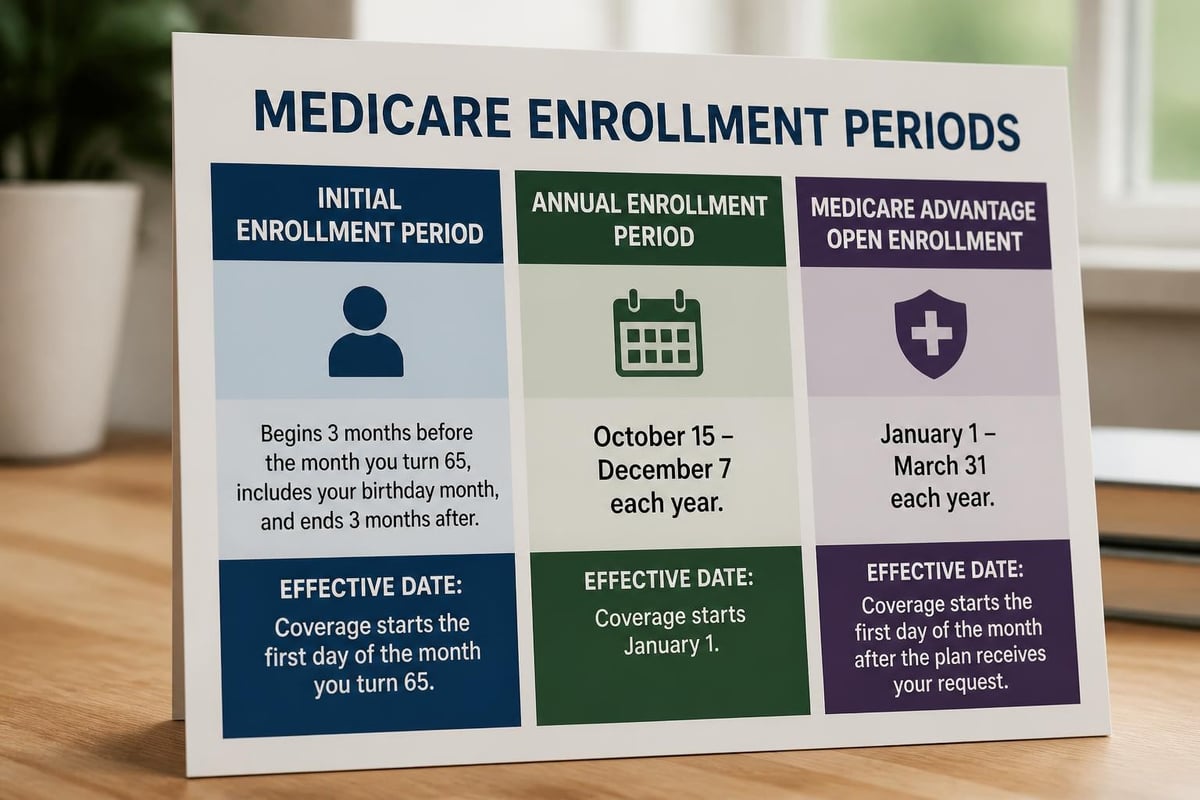
Beneficiaries first become eligible for Medicare Advantage during their Initial Enrollment Period, which spans seven months around their 65th birthday. Those already enrolled in Original Medicare can switch to united health medicare advantage during the Annual Enrollment Period from October 15 through December 7 each year, with coverage effective January 1.
The Medicare Advantage Open Enrollment Period runs from January 1 through March 31, allowing current Medicare Advantage members to switch plans once during this window. This provides an additional opportunity to change coverage if a plan proves unsuitable after the initial enrollment.
Special Enrollment Situations
Certain qualifying events trigger Special Enrollment Periods that permit plan changes outside regular timeframes:
- Moving outside the current plan's service area
- Losing employer or union coverage
- Qualifying for Medicaid or Extra Help
- Institutional residence changes
- Chronic condition qualification for Special Needs Plans
Understanding these enrollment rules prevents situations where beneficiaries feel trapped in unsuitable coverage until the next annual period. Medicare enrollment guidance helps navigate these complex timeframes and requirements.
Recent Industry Changes Affecting Coverage
The Medicare Advantage landscape continues evolving in response to regulatory changes, financial pressures, and program adjustments. These shifts directly impact plan availability, benefits, and costs for united health medicare advantage beneficiaries in 2026 and beyond.
Plan Availability and Benefit Adjustments
Industry observers note that insurers are scaling back certain Medicare Advantage offerings in response to reduced government payments and increased medical costs. UnitedHealthcare has adjusted some plan features, revised service areas, and modified supplemental benefits to maintain financial sustainability while continuing to serve millions of beneficiaries.
These changes manifest in several ways:
- Reduced service areas for certain plan types
- Modified supplemental benefit allowances
- Adjusted cost-sharing structures
- Changed network compositions
- Revised prescription drug formularies
Beneficiaries should review plan details annually during enrollment periods rather than assuming coverage remains constant year over year. Even when keeping the same plan, benefits and costs may shift significantly from one year to the next.
Regulatory Scrutiny and Program Oversight
Recent news coverage has highlighted increased federal oversight of Medicare Advantage operations. Reports indicate that federal authorities are investigating certain practices related to diagnosis coding, prior authorization processes, and claims denials across the industry. While investigations target systemic issues rather than beneficiary coverage, they underscore the importance of understanding appeal rights and coverage determination processes.
United health medicare advantage members who encounter claim denials or coverage disputes should understand their appeal rights. Plans must provide clear explanation of benefits, transparent denial reasons, and accessible reconsideration processes. Beneficiaries dissatisfied with plan responses can escalate appeals through multiple levels, including independent review organizations and administrative law judges.
Comparing Alternatives to Medicare Advantage
While united health medicare advantage plans serve millions of beneficiaries effectively, they represent one option within a broader Medicare coverage landscape. Understanding alternatives helps individuals make informed decisions aligned with their healthcare preferences and financial situations.
Original Medicare With Supplemental Coverage
Many beneficiaries choose Original Medicare combined with Medicare Supplement insurance (Medigap) and standalone Part D prescription coverage. This approach provides several distinct advantages:
Provider Freedom – See any doctor or hospital accepting Medicare nationwide without network restrictions
Predictable Costs – Supplement plans cover most or all cost-sharing, creating minimal out-of-pocket expenses
Travel Flexibility – No geographic limitations on coverage
Simplified Claims – Direct billing to Medicare and supplement carrier
However, this combination typically costs more in monthly premiums than many Medicare Advantage plans. The comprehensive coverage comes with higher upfront costs regardless of healthcare utilization. Understanding the differences helps beneficiaries weigh predictability against flexibility.
Decision Factors for Coverage Choice
The choice between united health medicare advantage and Original Medicare with supplements depends on individual priorities:
| Priority | Better Fit |
|---|---|
| Lowest monthly costs | Medicare Advantage (often $0 premium) |
| Provider choice | Original Medicare + Supplement |
| Integrated coverage | Medicare Advantage |
| Travel flexibility | Original Medicare + Supplement |
| Supplemental benefits | Medicare Advantage |
| Predictable costs | Original Medicare + Supplement |
| Simplified administration | Medicare Advantage |
Neither approach is universally superior. The optimal choice reflects personal healthcare patterns, financial circumstances, provider relationships, and lifestyle considerations. Beneficiaries in the Triad Area communities of Greensboro, Kernersville, High Point, and Winston Salem have access to comprehensive options in both categories.
Medical Underwriting and Eligibility Considerations
United health medicare advantage plans accept all Medicare-eligible beneficiaries during appropriate enrollment periods without medical underwriting. This guaranteed issue protection ensures that health status cannot prevent enrollment or affect premium costs, making coverage accessible regardless of pre-existing conditions.
When Health Status Matters
While Medicare Advantage enrollment ignores health conditions, the choice between Advantage and alternatives may depend partly on medical status. Beneficiaries with significant healthcare needs should carefully evaluate:
- Whether needed specialists participate in plan networks
- How coverage gap and prior authorization rules affect access to necessary care
- Whether plan formularies cover required medications at reasonable costs
- How frequently annual out-of-pocket maximums might be reached
Conversely, those leaving Medicare Advantage for Original Medicare and seeking Medicare Supplement coverage face medical underwriting in most situations. Supplement insurers can deny coverage or charge higher premiums based on health status outside specific guaranteed issue periods.
Guaranteed Issue Rights
Federal regulations provide certain guaranteed issue rights that allow beneficiaries to purchase Medigap coverage without underwriting:
- During the six-month Medigap Open Enrollment Period beginning when first enrolled in Medicare Part B at age 65 or older
- When Medicare Advantage plans reduce service areas or cease operations
- When moving outside a plan's service area
- In other specific circumstances defined by regulation
Understanding these rights proves essential for those considering switches between coverage types. Waiting too long to move from Medicare Advantage to supplements may result in coverage denials or prohibitively expensive premiums for those with health conditions.
State-Specific Considerations for North Carolina Residents
North Carolina beneficiaries evaluating united health medicare advantage coverage should understand state-specific factors affecting plan availability, benefits, and consumer protections. While Medicare operates as a federal program, implementation details vary by geography and state regulatory environment.
Network Adequacy in the Triad Area
The Triad Area, including Greensboro, Kernersville, High Point, and Winston Salem, benefits from robust healthcare infrastructure with multiple hospital systems, specialist practices, and primary care providers. UnitedHealthcare maintains substantial networks throughout this region, though specific provider participation varies between plan types.
Major healthcare systems in the area include facilities that typically participate in Medicare Advantage networks, providing beneficiaries with access to comprehensive hospital and specialist services. However, individual physician practices make independent participation decisions, creating variability in network composition.
Before selecting a united health medicare advantage plan, beneficiaries should verify that their preferred providers participate in the specific plan's network for the upcoming coverage year. Networks change annually, and prior participation does not guarantee future inclusion.
State Resources and Consumer Assistance
North Carolina provides consumer assistance through the State Health Insurance Assistance Program (SHIAP), which offers free, unbiased counseling on Medicare options including Medicare Advantage plans. These trained volunteers help beneficiaries understand coverage choices, compare plans, and navigate enrollment processes without promoting specific insurers or plan types.
Local independent agencies like Moser Insurance Group Inc also provide personalized guidance tailored to individual circumstances. By visiting moserinsurancegroup.com, calling 336-862-1763, or emailing moserinsurancegroup@gmail.com, Triad Area residents can access experienced advisors who understand regional provider networks and plan options specific to Greensboro, Kernersville, High Point, and Winston Salem.
Understanding Care Coordination and Management
United health medicare advantage plans emphasize care coordination as a core program element designed to improve health outcomes while managing costs. This approach differs fundamentally from Original Medicare's fee-for-service model where no entity coordinates care across multiple providers.
Primary Care Physician Role
Most HMO and HMO-POS plans require beneficiaries to designate a primary care physician who serves as the central coordinator for medical services. This physician:
- Provides routine and preventive care
- Coordinates specialist referrals when medically necessary
- Maintains comprehensive medical records
- Manages care transitions between hospital and outpatient settings
- Oversees medication management and potential interaction issues
While some beneficiaries appreciate this coordinated approach, others find the referral requirements restrictive compared to the direct access Original Medicare provides. The preference depends largely on personal healthcare philosophy and comfort with managed care structures.
Prior Authorization Requirements
Many united health medicare advantage plans require prior authorization for certain services, procedures, or medications. Before receiving specific care, providers must obtain plan approval confirming medical necessity and coverage eligibility. This process aims to prevent unnecessary procedures and ensure appropriate care, but can delay treatment access in some situations.
Services commonly requiring prior authorization include:
- Advanced imaging (MRI, CT, PET scans)
- Certain specialist procedures
- Durable medical equipment
- Home health services beyond specific thresholds
- Specialty medications
Understanding prior authorization requirements helps set realistic expectations about care access timelines. In urgent situations, plans must respond to authorization requests within expedited timeframes, typically 72 hours or less.
Making an Informed Coverage Decision
Selecting the optimal Medicare coverage requires comprehensive evaluation of multiple factors balanced against personal healthcare needs, financial circumstances, and lifestyle preferences. United health medicare advantage represents one strong option among several viable approaches to Medicare coverage.
Questions to Guide Decision-Making
Before enrolling in any coverage option, beneficiaries should honestly answer these critical questions:
Healthcare Patterns
- How frequently do I visit doctors and specialists?
- Do I have chronic conditions requiring ongoing management?
- What prescription medications do I take regularly?
- How important is provider choice versus cost predictability?
Financial Considerations
- What monthly premium fits my budget comfortably?
- Can I afford potential out-of-pocket costs up to the annual maximum?
- Do I prefer predictable copays or percentage-based coinsurance?
- How much annual healthcare spending do I realistically expect?
Lifestyle Factors
- Do I travel extensively or live in multiple locations seasonally?
- Is my current doctor network participation important?
- Do I value supplemental benefits like dental, vision, and fitness?
- Am I comfortable navigating managed care systems?
Honest self-assessment across these dimensions clarifies which coverage approach aligns best with individual circumstances.
Getting Professional Guidance
While Medicare provides standardized information about coverage options, translating general program rules into personal recommendations requires expertise and experience. Independent insurance professionals help beneficiaries navigate complex choices without the inherent bias of captive agents representing single carriers.
Moser Insurance Group Inc specializes in helping individuals and families throughout the Triad Area understand Medicare options with clear guidance and personalized support. Rather than pressuring clients toward specific products, the focus remains on education enabling confident insurance decisions. This approach proves particularly valuable when evaluating united health medicare advantage plans against alternatives, as objective analysis considers individual circumstances rather than commission structures.
Choosing the right Medicare coverage requires balancing multiple factors including costs, benefits, provider access, and personal healthcare preferences. United health medicare advantage plans offer comprehensive coverage with integrated benefits, but represent one option within a broader Medicare landscape. Whether Medicare Advantage aligns with your needs depends on honest assessment of your healthcare patterns, financial situation, and lifestyle priorities. Moser Insurance Group Inc provides the personalized guidance Triad Area residents need to make confident Medicare decisions without pressure. Contact us at 336-862-1763, email moserinsurancegroup@gmail.com, or visit moserinsurancegroup.com to discuss your specific situation and explore all available options in Greensboro, Kernersville, High Point, and Winston Salem.
Recent Comments