

Understanding the relationship between private health insurance and Medicare becomes essential as you approach age 65 or qualify through disability. Many individuals across the Triad Area, including Greensboro, Kernersville, High Point, and Winston Salem, find themselves navigating this complex landscape for the first time. The interplay between federal Medicare benefits and private insurance options determines your out-of-pocket costs, coverage scope, and access to care. Knowing how these systems work together empowers you to make informed decisions that protect your health and finances.
How Medicare and Private Insurance Work Together
Medicare provides the foundation of health coverage for Americans age 65 and older, as well as certain younger people with disabilities. The federal program consists of different parts that cover specific services. Part A handles hospital stays, skilled nursing facility care, hospice, and some home health services. Part B covers doctor visits, outpatient care, preventive services, and durable medical equipment.
While Medicare provides substantial coverage, it was never designed to cover 100% of healthcare costs. This reality creates opportunities for private health insurance and Medicare to function as complementary systems.
The Coverage Gap Challenge
Original Medicare (Parts A and B) leaves beneficiaries responsible for several costs:
- Part A deductible of $1,676 per benefit period in 2026
- Part B annual deductible of $257
- 20% coinsurance on most Part B services with no annual cap
- Hospital costs beyond 60 days require daily copays
- Foreign travel emergency care receives no coverage
These gaps can become financially devastating during serious illness or injury. A three-week hospital stay followed by months of outpatient therapy could easily generate $15,000 or more in out-of-pocket expenses under Original Medicare alone.

Private Insurance Options That Supplement Medicare
Private insurers offer several products designed specifically to work alongside Medicare. Understanding each option helps you identify which best fits your health needs, budget, and preferred approach to care.
Medicare Supplement Insurance (Medigap)
Medicare Supplement plans represent the most straightforward way private health insurance and Medicare coordinate. These standardized policies, sold by private companies, help pay the cost-sharing expenses that Original Medicare doesn't cover. According to the CMS Medigap overview, these plans must follow federal and state laws designed to protect consumers.
| Plan Type | Part A Deductible | Part B Deductible | Part B Coinsurance | Foreign Travel Emergency |
|---|---|---|---|---|
| Plan G | Yes | No | Yes | Yes (80% after $250) |
| Plan N | Yes | No | Partial (copays apply) | Yes (80% after $250) |
| Plan F* | Yes | Yes | Yes | Yes (80% after $250) |
| High Deductible G | After $2,870 | After $2,870 | After $2,870 | Yes (after deductible) |
*Plan F only available to those eligible for Medicare before January 1, 2020
Medigap policies work seamlessly with Original Medicare. When you visit a doctor, Medicare pays its share first, then your Medigap plan pays its share according to your policy terms. You typically owe little to nothing at the point of service with comprehensive plans like Plan G.
Research from the Kaiser Family Foundation on Medigap enrollment shows that approximately 12.8 million Medicare beneficiaries chose these supplemental policies in recent years, with average monthly premiums varying significantly by age, location, and plan type.
Medicare Advantage Plans
Medicare Advantage represents a different approach to combining private health insurance and Medicare. Instead of supplementing Original Medicare, these private plans replace it entirely. The official Medicare handbook explains that Medicare Advantage plans (Part C) provide all Part A and Part B benefits, often bundling prescription drug coverage and extra benefits like dental, vision, and hearing.
Key features of Medicare Advantage include:
- Network restrictions: Most plans require you to use specific doctors and hospitals
- Prior authorization: Many services need approval before coverage
- Out-of-pocket maximums: Annual caps limit your total costs (unlike Original Medicare)
- Bundled benefits: Prescription drugs, dental, vision often included
- Lower premiums: Many plans charge $0 monthly premium beyond Part B
The 2025 Medicare Advantage analysis reveals that plan options and benefits continue evolving, with insurers adjusting networks and cost-sharing structures annually.
Coordination Rules You Need to Know
When you have both private health insurance and Medicare, federal rules determine which insurance pays first. This concept, called "coordination of benefits," prevents double payment and ensures claims process correctly.
Primary vs. Secondary Coverage
Medicare's role changes based on your employment status and other factors. If you're 65 or older and still working with employer coverage based on current employment:
Employer has 20+ employees: Your group health plan pays primary; Medicare pays secondary
Employer has fewer than 20 employees: Medicare pays primary; group plan pays secondary
For retirees under 65 with Medicare due to disability, similar rules apply with a 100-employee threshold instead of 20.
This coordination becomes critical when selecting coverage in the Triad Area and throughout North Carolina. Working with experienced advisors helps you avoid gaps or duplicate coverage that wastes money.
Special Enrollment Periods
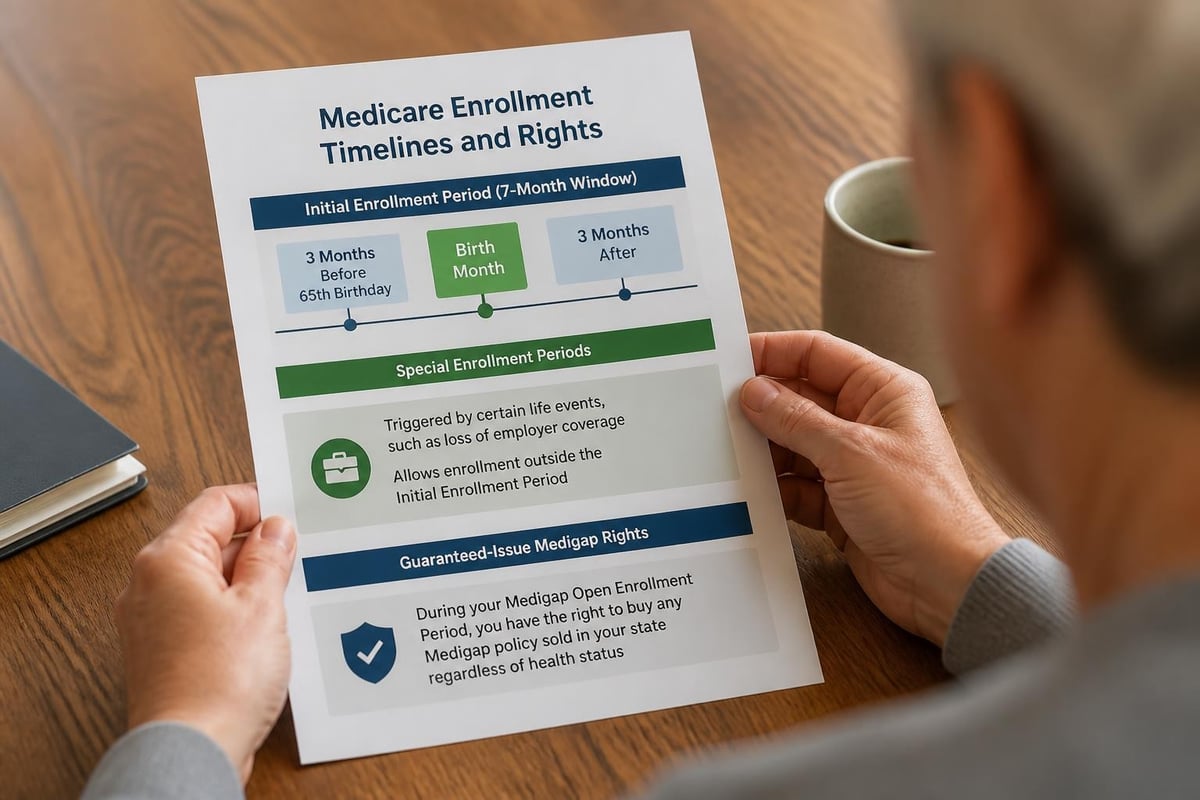
Understanding when you can add or change private health insurance and Medicare coverage prevents costly mistakes. Initial Enrollment Periods surround your 65th birthday, giving you a seven-month window to enroll without penalties. During this time, you enjoy guaranteed issue rights for Medigap policies.
If you delay Medicare while covered under an employer plan, you qualify for a Special Enrollment Period when that coverage ends. You have eight months to enroll in Part B and typically six months for guaranteed-issue Medigap rights.
Missing these windows can result in:
- Late enrollment penalties that last your lifetime
- Medical underwriting for Medigap (potential denial or higher premiums)
- Coverage gaps exposing you to significant financial risk
Cost Considerations and Budget Planning
Evaluating the total cost of private health insurance and Medicare requires looking beyond monthly premiums. Your comprehensive healthcare budget should account for multiple expense categories that vary based on your coverage choices.
Monthly Premium Comparison
| Coverage Approach | Medicare Premiums | Private Insurance Premiums | Estimated Total Monthly |
|---|---|---|---|
| Original Medicare + Plan G Medigap | Part B: $185* | $150-$250 | $335-$435 |
| Medicare Advantage (typical) | Part B: $185* | $0-$75 | $185-$260 |
| Original Medicare only | Part B: $185* | $0 | $185 |
*Standard Part B premium; higher earners pay IRMAA surcharges
These figures represent baseline costs before factoring in prescription drug coverage, which nearly everyone needs. Most Medicare Advantage plans include drug coverage, while Original Medicare beneficiaries need separate Part D plans averaging $40-$60 monthly.
Out-of-Pocket Expense Planning
Monthly premiums tell only part of the story. Your actual healthcare spending depends heavily on service utilization and cost-sharing structures.
With Original Medicare plus Medigap Plan G, you pay predictable costs: your Part B deductible ($257 annually) plus monthly premiums. After that, covered services generate minimal out-of-pocket costs. This predictability benefits those with chronic conditions requiring frequent care.
With Medicare Advantage, you face copays for most services even after meeting deductibles. A typical plan might charge $40 per specialist visit, $350 per day for hospital stays (days 1-5), and 20-40% coinsurance for expensive procedures until you reach the annual out-of-pocket maximum (often $5,000-$8,000).
Making Decisions Based on Your Health Needs
Choosing between private health insurance and Medicare options requires honest assessment of your health status, financial situation, and personal preferences. No single approach serves everyone optimally.
When Medigap Makes Sense
Medigap supplemental coverage typically benefits individuals who:
- Have chronic conditions requiring frequent specialist visits, tests, or procedures
- Value provider freedom and want to see any doctor accepting Medicare nationwide
- Prefer budget predictability over potential savings through networks
- Travel extensively and need coverage across state lines or abroad
- Can afford higher monthly premiums in exchange for lower point-of-service costs
Many residents in Greensboro, High Point, Winston Salem, and Kernersville choose Medicare Supplement Plans because North Carolina's medical facilities are widely distributed, and they want freedom to access specialists at major health systems without network restrictions.
When Medicare Advantage Fits Better
Medicare Advantage plans often suit beneficiaries who:
- Maintain generally good health with minimal medical needs
- Live in areas with strong provider networks
- Want bundled coverage including dental, vision, hearing, and prescriptions
- Prioritize lower monthly premiums
- Feel comfortable with managed care structures and prior authorization
Recent CMS policy updates continue refining Medicare Advantage regulations to improve beneficiary protections and plan stability.

Employer-Sponsored Retiree Coverage
Many individuals approaching Medicare eligibility already have employer-sponsored retiree coverage. Understanding how this private health insurance and Medicare interact prevents confusion and ensures optimal coordination.
COBRA and Medicare Timing
If you're receiving COBRA when you become Medicare-eligible, federal law allows your COBRA administrator to terminate your coverage once you enroll in Medicare. This termination isn't a qualifying event for your dependents, so plan accordingly.
More importantly, COBRA doesn't count as coverage based on current employment. Therefore, it doesn't extend your Initial Enrollment Period or create Special Enrollment rights. If you're on COBRA approaching age 65, enroll in Medicare during your Initial Enrollment Period to avoid penalties.
Employer Group Waiver Plans
Some large employers offer Medicare Advantage plans exclusively to their retirees, called Employer Group Waiver Plans (EGWPs). The Urban Institute’s analysis of EGWPs explains that these specialized plans operate under different rules than individual Medicare Advantage policies, often providing richer benefits with lower cost-sharing.
If your former employer offers an EGWP, evaluate it carefully against your alternatives. These plans sometimes provide superior value compared to individual Medicare options, but circumstances vary widely.
State-Specific Considerations in North Carolina
North Carolina's regulatory environment affects how private health insurance and Medicare function for residents. The state doesn't require insurers to offer all standardized Medigap plans, though most common plans remain available throughout Greensboro, Winston Salem, High Point, and surrounding communities.
Medigap Protections and Limitations
North Carolina follows federal Medigap regulations without significant state-specific enhancements. The state doesn't mandate continuous open enrollment beyond the federal six-month period following Part B enrollment. This means if you miss your initial opportunity and later want to switch Medigap carriers or plans, you'll face medical underwriting.
However, North Carolina does participate in the Medicare Birthday Rule adopted by several states, though not as expansively. Understanding these nuances helps you maximize your rights and opportunities.
Medicare Advantage Penetration
Medicare Advantage enrollment in North Carolina has grown substantially over the past decade. More than 40% of Medicare beneficiaries in many counties now choose Medicare Advantage over Original Medicare. This high penetration means robust plan competition, particularly in urban areas like the Triad.
Increased competition generally benefits consumers through:
- More plan choices with varying benefit structures
- Additional supplemental benefits (gym memberships, OTC allowances, meal delivery)
- Competitive pricing pressure
- Innovation in care delivery models
Getting Expert Guidance on Your Options
Navigating private health insurance and Medicare decisions requires current knowledge of regulations, plan details, and enrollment procedures. The complexity increases when you factor in prescription drug coverage, state-specific rules, and individual health circumstances.
Working with licensed insurance professionals who understand the Triad Area's healthcare landscape provides valuable perspective. Educational resources like Medicare seminars help you learn without pressure, comparing options objectively based on your situation.
Professional guidance becomes especially important during:
- Initial Medicare enrollment when you're making foundational choices
- Annual Enrollment Period (October 15 – December 7) when you can switch plans
- Life changes like moving, losing employer coverage, or developing new health conditions
- Appeals and claims issues when you need advocacy
Questions to Ask Before Deciding
Before finalizing your private health insurance and Medicare strategy, ensure you can answer these critical questions:
- Which doctors and hospitals do I want to keep seeing?
- What medications do I take regularly, and how will each plan cover them?
- Can I afford potential out-of-pocket maximums if I face serious illness?
- Do I travel frequently or spend time outside my home state?
- How important is budget predictability versus potential cost savings?
Understanding Medigap Pricing Factors
Private insurers use different pricing methodologies for Medicare Supplement plans, significantly affecting your long-term costs. Recognizing these structures helps you make smarter purchasing decisions.
Community-Rated vs. Attained-Age Policies
Community-rated policies charge the same premium to everyone in a geographic area regardless of age. A 65-year-old and an 85-year-old pay identical premiums. These policies typically start higher but increase more slowly over time.
Attained-age rated policies base premiums on your current age, increasing as you get older. They start lower but rise faster, sometimes significantly as you reach your 70s and 80s.
Issue-age rated policies base premiums on your age when you first buy the policy. Your rate stays based on that age but still increases for inflation and claims experience.
Understanding which methodology an insurer uses in Winston Salem, High Point, or Greensboro helps you project long-term affordability. Some individuals benefit from switching carriers periodically, though medical underwriting requirements make this challenging outside guaranteed-issue periods.
Prescription Drug Coverage Integration
No discussion of private health insurance and Medicare is complete without addressing prescription drug coverage. Part D plans, whether standalone or bundled within Medicare Advantage, represent essential protection for most beneficiaries.
Formulary Variations and Coverage Gaps
Each Part D plan maintains a formulary (list of covered drugs) organized into tiers with different cost-sharing. Tier 1 typically includes preferred generic drugs with lowest copays, while Tier 5 covers specialty medications with highest cost-sharing (often 25-33% coinsurance).
The infamous "donut hole" or coverage gap has effectively closed under recent legislation. In 2026, you pay 25% for brand-name and generic drugs during the gap phase until you reach catastrophic coverage thresholds.
When evaluating plans, verify:
- Your medications appear on the formulary
- Tier placement affects your costs
- Prior authorization or step therapy requirements apply
- Preferred pharmacies offer lower cost-sharing
- Mail-order options provide 90-day supplies
Coordination with Medigap Plans
Medigap policies don't include prescription drug coverage. If you choose Original Medicare with a Medigap plan, you need a separate standalone Part D plan. You cannot enroll in Medicare Advantage (which typically includes drug coverage) while maintaining a Medigap policy.
This separation actually provides flexibility. You can shop Part D plans annually during the Annual Enrollment Period based on your current medications and needs, while keeping your Medigap policy stable.
Rights and Protections for Beneficiaries
Federal and state laws establish important protections governing how private health insurance and Medicare interact. Knowing these rights helps you avoid discrimination and access guaranteed coverage opportunities.
Guaranteed Issue Rights
Certain circumstances grant you guaranteed issue rights to buy Medigap policies without medical underwriting, regardless of preexisting conditions. The Medicare Rights Center resources detail these situations, which include:
- First six months after enrolling in Part B at age 65 or older
- Loss of employer coverage
- Moving out of a Medicare Advantage plan's service area
- Medicare Advantage plan discontinuation or breach of contract
- Loss of Medicare Select plan eligibility
Understanding these rights proves critical when life circumstances change. Missing guaranteed issue periods can permanently limit your private insurance options.
Appeal and Grievance Procedures
When private health insurance and Medicare coordinate coverage, disputes occasionally arise. Original Medicare beneficiaries access administrative appeals through a structured five-level process, beginning with the Medicare Administrative Contractor and potentially ending in federal court.
Medicare Advantage enrollees follow their plan's internal appeals process first, with external review rights if internal appeals fail. These procedures differ significantly from Original Medicare appeals, representing another key distinction between coverage approaches.
Planning for Long-Term Care Needs
Neither Medicare nor standard private health insurance provides meaningful long-term care coverage. Medicare covers only limited skilled nursing facility stays following hospital admissions, and only when you need skilled medical care rather than custodial care.
This gap creates significant financial risk as you age. Long-term care expenses in Kernersville, Greensboro, and throughout North Carolina can easily exceed $7,000-$10,000 monthly for nursing home care or $4,000-$5,000 for assisted living.
Supplemental Protection Strategies
While beyond the scope of traditional private health insurance and Medicare coordination, several strategies address long-term care risk:
- Long-term care insurance purchased before age 65 while in good health
- Hybrid life insurance policies with long-term care riders
- Self-funding through dedicated savings or home equity
- Veterans benefits for those who qualify
- Medicaid planning as a safety net (requires spending down assets)
Starting these conversations early, ideally in your 50s, provides more options and typically lower costs for insurance-based solutions.
Staying Informed and Making Changes
The private health insurance and Medicare landscape evolves continuously. Plan benefits change, premiums adjust, provider networks shift, and new regulations take effect. Staying informed ensures your coverage remains optimal as circumstances change.
Annual Review Process
Every fall, dedicate time to review your coverage during the Annual Enrollment Period. Even if you're satisfied with your current plan, comparing alternatives helps verify you're still getting the best value. Pay attention to:
- Premium changes for 2027 (announced each September)
- Formulary modifications affecting your prescriptions
- Network updates potentially impacting your doctors
- Benefit adjustments changing cost-sharing or coverage
- New plan options entering your market
Contact information for personalized guidance: 336-862-1763 or moserinsurancegroup@gmail.com.
When to Seek Professional Help
Complex situations benefit from expert analysis. Consider consulting licensed professionals at moserinsurancegroup.com when you face:
- Multiple chronic conditions requiring expensive medications
- Upcoming surgeries or treatments with significant costs
- Dissatisfaction with current plan performance
- Premium increases straining your budget
- Provider network changes affecting access to preferred doctors
Understanding how private health insurance and Medicare work together empowers you to build comprehensive, affordable coverage that protects your health and finances throughout retirement. The choices you make during initial enrollment and subsequent annual periods significantly impact your healthcare costs and access for years to come. Whether you're newly eligible or reconsidering existing coverage, Moser Insurance Group Inc provides the clear guidance and personalized support you need to make confident decisions without pressure. Reach out at 336-862-1763, moserinsurancegroup@gmail.com, or visit Moser Insurance Group Inc to explore your options with experienced professionals who understand the unique needs of individuals and families in Greensboro, Winston Salem, High Point, Kernersville, and throughout the Triad Area.
Recent Comments