

Understanding when you can enroll in Medicare is one of the most important decisions you'll make as you approach retirement. For most Americans, the question "medicare starts at what age" has a straightforward answer, but the details surrounding enrollment periods, exceptions, and planning strategies can significantly impact your healthcare coverage and costs. Whether you live in Greensboro, Winston Salem, High Point, Kernersville, or elsewhere in the Triad Area, knowing the right time to sign up ensures you avoid penalties and secure comprehensive coverage when you need it most.
Standard Medicare Eligibility Age
Medicare starts at what age for the majority of Americans? The answer is 65 years old. This has been the standard eligibility age since Medicare's creation in 1965, and it remains consistent regardless of whether you've retired or continue working. You become eligible for Medicare on the first day of the month you turn 65, with one exception: if your birthday falls on the first of the month, your eligibility begins on the first day of the previous month.
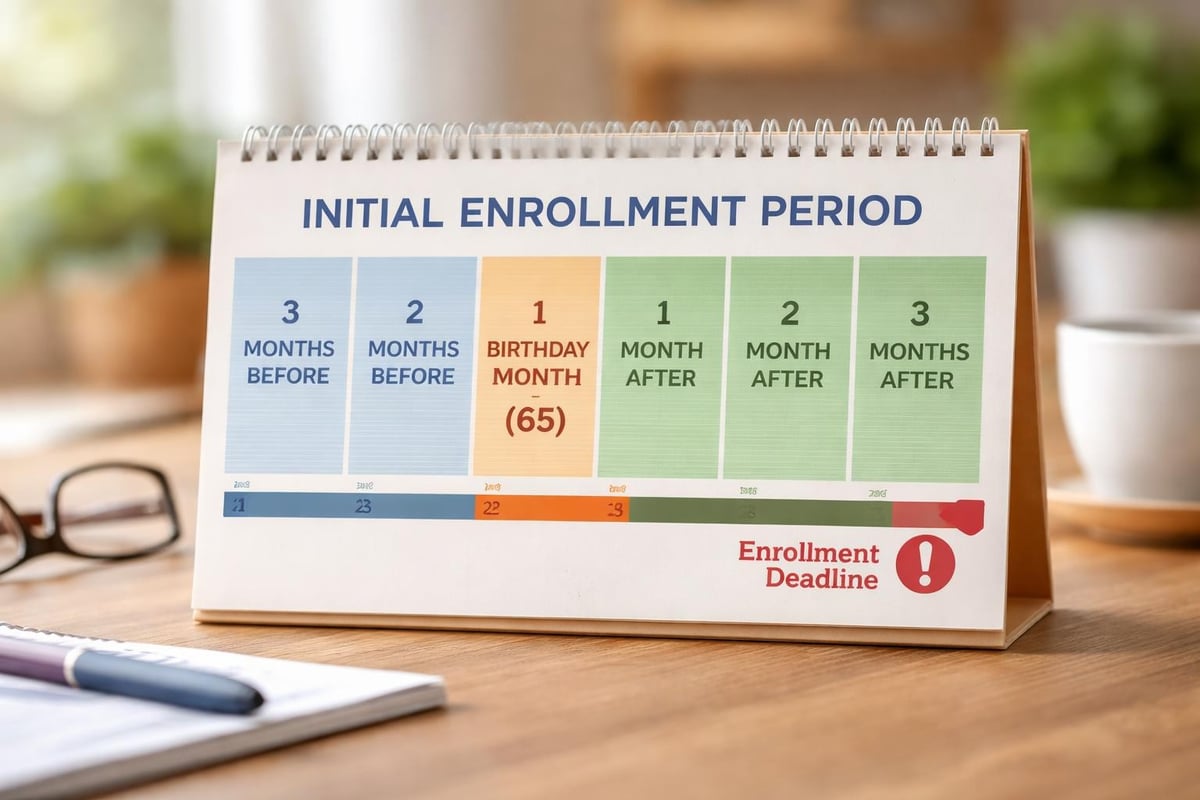
The official Medicare enrollment timeline provides specific guidance on when to apply. Your Initial Enrollment Period (IEP) extends seven months total: three months before your 65th birthday month, your birthday month itself, and three months after. This window gives you flexibility while ensuring you don't miss critical deadlines.
Citizenship and Residency Requirements
Beyond age, you must meet additional criteria to qualify for Medicare:
- Be a U.S. citizen or legal permanent resident who has lived in the United States continuously for at least five years
- Have worked for at least 10 years (40 quarters) in Medicare-covered employment, or be married to someone who has
- Be receiving Social Security or Railroad Retirement Board benefits
Most people qualify for premium-free Part A (hospital insurance) based on their work history or their spouse's employment record. Even if you haven't worked the required 40 quarters, AARP’s Medicare eligibility guide explains that you can still purchase Part A coverage, though you'll pay a monthly premium.
Qualifying for Medicare Before Age 65
Medicare starts at what age if you have special circumstances? The standard age of 65 doesn't apply to everyone. Several situations allow individuals to access Medicare coverage earlier, providing critical healthcare support when they need it most.
Disability-Based Eligibility
If you've been receiving Social Security Disability Insurance (SSDI) benefits for 24 consecutive months, you automatically qualify for Medicare regardless of your age. This two-year waiting period begins from the date your disability benefits start, not from when you first became disabled or applied for SSDI.
The disability qualification criteria includes specific conditions that allow immediate or expedited Medicare access:
- End-Stage Renal Disease (ESRD): Individuals with permanent kidney failure requiring dialysis or a transplant can enroll in Medicare immediately, with no waiting period
- Amyotrophic Lateral Sclerosis (ALS/Lou Gehrig's Disease): Medicare coverage begins the same month your SSDI benefits start, with no 24-month wait
Planning Considerations for Early Enrollment
Residents in Greensboro, High Point, and throughout the Triad Area who qualify early should understand how this affects their coverage options. Working with Medicare specialists in the local area helps ensure you select the right combination of benefits for your specific health needs and budget constraints.
| Qualification Type | Waiting Period | Coverage Start |
|---|---|---|
| Standard (Age 65) | None | First day of birth month |
| SSDI Recipients | 24 months | After 24 months of benefits |
| ESRD Patients | None | Based on treatment start date |
| ALS Diagnosis | None | Same month as SSDI benefits |
Understanding Your Initial Enrollment Period
The Initial Enrollment Period represents your first opportunity to sign up for Medicare, and the timing of your enrollment within this window can affect when your coverage begins. Many people in Winston Salem, Kernersville, and surrounding communities miss important nuances about IEP timing that lead to coverage gaps or delayed benefits.
When Coverage Begins Based on Enrollment Timing
If you enroll during the three months before your birthday month, coverage starts the first day of your birthday month. This is the ideal approach, as it ensures no gap in coverage if you're transitioning from employer insurance or another plan.
Enrolling during your birthday month means coverage begins the following month. For those enrolling in the three months after their birthday month, coverage can be delayed by one to three months depending on exactly when you sign up. The Centers for Medicare & Medicaid Services enrollment guidelines detail these timing rules comprehensively.
Coordinating with Employer Coverage
Medicare starts at what age if you're still working? The answer remains 65, but whether you should enroll depends on your employer's size and your coverage situation. If your employer has 20 or more employees, your group health plan is primary, and Medicare becomes secondary. You might choose to delay Part B enrollment without penalty.
For employers with fewer than 20 employees, Medicare becomes your primary coverage at 65, making enrollment essential. Understanding these differences in Medicare plans and how they coordinate with existing coverage prevents unexpected medical bills and coverage denials.

Penalties for Late Enrollment
Missing your Initial Enrollment Period can result in permanent financial penalties that increase your Medicare costs for as long as you have coverage. These penalties apply separately to Part A, Part B, and Part D (prescription drug coverage), making timely enrollment financially critical.
Part B Late Enrollment Penalty
The Part B penalty equals 10% of the standard premium for each full 12-month period you were eligible but didn't enroll. In 2026, with the standard Part B premium at $185 per month, a two-year delay would result in a 20% penalty, adding $37 to your monthly premium permanently. For someone living 20 years on Medicare, this single mistake costs over $8,800 in unnecessary premiums.
Part D Prescription Drug Penalty
The Part D late enrollment penalty calculation uses the national base beneficiary premium ($34.70 in 2026) multiplied by 1% for each month of delayed enrollment. While this seems smaller than the Part B penalty, it also continues for life and compounds with premium increases over time.
Special Enrollment Period Exceptions
Certain circumstances allow you to delay enrollment without penalties:
- Maintaining creditable coverage through an employer (20+ employees), spouse's employer, union, or TRICARE
- Living outside the United States
- Receiving veterans' benefits (though this doesn't always count as creditable coverage)
Documentation proving continuous creditable coverage is essential when enrolling during a Special Enrollment Period. The National Council on Aging eligibility checker helps determine if your current coverage qualifies.
Medicare Parts and Coverage Options at Age 65
Understanding what medicare starts at what age is only the beginning. Knowing which Medicare parts to choose and when to enroll in each determines your out-of-pocket costs, provider access, and overall healthcare experience. Each part serves a distinct purpose in your coverage strategy.
Original Medicare: Parts A and B
Part A (Hospital Insurance) covers inpatient hospital stays, skilled nursing facility care, hospice, and some home healthcare. Most people pay no premium for Part A because they or their spouse paid Medicare taxes during their working years.
Part B (Medical Insurance) covers doctor visits, outpatient care, preventive services, medical equipment, and some home healthcare. Everyone pays a premium for Part B, with the standard amount in 2026 set at $185 monthly, though higher earners pay Income-Related Monthly Adjustment Amounts (IRMAA) surcharges.
Medicare Supplement Plans
Original Medicare leaves several coverage gaps, including deductibles, coinsurance, and no out-of-pocket maximum. Medicare Supplement plans help fill these gaps by covering costs Original Medicare doesn't pay. In the Triad Area, residents often choose from Plans G, N, and HDG based on their health needs and budget preferences.
Medicare Advantage Plans
Medicare Advantage (Part C) provides an alternative to Original Medicare by bundling Parts A and B, often including prescription drug coverage and extra benefits like dental, vision, and hearing. These plans typically have lower premiums but use provider networks and require referrals for specialists. High Point and Greensboro residents can explore Medicare Advantage options that include local healthcare systems and preferred doctors.
| Coverage Type | Premium Cost | Provider Choice | Out-of-Pocket Max |
|---|---|---|---|
| Original Medicare + Supplement | Part B + Supplement premium | Any Medicare provider | Varies by supplement plan |
| Medicare Advantage | Often $0-$50/month | Network-based | $0-$8,850 annually (2026) |
| Original Medicare Only | Part B only ($185/month) | Any Medicare provider | No maximum |
Strategic Enrollment Planning for Different Situations
Medicare starts at what age may have a standard answer, but the optimal enrollment strategy varies significantly based on individual circumstances. Residents throughout Winston Salem, Kernersville, and the broader Triad Area face different considerations depending on their employment status, health conditions, and family situations.
Still Working at 65
If you maintain employer coverage through a company with 20 or more employees, you can delay Part B enrollment without penalty using a Special Enrollment Period when your employment or coverage ends. However, you should still enroll in premium-free Part A if eligible, as there's no financial downside and it provides secondary coverage.
Working for a smaller employer requires different planning. Since Medicare becomes primary at 65 regardless of your employer coverage, delaying enrollment could leave you responsible for bills your employer plan denies as secondary payer. Turning 65 Medicare guidance specific to your situation prevents these costly mistakes.
Retiring Before 65
Early retirees face a critical coverage gap between their employer insurance end date and Medicare eligibility. Options include:
- COBRA continuation coverage: Allows you to keep your employer plan for up to 18 months, though you pay the full premium plus administrative fees
- Marketplace/ACA plans: Provide comprehensive coverage with potential premium subsidies based on income
- Spouse's employer plan: If your spouse still works and has family coverage available
Planning this transition carefully ensures continuous coverage while managing costs effectively. For those in Greensboro and surrounding areas, exploring North Carolina health insurance options bridges this gap affordably.
Married Couples with Age Differences
When spouses have different ages, Medicare enrollment becomes more complex. The younger spouse cannot enroll in Medicare simply because their partner becomes eligible. If the older spouse retires and loses employer coverage, the younger spouse needs alternative coverage until reaching 65.
However, if the younger spouse continues working with employer coverage, the older spouse might be able to join that plan rather than enrolling in Medicare. Comparing costs and benefits between employer coverage and Medicare determines the most economical approach.

Enrollment Methods and Required Documentation
Once you know medicare starts at what age and have determined your optimal enrollment timing, the actual enrollment process requires specific documentation and can be completed through multiple channels. Understanding your options and preparing necessary paperwork streamlines the process and prevents delays.
Online Enrollment
The fastest way to enroll is through the Social Security Administration's website. You can complete your application 24/7, and the system saves your progress if you need to gather additional information. Online enrollment works best for straightforward situations without special circumstances or coverage complications.
Phone and In-Person Options
Calling Social Security at 1-800-772-1213 (TTY 1-800-325-0778) connects you with representatives who can answer questions and process your application. Office visits offer face-to-face assistance, though appointments are recommended. The SSA serves the Triad Area through offices in Greensboro, Winston Salem, and High Point.
What to Prepare
Gather these documents before starting your enrollment:
- Social Security number
- Birth certificate or proof of birth
- Proof of U.S. citizenship or lawful presence
- W-2 forms or tax returns if you have recent work history not yet recorded by Social Security
- Information about current health coverage, including group health plan details if you're delaying Part B
Automatic Enrollment Situations
If you're already receiving Social Security or Railroad Retirement Board benefits when you turn 65, you'll be automatically enrolled in Parts A and B. You'll receive your Medicare card in the mail approximately three months before your 65th birthday. You can decline Part B if you have creditable employer coverage, but you must actively opt out by following the instructions included with your card.
Part D Prescription Drug Coverage Considerations
While understanding medicare starts at what age covers Parts A and B, prescription drug coverage (Part D) requires separate enrollment decisions. Part D is optional but recommended for most beneficiaries, as the late enrollment penalty applies if you go 63 consecutive days without creditable prescription coverage after your Initial Enrollment Period ends.
When to Enroll in Part D
Enroll during your Initial Enrollment Period if you don't have creditable drug coverage through an employer, union, or other source. If you choose Medicare Advantage, most plans include integrated Part D coverage, eliminating the need for a standalone prescription drug plan.
Evaluating Plan Options
Part D plans vary significantly in:
- Monthly premiums: Range from $0 to over $100 depending on coverage level
- Formularies: The specific drugs covered and at what tier
- Pharmacy networks: Which pharmacies offer preferred pricing
- Deductibles and copayments: Your out-of-pocket costs per prescription
Analyzing your current medications against plan formularies ensures the plan you choose covers your drugs affordably. Plans change their formularies annually, making yearly review during the Annual Enrollment Period (October 15 – December 7) essential.
IRMAA and Part D
Higher-income beneficiaries pay Income-Related Monthly Adjustment Amounts on Part D premiums in addition to Part B IRMAA surcharges. These additional amounts are based on tax returns from two years prior, so 2026 IRMAA uses 2024 income data.
Regional Considerations for Triad Area Residents
Medicare starts at what age remains consistent nationwide, but plan availability, provider networks, and costs vary by location. Understanding options specific to Greensboro, Winston Salem, High Point, Kernersville, and the broader Triad Area helps you maximize your Medicare benefits.
Available Plan Types in North Carolina
North Carolina residents have access to numerous Medicare Advantage plans, Medicare Supplement carriers, and Part D prescription drug plans. The competitive marketplace means more choices but also requires more careful comparison. Working with local experts who understand Medicare supplements in Greensboro and surrounding communities provides valuable guidance.
Provider Network Considerations
Major healthcare systems serving the Triad Area include Cone Health, Novant Health, and Wake Forest Baptist Health. Verifying that your preferred doctors and hospitals participate in your chosen plan's network prevents surprise bills and ensures continuity of care. Original Medicare with a supplement plan allows you to see any provider accepting Medicare, offering maximum flexibility.
Cost Variations
While Part A and Part B premiums are set federally, Medicare Advantage and Part D premiums vary by county. Plans available in Guilford County may differ from those in Forsyth or Davidson counties, both in available options and pricing. This geographic variation makes local expertise particularly valuable when comparing plans.
Local Resources and Support
Residents throughout the Triad Area can access personalized Medicare guidance by contacting Moser Insurance Group Inc at 336-862-1763 or via email at moserinsurancegroup@gmail.com. Local knowledge combined with individual attention helps you navigate plan selection, enrollment timing, and coverage changes throughout your Medicare journey.
Common Mistakes to Avoid
Even when people correctly understand medicare starts at what age, several common errors create coverage problems and unnecessary costs. Learning from others' mistakes helps you avoid these pitfalls.
Missing the Initial Enrollment Period
Failing to enroll during your seven-month IEP when you don't have creditable coverage triggers late enrollment penalties. Many people mistakenly believe they can wait until they feel they need coverage, not realizing penalties apply even if they stayed healthy during the delay. Understanding eligibility and enrollment periods prevents this expensive mistake.
Assuming All Employer Coverage Is Creditable
Not all employer or retiree health plans qualify as creditable coverage for Medicare purposes. Coverage must be "expected to pay, on average, as much as standard Medicare prescription drug coverage pays" to count as creditable for Part D. Similarly, some retiree health plans don't meet the standards for delaying Part B enrollment. Always verify creditable status in writing from your plan administrator.
Confusing the General Enrollment Period with Special Enrollment Periods
If you miss your Initial Enrollment Period without creditable coverage, you must wait for the General Enrollment Period (January 1 – March 31 annually), with coverage not starting until July 1. Special Enrollment Periods provide immediate enrollment opportunities when you lose employer coverage or experience other qualifying events, but they require specific documentation and have time limits.
Not Comparing Plans Annually
Medicare Advantage and Part D plans change their benefits, formularies, and costs every year. The plan that was perfect in 2025 might become expensive or drop your medications in 2026. Reviewing options during the Annual Enrollment Period ensures you maintain optimal coverage.
Overlooking Supplement Plan Guarantees
During your six-month Medigap Open Enrollment Period (starting when you're 65 and enrolled in Part B), insurance companies must sell you any supplement plan they offer regardless of health conditions. After this window closes, medical underwriting applies in most states, potentially making supplements expensive or unavailable if you have health issues. Securing the right supplement during your guaranteed issue period is critical.
Medicare and Social Security Coordination
Medicare starts at what age is closely tied to Social Security retirement age, but the two programs operate independently. Understanding their interaction helps you make informed decisions about when to claim Social Security benefits versus when to enroll in Medicare.
Different Age Considerations
While Medicare eligibility begins at 65, Social Security retirement benefits can start as early as 62 or be delayed until 70 for maximum benefits. You don't need to claim Social Security to enroll in Medicare at 65. However, if you want Part A only (which is premium-free for most people), you must file a restricted application with Social Security.
Impact on Automatic Enrollment
If you claim Social Security benefits before turning 65, you'll be automatically enrolled in Medicare when you become eligible. Your Medicare card arrives approximately three months before your 65th birthday. If you're still working and want to delay Part B due to employer coverage, you must actively decline it to avoid premium deductions from your Social Security check.
IRMAA and Modified Adjusted Gross Income
Social Security administers IRMAA surcharges, which add to your Part B and Part D premiums based on income. The surcharges create a cliff effect at specific income thresholds, sometimes making a small income increase result in hundreds of dollars in additional monthly premiums. Strategic tax planning in the years before Medicare can minimize IRMAA impact.
Maximizing Your Medicare Benefits
Understanding medicare starts at what age and enrolling on time represents just the foundation. Maximizing your Medicare benefits requires ongoing attention to preventive services, program changes, and cost-saving opportunities.
Free Preventive Services
Medicare covers numerous preventive services at no cost when you use providers who accept assignment:
- Annual wellness visit
- Cardiovascular disease screening
- Diabetes screening
- Cancer screenings (mammograms, colonoscopies, prostate cancer screening)
- Bone mass measurement
- Flu and pneumonia vaccines
Taking advantage of these services helps catch health issues early when they're most treatable and least expensive.
Extra Help Programs
Low-income beneficiaries may qualify for programs that reduce Medicare costs:
- Medicare Savings Programs: Help pay Part B premiums, deductibles, and coinsurance
- Extra Help/Low-Income Subsidy: Reduces Part D prescription costs
- Medicaid: Provides comprehensive coverage working alongside Medicare
These programs have income and asset limits but can dramatically reduce healthcare costs for those who qualify. North Carolina residents can explore eligibility through local Department of Social Services offices or by visiting moserinsurancegroup.com for personalized assistance.
Staying Informed About Changes
Medicare rules, premiums, and covered services change annually. Staying informed through reliable sources ensures you don't miss beneficial changes or get caught off guard by new requirements. The official Medicare handbook, mailed each fall, summarizes yearly changes affecting beneficiaries.
Understanding medicare starts at what age empowers you to plan your healthcare transition strategically, avoid costly penalties, and secure comprehensive coverage when you need it most. Whether you're approaching 65, qualifying early due to disability, or helping a family member navigate Medicare enrollment, the decisions you make during your Initial Enrollment Period create lasting impact on your coverage and costs. For personalized guidance tailored to your specific situation in Greensboro, Winston Salem, High Point, Kernersville, or anywhere in the Triad Area, Moser Insurance Group Inc offers the clear, pressure-free education you need to make confident Medicare decisions. Contact us at 336-862-1763, email moserinsurancegroup@gmail.com, or visit Moser Insurance Group Inc to discuss your Medicare options with experienced local professionals who prioritize your understanding and satisfaction.
Recent Comments