

Understanding your Medicare Part B premium is essential for planning healthcare costs during retirement. This premium covers outpatient services, doctor visits, preventive care, and medical equipment. For 2026, beneficiaries across the Triad Area need to understand how these premiums are calculated, what factors influence costs, and how to manage expenses effectively. Whether you live in Greensboro, Winston Salem, High Point, or Kernersville, knowing your premium obligations helps you budget accurately and avoid unexpected financial burdens.
How Medicare Part B Premium Costs Are Structured
The medicare part b premium operates differently from traditional insurance premiums. Most beneficiaries pay a standard monthly amount that the Centers for Medicare & Medicaid Services (CMS) establishes annually. For 2026, the standard premium reflects adjustments based on healthcare cost projections and program sustainability.
Unlike Part A, which is typically premium-free for those who paid Medicare taxes during their working years, Part B requires monthly payments from all enrollees. The standard premium serves as a baseline, but your actual cost depends on several factors including income, enrollment timing, and special circumstances.
Standard Premium Amounts for 2026
The baseline medicare part b premium for 2026 represents the amount most beneficiaries will pay. This standard rate covers approximately 25% of Part B costs, with the Medicare Trust Fund covering the remaining 75%. According to what you will pay for Medicare in 2026, beneficiaries should prepare for premium adjustments that reflect rising healthcare expenses.
Premium calculations consider multiple factors:
- Healthcare cost inflation: Medical service expenses and technological advances drive premium increases
- Program sustainability: The Medicare Trustees Report provides long-term financial projections
- Legislative changes: Congressional actions can impact premium structures
- Beneficiary demographics: Enrollment patterns affect overall program costs
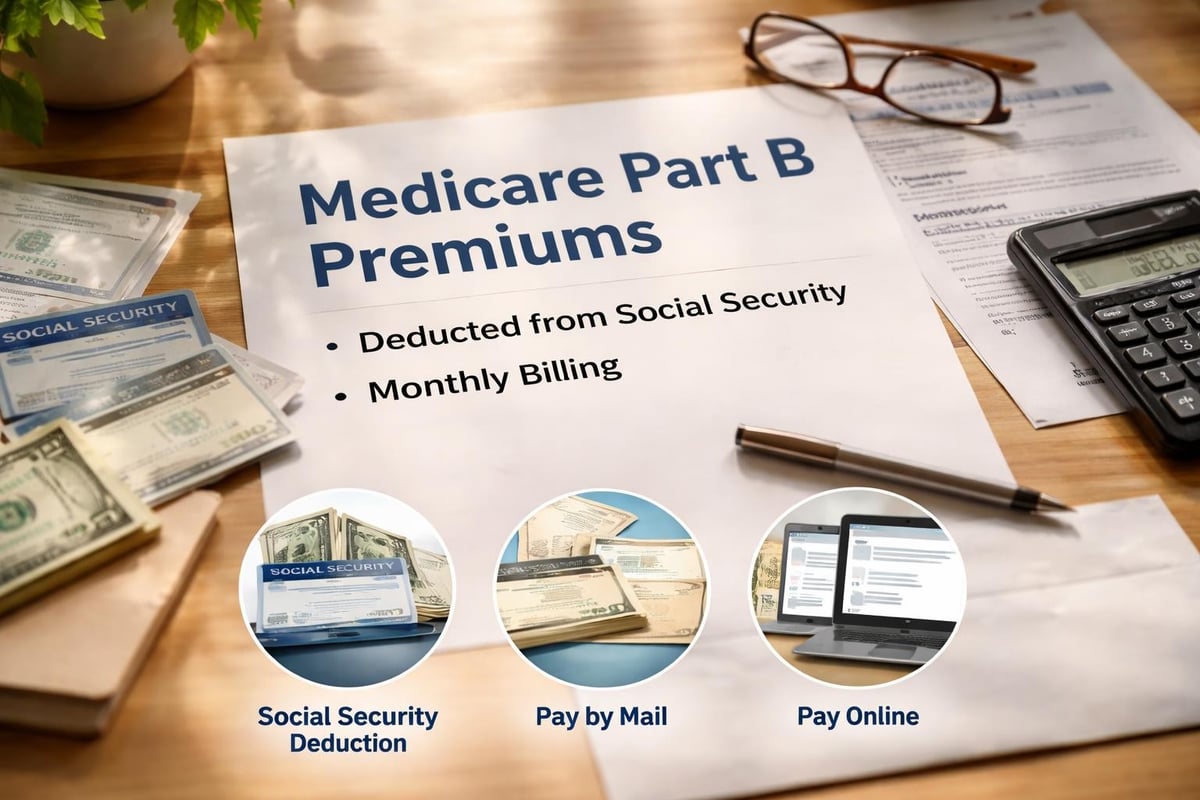
The Social Security Administration typically deducts your medicare part b premium directly from your monthly benefit payment. This automatic deduction simplifies payment processes and ensures continuous coverage without manual intervention.
Income-Related Monthly Adjustment Amount (IRMAA) Explained
Higher-income beneficiaries pay more than the standard medicare part b premium through an additional surcharge called IRMAA. This sliding scale ensures those with greater financial resources contribute more to their healthcare coverage. The surcharge applies based on your modified adjusted gross income (MAGI) from two years prior.
For 2026 premiums, Medicare examines your 2024 tax return. If you filed jointly and your combined income exceeded certain thresholds, you will pay IRMAA on top of the standard premium. Understanding 2026 IRMAA brackets and surcharges helps you anticipate total costs.
IRMAA Income Brackets and Surcharge Amounts
The table below illustrates how IRMAA increases your medicare part b premium based on income levels:
| Filing Status | 2024 MAGI | Monthly Premium (Standard + IRMAA) | Additional IRMAA Cost |
|---|---|---|---|
| Individual | $106,000 or less | Standard premium only | $0 |
| Individual | $106,001 – $133,000 | Standard + Tier 1 IRMAA | Additional surcharge |
| Individual | $133,001 – $167,000 | Standard + Tier 2 IRMAA | Higher surcharge |
| Individual | $167,001 – $200,000 | Standard + Tier 3 IRMAA | Higher surcharge |
| Individual | Above $200,000 | Standard + Tier 4 IRMAA | Highest surcharge |
| Joint | $212,000 or less | Standard premium only | $0 |
| Joint | $212,001 – $266,000 | Standard + Tier 1 IRMAA | Additional surcharge |
Residents in High Point and Greensboro working with Medicare specialists can better understand how their specific income affects premium calculations.
Appealing IRMAA Surcharges
If you experience a life-changing event that reduces your income, you can request an IRMAA reduction. The Social Security Administration recognizes several qualifying events that justify appealing your medicare part b premium surcharge.
Qualifying life-changing events include:
- Marriage or divorce: Changes in household income and filing status
- Death of spouse: Loss of combined income
- Work stoppage or reduction: Retirement, job loss, or reduced work hours
- Loss of income-producing property: Sale or loss through disaster
- Loss of pension income: Employer bankruptcy or pension reduction
The process involves completing Form SSA-44, providing documentation of the life-changing event, and demonstrating how your income decreased. According to appeal procedures for Medicare premium surcharges, successful appeals can significantly reduce your monthly costs.
For Winston Salem and Kernersville residents navigating IRMAA appeals, local guidance can streamline the process. Contact Moser Insurance Group Inc at 336-862-1763 or moserinsurancegroup@gmail.com for personalized assistance with documentation and filing procedures.

Late Enrollment Penalties and Premium Increases
Delaying Part B enrollment beyond your Initial Enrollment Period creates permanent premium penalties. The late enrollment penalty adds 10% to your medicare part b premium for each 12-month period you were eligible but not enrolled. This penalty continues for as long as you have Part B coverage.
Calculating Late Enrollment Penalties
If you were eligible for three years before enrolling, your penalty would be 30% above the standard premium. This additional cost compounds with any IRMAA surcharges you might owe, creating substantial monthly expenses.
Example scenario: A beneficiary with a 20% late enrollment penalty and IRMAA surcharges pays both the additional 20% and the income-based surcharge. These costs accumulate and continue indefinitely.
Exceptions to late enrollment penalties exist for those with creditable coverage through employer health plans. If you or your spouse work past age 65 and maintain group health coverage, you can delay Part B enrollment without penalty. Understanding Medicare eligibility timing prevents costly mistakes.
Payment Methods and Premium Collection
The Social Security Administration manages medicare part b premium collection through several methods. Most beneficiaries have premiums automatically deducted from Social Security retirement or disability benefits. This seamless process ensures timely payment and uninterrupted coverage.
For those not receiving Social Security benefits, Medicare bills premiums quarterly. Payment options include:
- Online payment: Through the Medicare.gov portal
- Automatic bank withdrawal: Electronic Funds Transfer (EFT)
- Check or money order: Mailed to the Medicare Premium Collection Center
- Credit or debit card: Through authorized payment processors
Missing premium payments can result in coverage termination. Medicare provides grace periods, but consistent non-payment leads to disenrollment. Reinstating coverage requires reapplication and may involve late enrollment penalties if you miss deadlines.
State Assistance Programs for Part B Premiums
Low-income beneficiaries may qualify for state assistance programs that pay medicare part b premium costs. The Medicare Savings Programs (MSP) help eligible individuals afford healthcare coverage through various benefit levels.
Medicare Savings Program Categories
| Program Type | Income Limit | Benefits Covered |
|---|---|---|
| Qualified Medicare Beneficiary (QMB) | Up to 100% of federal poverty level | Part A and Part B premiums, deductibles, coinsurance |
| Specified Low-Income Medicare Beneficiary (SLMB) | 100-120% of federal poverty level | Part B premiums only |
| Qualifying Individual (QI) | 120-135% of federal poverty level | Part B premiums only |
| Qualified Disabled and Working Individual (QDWI) | Up to 200% of federal poverty level | Part A premiums for working disabled |
According to state payment of Medicare premiums, these programs ensure Medicare remains accessible to vulnerable populations while coordinating benefits between federal and state systems.
North Carolina residents in the Triad Area can apply through their local Department of Social Services. These programs provide critical financial relief without affecting other Medicare benefits or coverage options.
Premium Trends and Future Projections
Medicare Part B premium costs have risen consistently over the past two decades, reflecting healthcare inflation and program expansion. Historical premium increases show steady growth averaging 5-6% annually, though year-to-year variations occur.
Looking ahead, projections suggest continued increases. Research indicates Medicare costs are set to soar over the next decade, with premiums potentially doubling by 2036 for some beneficiaries.
Several factors drive these projections:
- Aging population: Baby boomers entering Medicare increases enrollment
- Medical technology costs: Advanced treatments and medications raise expenses
- Chronic disease management: Longer lifespans with multiple conditions
- Prescription drug coverage: Part D integration affects overall program costs

Medicare Advantage and Part B Premium Givebacks
Some Medicare Advantage plans offer Part B premium reductions called "givebacks" or premium buybacks. These plans refund a portion of your medicare part b premium as an incentive to enroll. Studies examining Part B premium givebacks and plan enrollment reveal how these benefits influence beneficiary choices.
Givebacks typically range from $10 to $164 monthly, directly reducing your net Part B cost. The plan pays this amount back to you or reduces your premium deduction. However, evaluating the total value requires examining:
- Coverage comprehensiveness: Network restrictions and service limitations
- Out-of-pocket maximums: Total annual cost potential
- Prescription drug coverage: Integrated Part D benefits
- Provider access: Availability of preferred doctors and hospitals
Residents exploring Medicare Advantage options in Winston Salem should compare giveback amounts against overall plan features and costs. A higher giveback does not always equate to better value if other expenses increase.
Managing Part B Premiums Through Tax Planning
Strategic tax planning can help reduce your medicare part b premium by managing MAGI levels. Since Medicare looks back two years at tax returns, proactive planning in 2024 affects 2026 premiums.
Strategies to Lower Modified Adjusted Gross Income
- Roth conversions timing: Convert traditional IRA funds to Roth accounts during lower-income years
- Capital gains management: Harvest losses to offset gains and reduce taxable income
- Charitable contributions: Qualified charitable distributions from IRAs lower MAGI
- Business expense optimization: Self-employed individuals maximize deductions
- Health Savings Account contributions: Pre-Medicare HSA funding reduces taxable income
Working with financial advisors and Medicare specialists creates coordinated strategies. For those turning 65 in Greensboro and surrounding areas, planning begins well before Medicare enrollment.
Coordinating Part B with Supplement Plans
Your medicare part b premium represents just one component of total healthcare costs. Supplement insurance (Medigap) works alongside Part B to reduce out-of-pocket expenses for deductibles, coinsurance, and copayments.
While you pay the medicare part b premium directly to Medicare, supplement plan premiums go to private insurance carriers. Understanding this distinction helps with budgeting:
Medicare Part B costs:
- Monthly premium (standard or IRMAA-adjusted)
- Annual deductible ($257 in 2026)
- 20% coinsurance on approved services
Medigap supplement costs:
- Separate monthly premium to insurance company
- Coverage for Part B coinsurance and deductibles
- Standardized plan benefits (Plans A through N)
High Point residents comparing Medicare Supplement options should calculate combined costs including both Part B and supplement premiums for accurate budget planning.
Special Situations Affecting Part B Premiums
Certain circumstances create unique medicare part b premium considerations beyond standard calculations and IRMAA surcharges.
Working Past Age 65
Employees with employer group health insurance can delay Part B enrollment without penalties. The employer must have 20 or more employees for coverage to be considered creditable. Once employment ends or coverage terminates, you have eight months to enroll in Part B penalty-free.
Veterans Benefits and Part B
Veterans with VA healthcare coverage still benefit from enrolling in Part B. While VA benefits cover many services, Part B provides broader access to non-VA providers and services not available through Veterans Affairs facilities.
Medicare and Medicaid Dual Eligibility
Dual-eligible beneficiaries qualify for both Medicare and Medicaid. Medicaid typically pays the medicare part b premium for these individuals, eliminating out-of-pocket costs. Coordination between programs ensures comprehensive coverage without premium burdens.
End-Stage Renal Disease (ESRD)
Individuals with ESRD can enroll in Medicare regardless of age. Premium calculations follow standard rules, though coordination with employer coverage and dialysis treatment creates complex scenarios requiring specialized guidance.
How to Verify and Monitor Your Part B Premium
Regularly reviewing your medicare part b premium ensures accuracy and helps identify billing errors or IRMAA discrepancies. The Social Security Administration sends annual notices detailing your premium amount and any surcharges.
Steps to verify your premium:
- Review your Medicare Summary Notice (MSN) quarterly
- Check Social Security benefit statements for premium deductions
- Confirm IRMAA determinations match your actual income
- Report life-changing events promptly to update surcharges
- Maintain documentation of all Medicare correspondence
Online tools through Medicare.gov and SSA.gov provide 24/7 access to premium information, payment history, and coverage details. Creating accounts on these platforms empowers beneficiaries to monitor costs and detect issues early.
For Kernersville residents needing assistance reviewing Medicare statements and understanding premium calculations, local support provides personalized guidance. Visit moserinsurancegroup.com or call 336-862-1763 to discuss your specific situation.
Regional Considerations for Triad Area Residents
While medicare part b premium amounts remain consistent nationally, regional healthcare costs and provider availability affect total Medicare expenses. The Triad Area, encompassing Greensboro, Winston Salem, High Point, and Kernersville, features diverse healthcare systems and provider networks.
Local factors influencing total costs include:
- Hospital system pricing: Different facilities charge varying amounts for identical services
- Specialist availability: Urban areas typically offer more in-network options
- Supplemental insurance competition: Regional carriers create price variations for Medigap plans
- Medicare Advantage penetration: Plan availability and benefits differ by county
Understanding how Part B premiums integrate with regional healthcare resources helps residents make informed coverage decisions. Medicare help throughout the Triad Area connects beneficiaries with local expertise and personalized support.
Understanding your medicare part b premium involves more than knowing the monthly amount. Income levels, enrollment timing, and coverage coordination all impact your total healthcare costs throughout retirement. Moser Insurance Group Inc provides personalized guidance for individuals and families navigating Medicare decisions in Greensboro, Winston Salem, High Point, Kernersville, and throughout the Triad Area. Whether you are approaching 65, managing IRMAA surcharges, or comparing coverage options, our team offers clear explanations without pressure. Contact us at 336-862-1763, email moserinsurancegroup@gmail.com, or visit Moser Insurance Group Inc to discuss your Medicare questions and find the right solutions for your situation.
Recent Comments