

Many Medicare beneficiaries in the Triad Area, including those in Greensboro, Kernersville, High Point, and Winston-Salem, dream of international travel during retirement. Whether visiting family abroad, taking a cruise, or exploring new destinations, it's critical to understand that medicare international coverage is far more limited than most people realize. Original Medicare generally does not cover health care services outside the United States, leaving travelers vulnerable to substantial out-of-pocket costs if they need medical attention abroad. This gap in coverage can create significant financial risk for retirees who spend time overseas, making it essential to understand exactly when Medicare does and doesn't provide protection and what supplemental options might help fill the gaps.
Understanding Medicare's Geographic Boundaries
Medicare was designed primarily to cover health care services within the United States, its territories, and possessions. This geographic limitation affects millions of beneficiaries who travel internationally each year, often without realizing they're stepping outside their coverage zone.
The United States includes all 50 states, the District of Columbia, Puerto Rico, the U.S. Virgin Islands, Guam, American Samoa, and the Northern Mariana Islands. When you leave these areas, your medicare international coverage essentially ends, with only a few narrow exceptions. This means that routine doctor visits, emergency room care, hospitalizations, prescription drugs, and virtually all other medical services received abroad will not be covered by Original Medicare Parts A and B.
The Three Limited Exceptions
While medicare international coverage is extremely restricted, three specific scenarios exist where Original Medicare may cover care outside the United States. Understanding these exceptions is crucial for anyone planning international travel.
Exception One: Medical Emergencies in Canada
If you're traveling between Alaska and another U.S. state through Canada via the most direct route, and a medical emergency occurs requiring immediate hospitalization, Medicare may cover your care at a Canadian hospital. This exception is highly specific and applies only to true emergencies during direct transit, not to leisure travel or extended stays in Canada.
Exception Two: Foreign Hospital Closer Than U.S. Facility
When you're in the United States and a foreign hospital is closer to your location than the nearest U.S. hospital capable of treating your medical condition, Medicare may cover your care. This situation most commonly affects people living near the Mexican or Canadian borders. The Official Medicare fact sheet on coverage outside the United States provides detailed guidance on this exception and the documentation requirements.
Exception Three: Cruise Ship Emergencies
If a medical emergency occurs while you're on a cruise ship within U.S. territorial waters (within six hours of a U.S. port), Medicare may cover emergency care provided onboard. However, once the ship enters international waters, medicare international coverage no longer applies, regardless of how close you are to U.S. shores.

How Medigap Plans Address International Travel
Medicare Supplement plans, commonly known as Medigap, can provide valuable protection for international travelers through a foreign travel emergency benefit. This benefit isn't available on all Medigap plans, but when included, it offers a safety net that Original Medicare alone cannot provide. For residents in Greensboro, High Point, Winston-Salem, and Kernersville exploring their options, understanding which Medicare Supplement plans include this coverage makes a significant difference in travel planning.
Medigap plans C, D, F, G, M, and N include foreign travel emergency benefits. These plans cover 80 percent of medically necessary emergency care received during the first 60 days of a trip outside the United States, after you meet a $250 deductible. The coverage has a lifetime maximum benefit of $50,000, which sounds substantial but can be exhausted quickly if you face a serious medical event requiring hospitalization, surgery, or medical evacuation.
Key Limitations of Medigap Foreign Travel Coverage
The foreign travel emergency benefit has several important restrictions that travelers must understand:
- Coverage applies only during the first 60 consecutive days of each trip
- You must meet a $250 calendar-year deductible before benefits begin
- The plan pays 80 percent of approved costs; you're responsible for the remaining 20 percent
- A lifetime maximum of $50,000 applies across all trips
- Care must be medically necessary and begin within the first 60 days abroad
- Pre-existing conditions may be subject to waiting periods
The Medicare.gov Medigap travel guidance explains these restrictions in detail and helps beneficiaries determine whether their current or prospective Medigap plan includes this benefit. It's worth noting that Medigap plans sold after 2010 no longer offer Plan C or Plan F to newly eligible Medicare beneficiaries, making Plan G the most comprehensive option for those seeking foreign travel protection.
Medicare Advantage and International Coverage
Medicare Advantage plans operate differently from Original Medicare and may offer more flexibility regarding medicare international coverage, though coverage varies significantly by plan and insurer. Some Medicare Advantage plans include worldwide emergency and urgent care coverage as an additional benefit, while others strictly limit coverage to the United States and its territories.
Evaluating Medicare Advantage Foreign Coverage
When reviewing Medicare Advantage plans for international protection, pay close attention to these factors:
Coverage Scope: Some plans cover only true emergencies, while others include urgent care. The definitions matter significantly when determining whether your condition qualifies for coverage.
Geographic Restrictions: Plans may limit coverage to specific countries or regions, or they may offer worldwide coverage. Always verify the specific geographic boundaries in your plan documents.
Cost-Sharing Requirements: Even when coverage exists, you'll typically face copayments, coinsurance, or deductibles that may differ from your domestic cost-sharing structure.
Prior Authorization: Some plans require prior authorization even for emergency care, though this is less common for genuine emergencies. Understanding the notification requirements prevents claim denials.
| Coverage Feature | Original Medicare | Medigap with Foreign Travel | Medicare Advantage |
|---|---|---|---|
| Routine care abroad | Not covered | Not covered | Not covered |
| Emergency care abroad | Very limited exceptions | 80% after $250 deductible (60 days) | Varies by plan |
| Lifetime maximum | N/A | $50,000 | Varies by plan |
| Geographic scope | U.S. territories only | Worldwide emergencies | Plan-specific |
| Coverage duration | N/A | First 60 days of trip | Varies by plan |
The CMS Medicare Managed Care Manual outlines the regulatory framework governing Medicare Advantage international benefits, establishing the parameters within which plans can structure their foreign coverage. This document helps explain why coverage varies so dramatically among different Medicare Advantage offerings.

What Medicare Never Covers Internationally
Regardless of which Medicare coverage you have, certain types of international health care will never receive medicare international coverage. Understanding these permanent exclusions helps travelers plan appropriately and avoid surprise bills.
Medicare does not cover:
- Routine doctor visits while traveling abroad
- Prescription medications purchased outside the United States (with rare exceptions for specific circumstances)
- Scheduled surgeries or procedures performed in foreign countries
- Long-term care received in foreign facilities
- Medical tourism (traveling specifically to receive less expensive care abroad)
- Follow-up care for conditions that began overseas
The Medical Tourism Exception
An increasing number of Americans travel internationally specifically to receive medical care at lower costs than they would pay in the United States. Medicare does not cover these services, even if the care would be covered if received domestically. This policy applies whether you're seeking dental work in Mexico, surgery in Costa Rica, or any other planned medical procedure abroad.
The AARP explainer on Medicare coverage abroad provides consumer-friendly guidance on these limitations and offers practical advice for retirees who frequently travel internationally.
Supplemental Travel Insurance Options
Given medicare international coverage limitations, many beneficiaries purchase supplemental travel medical insurance to protect themselves during international trips. These policies specifically address the gaps left by Medicare and can provide crucial financial protection.
Travel medical insurance typically covers:
- Emergency medical care and hospitalization abroad
- Emergency medical evacuation to the United States
- Repatriation of remains in case of death
- Coverage for pre-existing conditions (with some policies)
- Higher benefit limits than Medigap foreign travel coverage
- Trip-specific or annual multi-trip options
Choosing Travel Medical Insurance
When selecting travel medical insurance, consider these factors:
Coverage Amounts: Look for policies offering at least $100,000 in medical coverage and $500,000 in medical evacuation coverage, as evacuation costs can easily exceed $100,000 from remote locations.
Pre-Existing Condition Waivers: If you have chronic health conditions, seek policies that cover pre-existing conditions when purchased within a specific timeframe of booking your trip (often 14-21 days).
Geographic Coverage: Verify that your destination countries are included in the policy coverage area, as some insurers exclude certain high-risk regions.
Policy Duration: Match the policy period to your travel dates, including any potential trip extensions.
The CDC Yellow Book travelers’ health guidance emphasizes the importance of comprehensive travel health preparation, including appropriate insurance coverage for international travel.
Special Considerations for Long-Term International Stays
Retirees who spend extended periods abroad face unique challenges with medicare international coverage. Whether maintaining a second home in another country, traveling for several months, or living abroad while remaining U.S. residents, understanding how Medicare works during prolonged absences is essential.
Impact on Medicare Premiums and Enrollment
Living abroad does not affect your Medicare enrollment status or premium obligations. You must continue paying Medicare Part B premiums even if you receive no coverage while overseas. Failure to pay premiums can result in coverage termination and potential late enrollment penalties if you later re-enroll.
If you're planning to live abroad permanently and will no longer need U.S.-based health coverage, you might consider whether maintaining Medicare makes financial sense. However, dropping Medicare Part B can trigger late enrollment penalties when you return to the United States and re-enroll, so this decision requires careful consideration.
Coordinating Medicare with Foreign Health Systems
Some retirees maintain both Medicare coverage and health insurance in their country of residence. This dual coverage strategy ensures protection during visits to the United States while providing comprehensive care abroad. When using this approach:
- Understand coordination of benefits rules between your policies
- Keep detailed records of all coverage and claims
- Be aware that Medicare won't pay for care received abroad, even as secondary insurance
- Consider the total cost of maintaining both coverage types
The Social Security Administration POMS guidance on Medicare coverage outside the United States provides operational details on how coverage works for beneficiaries living abroad.
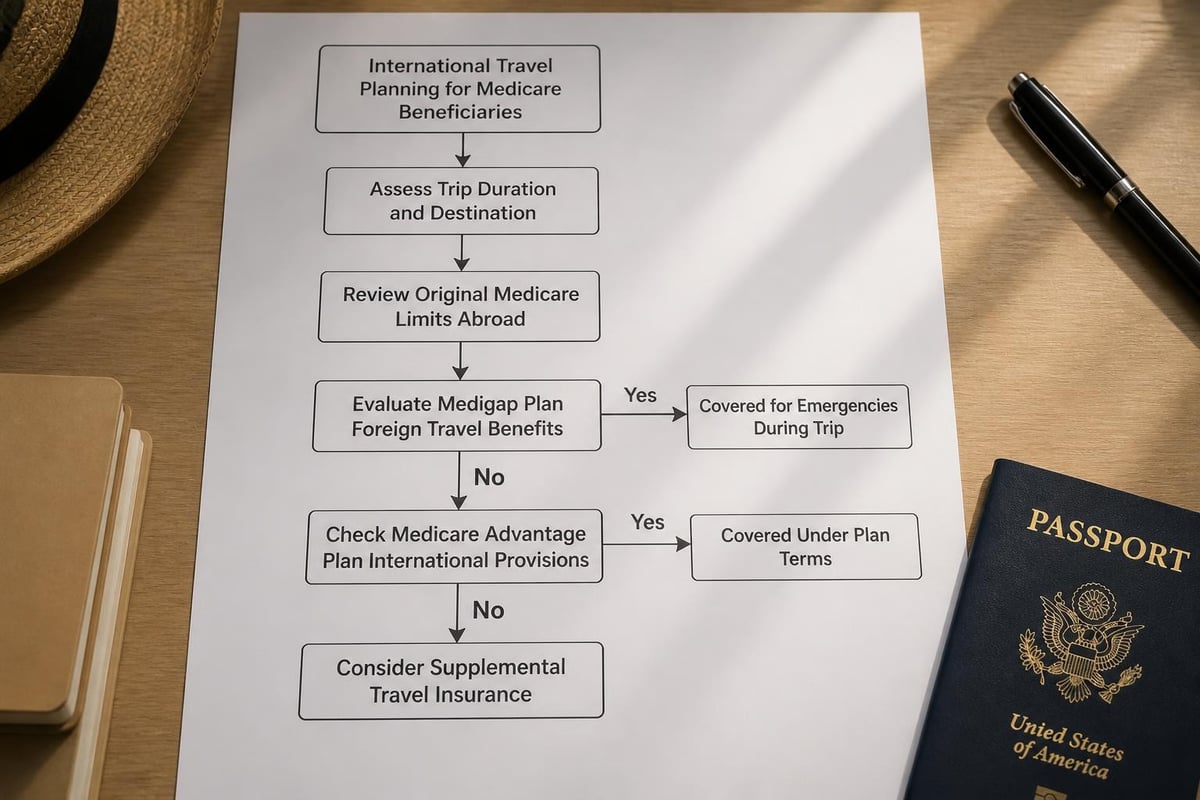
Practical Steps Before International Travel
Medicare beneficiaries planning international trips should take several proactive steps to ensure they're adequately protected. These preparations can prevent coverage gaps and financial surprises while traveling.
Pre-Travel Checklist for Medicare Beneficiaries
Review Your Current Coverage:
- Confirm whether your Medigap plan includes foreign travel emergency benefits
- Verify your Medicare Advantage plan's international coverage terms if applicable
- Understand your out-of-pocket cost exposure under current coverage
Purchase Supplemental Insurance:
- Compare travel medical insurance policies at least 2-3 weeks before departure
- Ensure coverage limits are adequate for your destination
- Verify that pre-existing conditions are covered if applicable
Organize Documentation:
- Carry copies of your Medicare card, insurance cards, and policy documents
- Keep emergency contact information for your insurers accessible
- Document any pre-existing conditions and current medications
Plan for Prescriptions:
- Fill prescriptions before departure to avoid running out abroad
- Understand that Medicare Part D does not cover prescriptions purchased internationally
- Carry medications in original containers with pharmacy labels
Research Destination Healthcare:
- Identify quality hospitals and clinics at your destination
- Understand local emergency services and how to access them
- Consider medical facility quality, especially in developing countries
The HealthLine article on Medicare international coverage offers updated consumer guidance on these preparation steps and practical advice for different types of travelers.
Cost Implications of International Medical Care
Understanding potential costs helps Medicare beneficiaries prepare financially for international medical needs. Health care costs vary dramatically by country and can range from significantly less expensive than U.S. care to substantially more costly.
| Region | Average ER Visit | Average Hospital Day | Medical Evacuation to U.S. |
|---|---|---|---|
| Western Europe | $200-$500 | $1,000-$3,000 | $50,000-$100,000 |
| Southeast Asia | $50-$150 | $200-$800 | $100,000-$150,000 |
| Latin America | $75-$250 | $300-$1,200 | $30,000-$75,000 |
| Middle East | $150-$400 | $800-$2,500 | $75,000-$125,000 |
These figures represent general ranges and actual costs depend on specific circumstances, facilities, and required treatments. Medical evacuation costs are particularly variable based on distance, required medical staffing, and aircraft type.
Financial Planning for International Medical Events
Without adequate medicare international coverage or supplemental insurance, beneficiaries may face:
- Immediate payment requirements before treatment begins
- Substantial out-of-pocket costs for emergency care
- Medical evacuation expenses exceeding $100,000
- Lost trip costs if medical issues require trip cancellation
- Currency exchange rate risks affecting final costs
Building an emergency fund specifically for travel medical contingencies provides additional peace of mind beyond insurance coverage.
Regional Considerations for Triad Area Residents
Medicare beneficiaries in the Triad Area, including Greensboro, Kernersville, High Point, and Winston-Salem, have specific considerations when planning international travel. Understanding local resources and planning options helps ensure comprehensive protection.
Working with a knowledgeable local insurance professional provides personalized guidance on medicare international coverage and supplemental options. For residents in Greensboro, High Point, Winston-Salem, and Kernersville, having access to local expertise makes navigating complex coverage questions significantly easier.
Common International Destinations for Triad Residents
Many Triad Area residents travel to popular international destinations where understanding medicare international coverage becomes crucial:
Caribbean Cruises: These popular vacations from nearby East Coast ports often include stops in foreign countries where Medicare provides no coverage. Cruise travelers should verify coverage for both onboard care and shore excursions.
European Travel: Extended European trips to visit family or explore historical sites require careful planning since medical costs in Western Europe can be substantial and Medicare provides no routine coverage.
Mexican Beach Resorts: Retirees frequently visit Mexican coastal destinations. While some border-area exceptions exist for medicare international coverage, resort areas are typically not covered under any Medicare exception.
Canadian Visits: Many Triad residents have connections to Canada. Understanding the limited emergency transit exception and knowing it doesn't apply to routine visits prevents coverage misunderstandings.
Making Informed Coverage Decisions
Medicare beneficiaries must weigh multiple factors when deciding how to protect themselves during international travel. The right approach depends on individual circumstances, travel patterns, and risk tolerance.
Questions to Guide Your Decision
Consider these questions when evaluating your medicare international coverage needs:
- How frequently do you travel internationally each year?
- What is the typical duration of your trips abroad?
- Do you visit countries with high-quality, affordable medical care or regions where care is expensive or limited?
- Do you have chronic health conditions that increase your likelihood of needing medical care while traveling?
- Can you afford potential out-of-pocket costs if you need emergency care abroad?
- Does your current Medicare coverage include any international benefits?
Answering these questions honestly helps determine whether Medigap foreign travel coverage is sufficient or whether additional travel medical insurance is necessary for your situation.
Working with Insurance Professionals
Navigating medicare international coverage options can be complex, especially when comparing Medigap plans, Medicare Advantage alternatives, and supplemental travel insurance. Speaking with an experienced insurance professional who understands Medicare can clarify your options and help you make informed decisions.
You can reach our team at Moser Insurance Group Inc by phone at 336-862-1763, via email at moserinsurancegroup@gmail.com, or by visiting our website at moserinsurancegroup.com to discuss your specific travel plans and coverage needs.
Documentation and Claims Process
If you need medical care abroad and believe you have coverage through Medigap foreign travel benefits or Medicare Advantage international provisions, understanding the claims process is essential.
Steps for Filing International Claims
-
Seek Necessary Care: Prioritize getting appropriate medical treatment. Most foreign providers require payment at the time of service.
-
Obtain Detailed Documentation: Request itemized bills, medical records, diagnosis codes, and treatment details from the foreign provider.
-
Pay Out-of-Pocket: Be prepared to pay the full cost upfront, as most foreign providers don't bill Medicare directly or file claims on your behalf.
-
Translate Documents: If records are in a foreign language, obtain certified translations for submission to your insurance company.
-
Submit Claims Promptly: File claims with your Medigap insurer or Medicare Advantage plan according to their specific requirements and deadlines.
-
Follow Up Regularly: Track claim status and provide additional documentation if requested.
The GovInfo resources on Medicare coverage outside the United States include official publications that provide additional context on federal Medicare policies and claims procedures.
Common Claim Denial Reasons
Understanding why international claims are frequently denied helps prevent issues:
- Care received beyond the first 60 days of travel (Medigap limitation)
- Services not meeting the "emergency" definition in policy terms
- Insufficient documentation of medical necessity
- Care received in countries excluded from Medicare Advantage plan coverage
- Pre-existing condition exclusions not satisfied
- Failure to notify insurer within required timeframe
Keeping meticulous records and understanding your policy terms before traveling reduces the risk of claim denials.
Understanding medicare international coverage limitations is crucial for protecting yourself financially during international travel. While Original Medicare provides minimal coverage abroad, Medigap foreign travel benefits and certain Medicare Advantage plans can offer valuable protection for emergencies during the first 60 days of a trip. For many travelers, especially those taking extended trips or visiting regions with expensive healthcare, supplemental travel medical insurance provides essential additional protection. At Moser Insurance Group Inc, we help Medicare beneficiaries throughout the Triad Area understand their coverage options and make confident decisions about international travel protection. Contact us at 336-862-1763, email moserinsurancegroup@gmail.com, or visit Moser Insurance Group Inc to discuss how we can help you travel with peace of mind.
Recent Comments