

Understanding the relationship between medicare and supplements is essential for anyone approaching age 65 or already enrolled in Medicare. Original Medicare provides foundational health coverage, but it wasn't designed to cover every medical expense you might encounter. This is where Medicare Supplement Insurance, commonly called Medigap, becomes invaluable. These policies work alongside your Original Medicare coverage to help pay for out-of-pocket costs like deductibles, copayments, and coinsurance. For residents in the Triad Area, including Greensboro, Kernersville, High Point, and Winston Salem, making informed decisions about medicare and supplements can significantly impact your financial security and healthcare access throughout retirement.
Understanding How Medicare and Supplements Work Together
Original Medicare consists of Part A (hospital insurance) and Part B (medical insurance). While these components provide substantial coverage, they leave beneficiaries responsible for various out-of-pocket expenses. Part A requires a deductible for hospital stays, and Part B charges both a deductible and 20% coinsurance for most services with no annual out-of-pocket maximum.
Medicare Supplement plans bridge these gaps by paying some or all of these costs depending on which plan you choose. When you receive healthcare services, Medicare pays its share first, then your supplement policy pays its portion according to your plan's benefits.
The Coverage Framework
Medicare and supplements operate on a coordinated payment system that streamlines your healthcare expenses:
- You receive medical services from any provider who accepts Medicare
- The provider submits the claim to Medicare
- Medicare processes the claim and pays its approved amount
- Your supplement insurance automatically pays its share
- You receive an explanation of benefits showing what each paid
This automated process means you rarely need to file claims yourself or wait for reimbursement checks.

Types of Medicare Supplement Plans Available
The standardized Medigap plans are labeled with letters, each offering a different combination of benefits. Understanding these options is crucial when evaluating medicare and supplements for your situation.
| Plan | Part A Deductible | Part B Deductible | Part B Excess Charges | Foreign Travel Emergency |
|---|---|---|---|---|
| Plan A | No | No | No | No |
| Plan G | Yes | No | Yes | Yes |
| Plan N | Yes | No | No | Yes |
| Plan F* | Yes | Yes | Yes | Yes |
*Only available to those eligible for Medicare before January 1, 2020
Most Popular Supplement Plans
Plan G has become the most popular choice since 2020 for new Medicare beneficiaries. It covers everything except the Part B deductible, which is $257 in 2026. This plan provides comprehensive coverage while keeping premiums more affordable than the now-grandfathered Plan F.
Plan N offers a budget-friendly alternative with slightly higher out-of-pocket costs. You'll pay small copayments for doctor visits and emergency room visits that don't result in admission, but you'll enjoy lower monthly premiums.
High-deductible Plan G requires you to pay a calendar year deductible before the plan begins paying, but premiums are significantly lower. This option works well for healthy individuals who want catastrophic protection.
What Medicare and Supplements Don't Cover
While medicare and supplements provide excellent coverage for approved medical services, certain healthcare needs fall outside their scope. Understanding these limitations helps you plan comprehensively for all your healthcare needs.
Medicare doesn't cover most prescription drugs, which is why Medicare Part D exists as a separate component. Similarly, Medicare Supplement plans don't include prescription drug coverage, so you'll need to enroll in a standalone Part D plan unless you have creditable coverage from another source.
Healthcare Services Typically Not Covered
- Long-term custodial care in nursing homes
- Most dental care and dentures
- Eye examinations for prescription glasses
- Hearing aids and examinations
- Routine foot care in most cases
- Cosmetic surgery
- Acupuncture (with limited exceptions)
The question of whether Medicare covers nutritional supplements comes up frequently. Generally, Medicare doesn't pay for over-the-counter vitamins or nutritional drinks. However, exceptions exist when these products are medically necessary and prescribed as part of your treatment plan.

Enrollment Periods and Guaranteed Issue Rights
Timing matters significantly when purchasing Medicare Supplement insurance. The six-month Medigap Open Enrollment Period begins the first day of the month you're both 65 or older and enrolled in Medicare Part B. During this window, insurance companies cannot deny you coverage or charge higher premiums based on health conditions.
Missing this window doesn't mean you can't get coverage, but you may face medical underwriting, higher premiums, or denial if you have pre-existing conditions. For those in Greensboro, Winston Salem, High Point, and Kernersville, working with a knowledgeable insurance professional can help you navigate these critical timelines.
Special Enrollment Situations
Certain circumstances grant guaranteed issue rights even outside your initial enrollment period:
- Your Medicare Advantage plan is leaving your area or stops providing services
- You moved out of your plan's service area and need new coverage
- Your Medigap company went bankrupt or discontinued your plan
- You were misled about your coverage or enrollment
- You're losing employer coverage that was primary to Medicare
These protections ensure you can access medicare and supplements even when life circumstances change unexpectedly.
Comparing Costs and Finding Value
Premium costs for identical Medicare Supplement plans can vary substantially between insurance companies. Since federal law standardizes benefits for each plan letter, a Plan G from one company provides exactly the same coverage as Plan G from another. The only differences are price, customer service, and company financial stability.
Factors Affecting Your Premium
Insurance companies use different pricing methods that affect how your premium changes over time:
Community-rated (no-age-rated): Everyone pays the same premium regardless of age. These may start higher but increase more slowly.
Issue-age-rated: Your premium is based on your age when you buy the policy and doesn't increase solely due to aging.
Attained-age-rated: Your premium increases as you get older, in addition to normal rate increases. These typically start with the lowest premiums but increase most over time.
Geographic location also impacts pricing. Residents throughout the Triad Area may see different rates depending on their specific zip code. Getting personalized quotes helps you understand your actual costs rather than relying on advertised estimates.
Medicare Advantage vs Medicare and Supplements
Many people wonder whether Medicare Advantage (Part C) or Original Medicare with a supplement policy provides better coverage. This represents one of the most significant decisions you'll make about your healthcare.
| Feature | Medicare + Supplement | Medicare Advantage |
|---|---|---|
| Provider Network | Any Medicare provider nationwide | Typically limited network |
| Out-of-Pocket Maximum | Varies by supplement plan | Required annual cap |
| Prescription Coverage | Requires separate Part D | Often included |
| Monthly Premium | Part B + Supplement | May be $0 plus Part B |
| Referrals Required | No | Often yes |
| Travel Coverage | Excellent | Limited outside service area |
Medicare Advantage plans bundle everything into one plan with networks and often include extras like dental and vision. However, understanding Medicare Supplement options reveals that traditional medicare and supplements offer more flexibility and predictable costs for those who prioritize provider choice and comprehensive coverage.
How Supplements Handle Prescription Medications
A common misconception involves prescription drug coverage under Medicare Supplement plans. No Medigap policy includes prescription drug benefits, regardless of which plan letter you choose. The Medicare Modernization Act of 2003 separated prescription coverage into Medicare Part D.
If you have Original Medicare and a supplement, you need three components for complete coverage:
- Medicare Part A (Hospital Insurance)
- Medicare Part B (Medical Insurance)
- Medicare Part D (Prescription Drug Coverage)
- Medigap Policy (Supplement Insurance)
Your supplement policy works with Parts A and B, while Part D operates independently to cover your medications. Attempting to enroll in a Medicare Supplement plan that includes drug coverage will be unsuccessful because such plans haven't existed since 2006.
Creditable Coverage Considerations
You might not need Part D if you have creditable prescription coverage from another source, such as:
- Employer or union health insurance
- TRICARE
- Veterans Affairs benefits
- Federal Employee Health Benefits
Maintaining creditable coverage prevents late enrollment penalties if you decide to join Part D later. However, most people with medicare and supplements do need to enroll in Part D during their Initial Enrollment Period.
Medical Supplements and Coverage Specifics
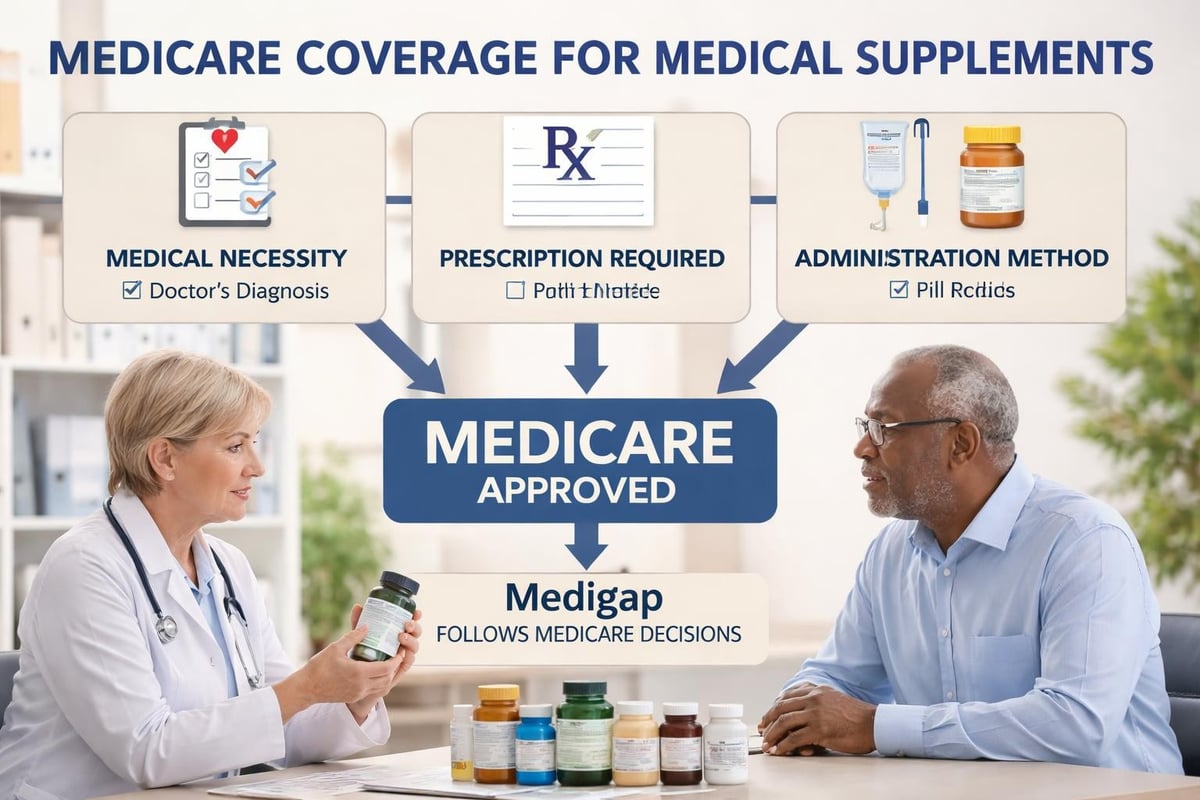
The relationship between Medicare and vitamins or dietary supplements deserves clarification. Medicare Part B covers medically necessary services and supplies but generally excludes over-the-counter products.
Exceptions occur when supplements meet specific criteria:
Enteral nutrition through feeding tubes may be covered when you cannot eat normally due to medical conditions. Immunosuppressive drugs following organ transplants receive coverage. Injectable drugs administered in medical settings often qualify for Part B coverage.
Your Medicare Supplement insurance follows Medicare's coverage decisions. If Medicare approves coverage for a medical supplement or medication, your Medigap policy may help with your cost-sharing responsibilities according to your plan's benefits.
Making the Right Choice for Your Situation
Selecting the optimal combination of medicare and supplements requires evaluating your personal circumstances. No single solution works for everyone, which is why understanding your options thoroughly matters so much.
Consider these factors when making your decision:
- Healthcare utilization: Do you see specialists frequently or have chronic conditions requiring regular care?
- Budget: Can you afford higher monthly premiums for lower out-of-pocket costs, or do you prefer the opposite?
- Travel habits: Do you spend significant time outside your local area?
- Provider preferences: Do you have doctors you want to continue seeing?
- Risk tolerance: Are you comfortable with cost uncertainty, or do you want predictable expenses?
Getting Personalized Guidance
Working with an experienced Medicare insurance professional provides valuable perspective tailored to your unique situation. For residents in Greensboro, Kernersville, High Point, Winston Salem, and throughout the Triad Area, local expertise ensures you understand both your coverage options and how they apply to healthcare providers in your community.
Moser Insurance Group Inc specializes in helping individuals navigate these complex decisions without pressure or confusion. You can reach them at 336-862-1763, email moserinsurancegroup@gmail.com, or visit moserinsurancegroup.com to schedule a consultation.
Understanding Supplement Plan Flexibility
One advantage of medicare and supplements is the flexibility to change plans during specific periods. Unlike Medicare Advantage, which limits changes to the Annual Enrollment Period, you can apply to switch Medigap plans at any time. However, insurance companies can apply medical underwriting outside guaranteed issue periods.
When Plan Changes Make Sense
Several situations might prompt you to explore different supplement options:
Premium increases from your current carrier may make competing plans more affordable. Since benefits are standardized, switching to a lower-cost identical plan saves money without sacrificing coverage.
Moving to a different area could change your premium, as rates vary by location. Comparing plans in your new zip code helps optimize your costs.
Health improvements might qualify you for better rates with medical underwriting. If you've lost weight, quit smoking, or resolved health conditions, you might secure lower premiums.
Downsizing coverage from Plan G to Plan N reduces premiums if you're comfortable with small copayments and rarely see doctors who charge excess charges.
The key is recognizing that while you have flexibility, understanding your guaranteed issue rights prevents unexpected hurdles when making changes.
State Regulations and Consumer Protections
Federal law establishes the framework for medicare and supplements, but states can add consumer protections. North Carolina has implemented several provisions that benefit Medigap policyholders throughout the Triad Area.
The state requires a 30-day free-look period after you purchase a policy. During this time, you can cancel for a full refund if you're unsatisfied for any reason. This protection allows you to review your policy carefully without financial risk.
North Carolina also enforces birthday rule provisions. If you already have a Medigap policy, you can switch to another policy with the same or fewer benefits within 30 days of your birthday each year without medical underwriting. This annual opportunity helps you shop for better rates as you age.
Comparing Statistical Data
The Kaiser Family Foundation provides comprehensive analysis of coverage sources among Medicare beneficiaries. Understanding these trends helps you see how your peers approach medicare and supplements:
- Approximately 23% of Medicare beneficiaries have Medigap coverage
- About 46% are enrolled in Medicare Advantage plans
- Around 89% have some form of supplemental coverage beyond Original Medicare
- Most beneficiaries recognize the need to supplement Original Medicare's coverage gaps
These statistics demonstrate that most people find value in supplementing their Medicare coverage, whether through Medigap, Medicare Advantage, or employer-sponsored plans.
Special Considerations for Specific Populations
Certain groups face unique circumstances when evaluating medicare and supplements. Understanding these situations ensures appropriate coverage decisions.
People Under Age 65 on Medicare
If you qualify for Medicare due to disability before turning 65, your supplement options may be limited. Federal law doesn't require insurance companies to offer Medigap policies to those under 65, though some states mandate it. North Carolina doesn't require this, but several insurance carriers voluntarily offer plans.
These policies typically cost more than age-65 coverage, and you'll have the opportunity to switch to standard age-rated policies during your six-month Medigap Open Enrollment Period starting when you turn 65.
End-Stage Renal Disease Patients
Medicare eligibility due to ESRD previously created barriers to Medigap enrollment. However, changes effective January 1, 2020, now require insurance companies to sell you a Medigap policy if you're in your Open Enrollment Period, regardless of ESRD status.
This protection applies during your six-month window after enrolling in Part B at age 65 or older. If you had Medicare due to disability and developed ESRD before turning 65, you'll gain these rights when you turn 65.
Working with Medicare Resources
Successfully navigating medicare and supplements often involves consulting multiple information sources. Official government resources provide authoritative guidance, while independent professionals offer personalized recommendations.
The official Medicare website offers searchable publications covering every aspect of Medicare coverage. These documents explain benefits, enrollment periods, rights, and protections in detail.
For statistical information and program data, the CMS statistical supplements provide comprehensive insights into Medicare enrollment, utilization, and costs.
Local insurance professionals who specialize in Medicare bring these resources to life with practical applications specific to your situation. They stay current with plan availability, pricing, and carrier options in your area, translating complex regulations into actionable decisions.
Planning for Future Healthcare Needs
Choosing between medicare and supplements requires considering not just your current health but your future needs. Healthcare utilization typically increases with age, making comprehensive coverage increasingly valuable over time.
Many people select Plan G during their Open Enrollment Period because it provides the most comprehensive coverage available to new beneficiaries. The predictability of having virtually all Medicare-approved costs covered (except the Part B deductible) offers peace of mind as health needs evolve.
Others prefer Plan N's lower premiums and accept small copayments, then switch to Plan G later if their healthcare needs increase. Remember that switching to more comprehensive plans outside guaranteed issue periods requires medical underwriting, which could result in denial or higher premiums based on health conditions.
Long-Term Cost Considerations
Evaluating medicare and supplements over decades requires considering how premiums change:
Attained-age-rated plans start with the lowest premiums but increase fastest over time. A 65-year-old might pay $120 monthly, while an 85-year-old with the same plan could pay $300 or more, plus annual rate increases.
Issue-age-rated plans base your premium on your age when you enroll. You'll still experience rate increases due to medical inflation, but not solely because you're aging. These provide more predictable long-term costs.
Community-rated plans charge everyone the same premium regardless of age. These start higher but offer the most stable pricing structure over time.
For Greensboro, Winston Salem, High Point, and Kernersville residents planning for retirement, understanding these pricing structures helps project healthcare expenses across decades.
The Application and Underwriting Process
Applying for Medicare Supplement coverage involves completing an application and providing health information when required. During your guaranteed issue periods, insurance companies cannot deny coverage or charge higher premiums based on health conditions.
The application typically asks about:
- Basic personal information and Medicare details
- Current medications and dosages
- Recent medical treatments and diagnoses
- Tobacco use
- Height and weight
During your Medigap Open Enrollment Period, you answer these questions for informational purposes only. They cannot affect your acceptance or premium. Outside guaranteed issue periods, insurance companies review this information carefully and may request medical records or prescription histories.
Approval Timeline
Most applications receive approval within 2-4 weeks during guaranteed issue periods. The insurance company cannot delay beyond the start of your coverage if you applied during your Open Enrollment Period. When medical underwriting applies, the process may take longer as the company reviews your health history.
You can often get coverage effective the first day of the month following your application, or you can request a later effective date if you're planning ahead. Working with an experienced agent ensures your application is complete and timing is optimized for your situation.
Understanding the relationship between medicare and supplements empowers you to make informed decisions about your healthcare coverage. The coordination between Original Medicare and Medigap policies provides comprehensive protection against out-of-pocket costs while maintaining freedom to see any Medicare provider. Whether you're approaching age 65 or reviewing your current coverage, personalized guidance ensures you select the right combination for your needs and budget. The team at Moser Insurance Group Inc serves individuals and families throughout the Triad Area with clear explanations and no-pressure support, helping you understand your Medicare options confidently. Contact them at 336-862-1763, email moserinsurancegroup@gmail.com, or visit Moser Insurance Group Inc to discuss your specific situation and find the coverage that works best for you.
Recent Comments