

When families face serious illness and end-of-life decisions, understanding how medicare and hospice work together becomes essential. Medicare provides comprehensive hospice coverage for beneficiaries with terminal illnesses, offering comfort care and support services during life's final chapter. For residents across the Triad Area, including Greensboro, Kernersville, High Point, and Winston Salem, knowing what Medicare covers and how to access these benefits can make a profound difference during difficult times. Navigating this coverage doesn't have to be overwhelming when you understand the fundamentals of medicare and hospice benefits.
What Medicare Hospice Coverage Includes
Medicare Part A covers hospice care for beneficiaries who meet specific criteria and choose comfort care over curative treatment. This benefit represents one of the most comprehensive services Medicare offers, addressing physical, emotional, and spiritual needs during terminal illness.
Eligibility Requirements for Hospice Under Medicare
To qualify for medicare and hospice benefits, patients must meet clear eligibility standards:
- Terminal diagnosis: A physician certifies the patient has a life expectancy of six months or less if the illness runs its normal course
- Election of comfort care: The patient chooses palliative care focused on comfort rather than curative treatment
- Enrollment in a Medicare-approved hospice: Care must be provided by a certified hospice program
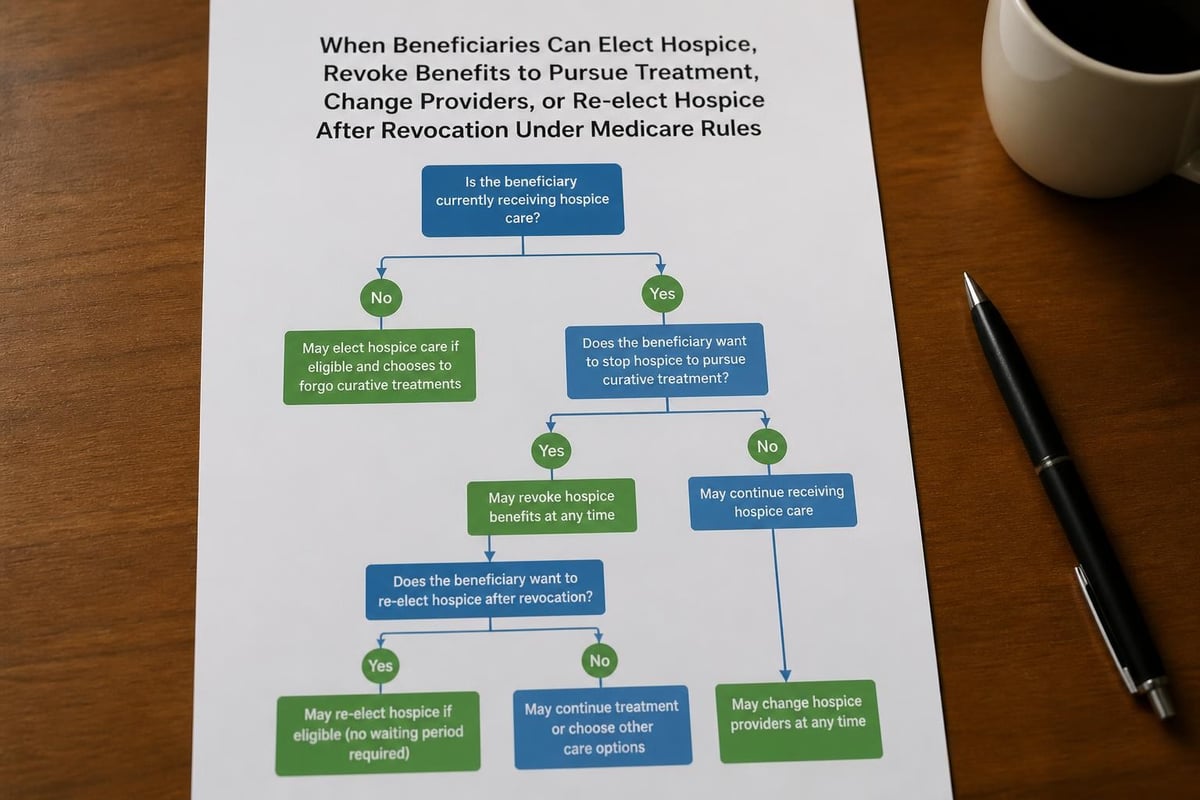
The certification process requires documentation from both the hospice medical director and the patient's attending physician. Beneficiaries can revoke the hospice election at any time if they decide to pursue curative treatment again.

Core Services Provided Through Medicare Hospice
The medicare and hospice benefit includes an extensive range of services designed to provide comprehensive end-of-life care:
| Service Category | What's Covered | Frequency |
|---|---|---|
| Nursing care | Skilled nursing services | As needed |
| Medical equipment | Hospital beds, wheelchairs, oxygen | Full coverage |
| Medications | Pain relief and symptom management | 95% covered |
| Physician services | Medical director oversight | Included |
| Counseling | Bereavement, dietary, spiritual | Available to family |
| Therapy services | Physical, occupational, speech | As needed |
| Home health aide | Personal care assistance | Regular visits |
| Social services | Care coordination, planning | Ongoing |
Medicare also covers short-term inpatient care for symptom management and respite care to give family caregivers temporary relief. These services ensure patients receive appropriate care across all settings.
Understanding Medicare Hospice Payment Structure
The financial aspects of medicare and hospice coverage differ significantly from standard Medicare benefits. Understanding these payment mechanisms helps families plan without unexpected costs.
Medicare pays hospice providers a daily rate for each day a beneficiary is enrolled, regardless of specific services received. The Centers for Medicare & Medicaid Services updates these rates annually based on inflation and geographic wage variations.
Four Levels of Hospice Care
Medicare recognizes four distinct levels of care, each with different payment rates:
- Routine home care: Standard hospice services provided at home
- Continuous home care: Intensive nursing care during crisis periods
- Inpatient respite care: Short-term facility care for caregiver relief
- General inpatient care: Hospital-level symptom management
The appropriate level depends on the patient's medical needs at any given time. Care levels can change as conditions evolve, with hospice teams adjusting services accordingly.
Out-of-Pocket Costs for Beneficiaries
Medicare and hospice coverage eliminates most out-of-pocket expenses associated with end-of-life care. Beneficiaries face minimal costs:
- No deductibles for hospice services
- No copayments for nursing, equipment, or supplies
- Maximum $5 copay per prescription for comfort medications
- 5% coinsurance for inpatient respite care
These cost protections ensure financial concerns don't interfere with accessing appropriate end-of-life care. The geographic wage index adjustments Medicare uses to calculate provider payments don't affect beneficiary costs.
Choosing Between Medicare Advantage and Original Medicare for Hospice
Beneficiaries enrolled in Medicare Advantage plans have different processes for accessing medicare and hospice services compared to those with Original Medicare. Understanding these differences helps with planning and decision-making.
Medicare Advantage plans must cover hospice services at least as comprehensively as Original Medicare. However, when a Medicare Advantage enrollee elects hospice, Original Medicare takes over hospice coverage while the Advantage plan continues covering unrelated medical services.
How Hospice Works with Medicare Supplement Plans
Beneficiaries with Medicare Supplement plans experience seamless coordination with hospice benefits. Since Medicare Part A directly covers hospice services with minimal cost-sharing, Medigap plans have limited involvement. The supplement plan continues covering other Medicare services not related to the terminal condition.
This dual coverage arrangement means families don't need to navigate complex coordination between multiple insurers. Original Medicare remains the primary payer for all hospice-related care, while supplements handle gaps in non-hospice medical expenses.

Duration of Medicare Hospice Benefits
Many families worry that medicare and hospice coverage has strict time limits. While the initial certification covers a six-month prognosis, Medicare doesn't cap the total duration of hospice benefits.
Benefit Periods Explained
Hospice coverage operates through benefit periods rather than hard deadlines:
- Initial period: 90 days
- Second period: 90 days
- Subsequent periods: Unlimited 60-day periods
At the end of each period, a physician must recertify that the patient remains terminally ill with a six-month or less prognosis. This flexibility recognizes that predicting exact survival timeframes is inherently uncertain.
Many patients live longer than six months while receiving hospice care. The recertification process allows continued coverage as long as the terminal condition persists. According to MedPAC’s analysis, average hospice enrollment lengths vary significantly, with some patients receiving care for extended periods.
Accessing Hospice Care in the Triad Area
Residents of Greensboro, Kernersville, High Point, and Winston Salem have access to multiple Medicare-certified hospice providers. Choosing the right program involves understanding services, provider qualifications, and family preferences.
Finding Medicare-Certified Hospice Providers
Locating qualified hospice programs in the Triad Area starts with verification of Medicare certification. Only certified programs can bill Medicare for services, ensuring quality standards and regulatory compliance.
Key factors when evaluating local hospice providers include:
- Service area coverage: Confirming they serve your specific city or community
- Staff qualifications: Nursing expertise, chaplain availability, volunteer programs
- On-call availability: 24/7 access to medical professionals
- Bereavement support: Services offered to families after patient death
- Cultural sensitivity: Alignment with family values and preferences
The CMS Medicare Learning Network provides educational resources about hospice operations and quality standards that help families evaluate potential providers.
Rural Access Considerations
While the Triad Area offers strong hospice infrastructure, rural communities sometimes face access challenges. Medicare and hospice regulations require providers to serve their entire service area, including remote locations. Families in less populated areas should confirm travel capabilities and response times when selecting providers.
Common Medicare Hospice Questions and Concerns
Understanding medicare and hospice raises practical questions for families making end-of-life care decisions. Addressing these concerns helps with informed planning and reduced anxiety.
Can You Change Hospice Providers?
Beneficiaries maintain the right to change hospice providers at any time. Reasons for switching might include relocation, dissatisfaction with services, or preference for different care approaches. The process involves:
- Notifying the current hospice in writing of the change
- Identifying a new Medicare-certified provider willing to accept the patient
- Completing enrollment paperwork with the new hospice
- Coordinating the transfer of medical records and care plans
Medicare coverage continues uninterrupted during provider transitions, protecting beneficiaries from gaps in service.
What Happens If You Revoke Hospice?
Patients who decide to pursue curative treatment can revoke hospice benefits at any point. This decision:
- Restores standard Medicare benefits for treatment of the terminal condition
- Allows re-election of hospice later if circumstances change
- Doesn't affect future eligibility for hospice care
Some patients choose to revoke hospice temporarily to try new treatments, then re-enroll if those treatments prove ineffective. This flexibility ensures beneficiaries maintain control over care decisions throughout their illness journey. If you're navigating complex Medicare decisions and want personalized guidance, reaching out to professionals at Moser Insurance Group Inc can help clarify your options.
Coordinating Hospice with Other Medicare Benefits
Medicare and hospice coordination extends beyond just hospice services. Understanding how the hospice election affects other Medicare benefits prevents confusion and ensures comprehensive care.
Services Covered Outside the Hospice Benefit
While receiving hospice care, Medicare continues covering unrelated medical conditions. For example, a patient in hospice for heart failure can still receive Medicare coverage for:
- Diabetes management and insulin supplies
- Routine preventive services like flu shots
- Treatment for broken bones or other acute injuries
- Eye care for vision problems unrelated to the terminal condition
The key distinction involves whether services relate to the terminal illness and related conditions. Hospice covers everything connected to the terminal diagnosis, while Original Medicare handles unrelated healthcare needs.
Working with Multiple Providers
Coordinating care between hospice teams and other medical providers requires clear communication. The hospice interdisciplinary team typically includes:
- Medical director overseeing care plans
- Registered nurses providing clinical services
- Home health aides assisting with personal care
- Social workers coordinating resources
- Chaplains offering spiritual support
- Volunteers providing companionship
- Bereavement counselors supporting families
This comprehensive team collaborates with the patient's primary care physician and specialists to ensure seamless, coordinated care that respects the patient's wishes and medical needs.
Medicare Hospice Quality and Oversight
Quality standards and regulatory oversight protect medicare and hospice beneficiaries. Understanding these safeguards helps families select providers and advocate for appropriate care.
Quality Reporting Requirements
Medicare-certified hospice programs must participate in quality reporting initiatives that measure performance across key metrics:
| Quality Measure | What It Assesses | Why It Matters |
|---|---|---|
| Pain screening | Regular assessment protocols | Ensures comfort management |
| Dyspnea treatment | Shortness of breath control | Critical symptom relief |
| Patient preferences | Advance directive documentation | Respects end-of-life wishes |
| Caregiver education | Family training and support | Enables home care success |
| Timely care | Response to urgent needs | Access during crises |
These publicly reported measures allow families to compare provider performance and make informed choices about hospice programs.
Fraud Prevention and Patient Protection
Unfortunately, some unscrupulous operators have exploited medicare and hospice programs. The Department of Justice has prosecuted cases involving fraudulent hospice enrollments, kickback schemes, and false billing.
Red flags that might indicate improper hospice practices include:
- Pressure to enroll before you're ready
- Minimal contact from hospice staff after enrollment
- Lack of documented care plans or physician oversight
- Promises of financial incentives for enrollment
- Reluctance to provide detailed service information
Medicare beneficiaries can report suspected fraud by contacting the Office of Inspector General. Legitimate hospice providers welcome questions and provide transparent information about services, costs, and care approaches.
Planning Ahead for Medicare Hospice Needs
While conversations about end-of-life care feel difficult, advance planning for medicare and hospice services reduces stress during crisis situations. Proactive discussions ensure care aligns with personal values and preferences.
Advance Directive Documentation
Documenting healthcare wishes through advance directives provides critical guidance for hospice teams and family members. Essential documents include:
- Living will: Specifies desired medical interventions in specific scenarios
- Healthcare power of attorney: Designates decision-maker if you cannot communicate
- Do Not Resuscitate (DNR) orders: Clarifies resuscitation preferences
- POLST forms: Portable medical orders respected across care settings
These documents ensure hospice care respects individual preferences even when patients cannot actively participate in decisions.
Discussing Hospice with Healthcare Providers
Initiating medicare and hospice conversations with physicians helps clarify prognosis, treatment options, and appropriate timing for hospice referral. Many physicians hesitate to raise hospice unless patients or families broach the topic first.
Questions to ask your doctor about hospice timing:
- What does the current disease trajectory suggest about prognosis?
- Would hospice be appropriate now, or should we wait?
- How will we know when curative treatments are no longer beneficial?
- Can you provide a hospice referral for consultation without requiring immediate enrollment?
These discussions often reveal that hospice can begin earlier than many families realize, providing months of supportive services rather than just final days of care. Research from Kaiser Family Foundation shows earlier hospice enrollment often correlates with better symptom management and family satisfaction.
Financial Planning Beyond Medicare Hospice Coverage
While medicare and hospice benefits cover medical aspects of end-of-life care, families often face additional expenses that require separate planning.
Costs Not Covered by Medicare Hospice
Despite comprehensive coverage, certain expenses fall outside medicare and hospice benefits:
- Room and board in assisted living or residential facilities (unless patient is homebound)
- 24-hour home care beyond intermittent skilled nursing visits
- Caregiver wages for family members providing care
- Home modifications like wheelchair ramps or bathroom safety equipment
- Travel expenses for family members to be with the patient
- Funeral and burial costs after death
Understanding these potential costs helps families prepare financially and explore resources to cover gaps.
Supplemental Insurance for Non-Hospice Expenses
Some families rely on supplemental insurance products to address costs outside medicare and hospice coverage. While hospital indemnity plans and other supplements won't directly pay for hospice-excluded expenses, they can provide cash benefits during hospitalizations that precede hospice enrollment or during short-term inpatient hospice stays.
Bereavement Support After Hospice Care Ends
The medicare and hospice benefit extends beyond patient death to include bereavement services for surviving family members. These services recognize that grief support forms an essential component of comprehensive end-of-life care.
What Medicare Covers for Grieving Families
Medicare requires hospice programs to offer bereavement services to family members for at least one year following patient death. Services typically include:
- Individual grief counseling sessions
- Family counseling to address collective grief
- Support groups with others experiencing similar losses
- Memorial services honoring deceased patients
- Educational materials about the grieving process
- Follow-up calls checking on family wellbeing
These services carry no additional cost to families and don't count against Medicare benefits. Hospice teams recognize that supporting caregivers through bereavement fulfills their mission of comprehensive end-of-life care.
Resources for Medicare and Hospice Information
Accessing reliable information about medicare and hospice benefits helps families make informed decisions during stressful times. Multiple trusted resources provide guidance and support.
Government Resources and Assistance
Official Medicare resources offer authoritative information about hospice coverage:
- Medicare.gov: Hospice benefit explanations and provider directories
- 1-800-MEDICARE: Phone assistance with coverage questions
- State Health Insurance Assistance Programs (SHIP): Free local counseling
- Area Agencies on Aging: Community resources and support services
These free services provide unbiased information without sales pressure, helping beneficiaries understand their options thoroughly.
Local Support in the Triad Area
Residents across Greensboro, Kernersville, High Point, and Winston Salem can access local resources that complement federal programs. Community organizations, faith-based groups, and healthcare systems often provide additional support services, educational programs, and care coordination assistance.
For personalized guidance about how medicare and hospice coverage fits into your overall Medicare plan, local insurance professionals can help you understand your specific situation and options.
Contact Information for Direct Assistance
When you need personalized help understanding medicare and hospice benefits:
- Phone: 336-862-1763
- Email: moserinsurancegroup@gmail.com
- Website: moserinsurancegroup.com
Having direct access to knowledgeable professionals who understand local healthcare resources and Medicare regulations helps reduce confusion during already difficult times.
Making the Hospice Decision with Confidence
Choosing medicare and hospice care represents a significant decision that affects patients and families profoundly. Understanding coverage details, service options, and quality standards empowers informed choices aligned with personal values.
The comprehensive nature of medicare and hospice benefits ensures patients receive dignified, comfortable care during life's final chapter without financial burden. From pain management and nursing services to emotional support and bereavement counseling, the benefit addresses physical, emotional, and spiritual dimensions of end-of-life care.
Families considering hospice should remember that electing these services doesn't mean giving up hope. Rather, it represents a shift in care goals toward comfort, quality of life, and meaningful time with loved ones. The flexibility to revoke hospice and pursue treatment again preserves patient autonomy throughout the journey.
Geographic considerations matter less than they once did, with strong hospice infrastructure throughout areas like the Triad region ensuring access to quality care. Rural communities may face unique challenges, but Medicare requirements ensure providers serve their entire service areas comprehensively.
Quality oversight, fraud prevention, and patient protections create accountability within medicare and hospice programs. Families can verify provider credentials, review quality measures, and report concerns through established channels. These safeguards protect vulnerable patients during a particularly sensitive time.
Advance planning makes hospice transitions smoother when the time comes. Documenting preferences through advance directives, discussing prognosis openly with physicians, and researching local hospice options before crisis situations reduces stress and ensures care aligns with personal wishes.
Beyond medical coverage, comprehensive planning addresses financial aspects, family support needs, and bereavement services. Understanding what medicare and hospice cover and what expenses require separate planning prevents surprises and allows families to focus on what matters most.
Understanding medicare and hospice coverage helps you make confident decisions about end-of-life care for yourself or loved ones. When you need personalized guidance navigating Medicare options, advance planning, or coordination between different coverage types, professional support makes the process clearer and less overwhelming. Moser Insurance Group Inc helps individuals and families across the Triad Area understand their Medicare choices with clear explanations and no-pressure support, so you can make decisions that truly fit your needs. Reach out at 336-862-1763 or moserinsurancegroup@gmail.com to discuss your specific situation.
Recent Comments