

Choosing the right Medicare coverage can feel overwhelming when you're first eligible or reviewing your options during Annual Enrollment. With dozens of plans available in most areas, understanding which type of coverage best fits your health needs, budget, and lifestyle is essential. The best Medicare plans aren't necessarily the same for everyone-what works for your neighbor might not work for you. This guide breaks down the major Medicare options, helps you compare key features, and shows you how to find coverage that delivers the protection you need without paying for benefits you won't use.
Understanding Your Medicare Coverage Options
Medicare offers several pathways to coverage, and understanding the fundamental differences between them is the first step toward making an informed decision. The two main routes are Original Medicare (Parts A and B) and Medicare Advantage (Part C), each with distinct features, costs, and coverage rules.
Original Medicare consists of Part A (hospital insurance) and Part B (medical insurance). These programs are run directly by the federal government and accepted by most doctors and hospitals nationwide. You'll pay a Part B premium (most people pay the standard amount), plus deductibles and coinsurance for services. Original Medicare doesn't include prescription drug coverage or an out-of-pocket maximum, which is why many beneficiaries add a Part D drug plan and a Medicare Supplement plan.
Medicare Advantage plans are offered by private insurance companies approved by Medicare. These plans must cover everything Original Medicare covers, but they typically add prescription drug coverage, dental, vision, and hearing benefits. According to recent CMS data, Medicare Advantage enrollment continues to grow, now covering more than half of all Medicare beneficiaries.
Key Differences Between Plan Types
| Feature | Original Medicare + Medigap | Medicare Advantage |
|---|---|---|
| Coverage Area | Nationwide acceptance | Network-based (HMO/PPO) |
| Out-of-Pocket Max | None (Medigap varies) | Yes, capped annually |
| Prescription Drugs | Separate Part D needed | Often included |
| Extra Benefits | None | Dental, vision, hearing, fitness |
| Referral Requirements | No referrals needed | Often required (HMO) |
| Monthly Costs | Part B + Medigap + Part D | Plan premium (sometimes $0) + Part B |
The best Medicare plans for you depend on whether you prioritize provider flexibility, predictable costs, or additional benefits beyond basic medical coverage.

Evaluating Medicare Advantage Plans
Medicare Advantage has become increasingly popular across the Triad Area, including Greensboro, Kernersville, High Point, and Winston Salem. These plans bundle hospital, medical, and usually prescription drug coverage into one plan with a single monthly premium (sometimes $0 beyond your Part B premium).
When comparing Medicare Advantage options, focus on these critical factors:
- Network coverage: Does the plan include your current doctors and preferred hospitals?
- Prescription drug formulary: Are your medications covered, and at what tier?
- Out-of-pocket maximum: What's the most you'll pay in a year for covered services?
- Extra benefits: What dental, vision, hearing, or fitness perks are included?
- Star ratings: How does Medicare rate the plan's quality and customer service?
Types of Medicare Advantage Plans
Medicare Advantage plans come in several varieties, each with different rules about how you access care:
HMO (Health Maintenance Organization) plans typically require you to choose a primary care physician and get referrals to see specialists. You must use in-network providers except in emergencies. These plans often have lower premiums but less flexibility.
PPO (Preferred Provider Organization) plans let you see any Medicare-approved provider without referrals, though you'll pay less when using in-network doctors. This flexibility comes with higher premiums in most cases.
Special Needs Plans (SNPs) serve specific populations, such as people with chronic conditions, dual eligibility for Medicare and Medicaid, or those living in institutions. These plans tailor benefits to specific health needs.
The Medicare Plan Finder tool lets you enter your ZIP code, medications, and preferred providers to compare all available Medicare Advantage plans in your area. This official resource shows premiums, coverage details, and pharmacy networks side-by-side.
Exploring Medicare Supplement (Medigap) Coverage
Medicare Supplement plans work alongside Original Medicare to reduce your out-of-pocket costs. Unlike Medicare Advantage, Medigap doesn't replace Original Medicare-it fills the "gaps" by covering deductibles, coinsurance, and copayments that Original Medicare doesn't pay.
Medicare Supplement Plans are standardized and labeled with letters (Plan G, Plan N, etc.). Each plan type offers the same benefits regardless of which insurance company sells it, though premiums vary by company, location, and your age or health status (depending on state rules).
Most Popular Medigap Plans in 2026
Plan G has become the most popular Medigap option since Plan F became unavailable to new Medicare beneficiaries. Plan G covers virtually all out-of-pocket costs except the Part B deductible. Once you meet that annual deductible, Plan G pays the rest, giving you predictable healthcare expenses.
Plan N offers a lower-premium alternative with modest cost-sharing. You'll pay copays for doctor visits and emergency room visits (if not admitted), plus any Part B excess charges. For generally healthy individuals who don't mind small copays, Plan N delivers substantial savings compared to Plan G.
High-Deductible Plan G requires you to pay a calendar-year deductible before coverage begins, but premiums are significantly lower. This option works well if you want catastrophic protection and can comfortably cover routine medical expenses out-of-pocket.
| Medigap Plan | Part A Deductible | Part B Deductible | Part B Coinsurance | Foreign Travel Emergency |
|---|---|---|---|---|
| Plan G | ✓ | ✗ | ✓ | ✓ |
| Plan N | ✓ | ✗ | ✓ (with copays) | ✓ |
| High-Ded G | ✓ (after deductible) | ✗ | ✓ (after deductible) | ✓ (after deductible) |
One significant advantage of Medigap: you can see any doctor or hospital that accepts Medicare nationwide, with no networks or referrals. This makes Medigap particularly valuable if you travel frequently, spend winters in another state, or want maximum provider choice.
Comparing Prescription Drug Coverage
Most Medicare beneficiaries need prescription drug coverage, whether through a standalone Part D plan (with Original Medicare) or a Medicare Advantage plan that includes drug coverage. The best Medicare plans for medication coverage depend entirely on which drugs you take and where you prefer to fill prescriptions.
How to Evaluate Part D Plans
Every Part D plan maintains a formulary-a list of covered medications organized into tiers. Generic drugs typically fall into lower tiers with smaller copays, while brand-name and specialty medications occupy higher tiers with higher cost-sharing.
Key factors when comparing drug plans:
- Total annual cost: Add up premiums, deductibles, and estimated copays for your specific medications
- Formulary coverage: Verify all your medications are covered without restrictions
- Pharmacy network: Confirm your preferred pharmacy participates
- Coverage gap (donut hole): Understand costs if you reach the coverage gap
- Prior authorization requirements: Check if any medications need approval
Research from the Urban Institute shows that beneficiaries often focus on monthly premiums when choosing drug plans, but total annual costs-including copays and coinsurance-vary dramatically based on your medication list.

The Part D Redesign for 2026
Significant changes to Part D take effect in 2026, including a $2,000 out-of-pocket cap on prescription costs. This redesign provides meaningful financial protection for beneficiaries taking expensive medications. The coverage gap phases out, and cost-sharing becomes more predictable throughout the year.
When reviewing Part D options during Annual Enrollment, use the Medicare Plan Finder to enter your exact medications and dosages. The tool calculates your estimated annual costs for each available plan, helping you identify true value beyond advertised premiums.
Determining the Best Plan for Your Situation
Finding the best Medicare plans requires honest assessment of your healthcare needs, financial situation, and personal priorities. There's no universal "best" plan-only the best plan for your specific circumstances in 2026.
Questions to Guide Your Decision
How often do you visit doctors? If you rarely need medical care beyond preventive services, a Medicare Advantage plan with a $0 premium and modest copays might save money. If you have chronic conditions requiring frequent specialist visits, Original Medicare with a Medigap plan offers unlimited access without networks or referrals.
Do you take expensive medications? Prescription costs significantly impact your total healthcare spending. Compare formularies carefully, and calculate annual drug costs under different plan types. Some Medicare Advantage plans offer better drug coverage than standalone Part D plans.
How important is provider choice? Original Medicare with Medigap lets you see any Medicare-accepting provider nationwide. Medicare Advantage plans restrict coverage to network providers (except emergencies), which might limit options in areas like the Triad, where you want access to specialists in Greensboro, High Point, or Winston Salem.
What's your budget tolerance for uncertainty? Medigap plans offer predictable monthly premiums with minimal out-of-pocket costs when you need care. Medicare Advantage plans might have lower or $0 premiums but variable costs depending on how much care you use, capped by the plan's out-of-pocket maximum.
Do you value extra benefits? Medicare Advantage plans often include dental, vision, hearing aids, fitness memberships, and over-the-counter allowances. Original Medicare doesn't cover these services, and neither do most Medigap plans. If these benefits matter to you, factor their value into your comparison.
Regional Considerations in North Carolina
Medicare options vary by location. Beneficiaries in Kernersville might see different plan choices than those in Winston Salem, and premium rates can differ between counties. Network adequacy also varies-verify that Medicare Advantage plans include your preferred providers in High Point or Greensboro before enrolling.
According to analysis from the Kaiser Family Foundation, Medicare Advantage enrollment growth reflects both expanded plan availability in suburban and rural areas and enhanced benefits that appeal to cost-conscious beneficiaries.
Understanding Enrollment Periods and Deadlines
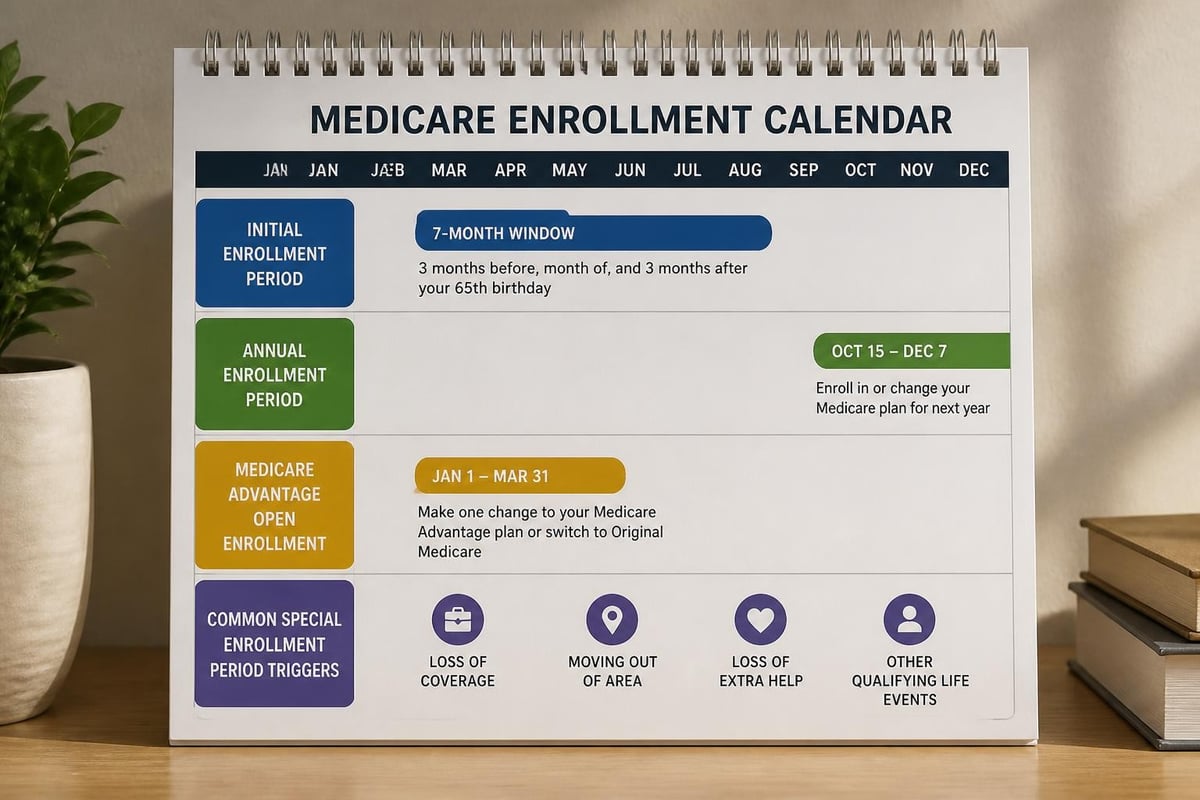
Choosing among the best Medicare plans matters most when you can actually enroll or make changes. Medicare has specific enrollment periods with different rules and eligibility requirements.
Initial Enrollment Period (IEP)
Your IEP begins three months before your 65th birthday month and extends three months after-a seven-month window total. During this period, you can enroll in Original Medicare, choose a Medicare Advantage plan, add Part D coverage, or purchase a Medigap policy.
Critical point: Medigap companies must accept you during your six-month Medigap Open Enrollment Period (beginning when you turn 65 and enroll in Part B), regardless of health conditions. Outside this window, insurers can deny coverage or charge higher premiums based on health status in most states.
Annual Enrollment Period (AEP)
October 15 through December 7 each year is when all Medicare beneficiaries can switch between Original Medicare and Medicare Advantage, change Medicare Advantage plans, or modify Part D coverage. Changes take effect January 1.
The Medicare & You handbook arrives in the mail each fall with updated information about coverage options, costs, and deadlines for the coming year. This official guide helps you review whether your current plan still meets your needs.
Special Enrollment Periods (SEPs)
Certain life events trigger Special Enrollment Periods allowing plan changes outside Annual Enrollment:
- Moving to a new service area
- Losing employer coverage
- Qualifying for Medicaid
- Moving into or out of a nursing home
- Plan contract termination by Medicare
Each SEP has specific timeframes and documentation requirements. If you experience a qualifying event, act quickly to avoid coverage gaps.
Getting Personalized Help With Medicare Decisions
Comparing the best Medicare plans involves dozens of variables-premiums, networks, formularies, coverage rules, and cost-sharing structures. Many beneficiaries benefit from expert guidance to navigate these complexities and avoid costly mistakes.
Free Counseling Resources
Every state operates a State Health Insurance Assistance Program (SHIP) providing free, unbiased Medicare counseling. SHIP counselors help you compare plans, understand your rights, verify drug coverage, and resolve billing issues. These trained volunteers don't sell insurance, so their advice remains objective and focused on your best interests.
SHIP counselors can review your situation in detail, explaining how different Medicare options would work given your specific medications, providers, and health conditions. This personalized analysis proves invaluable during Initial Enrollment or when considering plan changes during Annual Enrollment.
Working With Licensed Agents
Licensed insurance agents specializing in Medicare can also help you compare options, though they represent specific insurance companies. Agents can explain plan details, assist with applications, and answer questions throughout the year.
When working with any insurance professional in the Greensboro, Kernersville, High Point, or Winston Salem areas, verify they're properly licensed in North Carolina and represent multiple carriers so you can compare options from different companies.
For personalized Medicare guidance, you can reach Moser Insurance Group Inc at 336-862-1763, email moserinsurancegroup@gmail.com, or visit moserinsurancegroup.com to learn how we help individuals and families throughout the Triad Area understand their Medicare options without pressure.
Avoiding Common Medicare Plan Selection Mistakes
Even informed beneficiaries sometimes make errors when choosing Medicare coverage. Understanding these common pitfalls helps you avoid problems that could affect your health or finances.
Mistake #1: Choosing Based Only on Premium
The lowest-premium plan rarely delivers the best value when you factor in deductibles, copays, coinsurance, and coverage limitations. A Medicare Advantage plan advertising a $0 premium might cost significantly more than a plan with a $50 monthly premium once you account for cost-sharing when you actually use healthcare services.
Calculate total estimated annual costs including all out-of-pocket expenses based on your expected healthcare utilization. The plan with the lowest monthly premium often proves most expensive overall.
Mistake #2: Not Verifying Provider Networks
Assuming your doctors participate in a Medicare Advantage plan without confirming leads to unpleasant surprises. Networks change annually, and doctors sometimes drop contracts with specific plans. Before enrolling, call your providers directly to verify they accept the plan you're considering and confirm they're accepting new patients under that plan.
Mistake #3: Ignoring Prescription Drug Coverage
Some beneficiaries skip Part D enrollment thinking they'll add it later if needed. This triggers late enrollment penalties-an extra premium charge that continues as long as you have Part D coverage. Even if you take few medications now, enroll in a basic Part D plan to avoid penalties. You can always switch to more comprehensive drug coverage during Annual Enrollment if your needs change.
Mistake #4: Missing Medigap Open Enrollment
Delaying Medigap enrollment beyond your six-month Open Enrollment Period means insurance companies can refuse coverage or charge higher premiums based on pre-existing conditions. If you want Medigap, purchase it during this guaranteed-issue period to lock in coverage and rates.
Mistake #5: Not Reviewing Coverage Annually
Medicare plans change benefits, premiums, formularies, and networks each year. The plan that worked perfectly last year might drop your medications from its formulary, remove your doctor from its network, or significantly increase cost-sharing for 2026. Review your Annual Notice of Change each fall and compare alternatives during Annual Enrollment.
Medicare Plan Costs Beyond Premiums
Understanding the true cost of different Medicare plans requires looking beyond monthly premiums to the total amount you'll spend on healthcare throughout the year.
Original Medicare Costs for 2026
Most beneficiaries pay no premium for Part A (hospital insurance) if they or their spouse worked and paid Medicare taxes for at least 10 years. Part B (medical insurance) has a standard monthly premium, though high-income earners pay Income-Related Monthly Adjustment Amounts (IRMAA) on top of the base premium.
Original Medicare includes deductibles and coinsurance:
- Part A deductible per benefit period for hospital stays
- Part B annual deductible plus 20% coinsurance for most services
- No out-of-pocket maximum on Part B spending
Without supplemental coverage, beneficiaries could face unlimited Part B costs if they experience serious illness requiring extensive outpatient treatment.
Medicare Advantage Cost Structure
Medicare Advantage plans feature different cost-sharing:
- Monthly premium (sometimes $0) plus Part B premium
- Fixed copays for doctor visits, specialists, and services
- Annual out-of-pocket maximum capping costs
- Prescription drug deductibles and copays by tier
The out-of-pocket maximum provides financial protection that Original Medicare lacks. Once you reach this threshold, the plan covers 100% of costs for the remainder of the year.
Medigap Premium Factors
Medicare Supplement premiums vary based on several factors:
Pricing method: Companies use three approaches-community-rated (same price for everyone), issue-age-rated (based on age when you buy), or attained-age-rated (increases as you age). Attained-age policies start with lower premiums but rise faster over time.
Geographic location: Medigap premiums differ between counties and states. The same Plan G might cost 30-40% less in one area compared to another just miles away.
Household discounts: Many insurers offer discounts if both spouses purchase policies, reducing total costs for married couples.
Tobacco surcharges: Most states allow higher premiums for tobacco users, typically 15-25% above standard rates.
When comparing Medigap options, request quotes from multiple highly-rated carriers to find competitive pricing for the plan type you want.
Making Your Medicare Plan Decision
After researching options, comparing costs, and considering your priorities, you'll need to make a decision and complete enrollment. The best Medicare plans are those you actually choose and successfully enroll in before deadlines pass.
Steps to Finalize Your Choice
- List your current doctors and verify network participation for any Medicare Advantage plans you're considering
- Enter medications into the Medicare Plan Finder to calculate accurate drug costs under different plans
- Compare total estimated annual costs including premiums, deductibles, copays, and coinsurance
- Review plan ratings and customer satisfaction to gauge quality and service levels
- Confirm you're enrolling during an eligible period (IEP, AEP, or SEP)
- Complete applications before deadlines to ensure coverage begins when needed
Documentation You'll Need
When enrolling in Medicare coverage, gather:
- Medicare card showing your number and Part A/B effective dates
- List of current medications with dosages
- Preferred pharmacy information
- Social Security number
- Banking information for premium payments (if autopay)
Most enrollments can be completed online, by phone, or through a licensed agent. Applications typically process within a few weeks, and you'll receive confirmation materials detailing your coverage.
Selecting from the best Medicare plans available requires careful evaluation of your healthcare needs, budget, and priorities for 2026 and beyond. Whether Original Medicare with supplements or Medicare Advantage serves you better depends on factors unique to your situation-from prescription medications to provider preferences to financial considerations. If you're in the Greensboro, Kernersville, High Point, Winston Salem, or broader Triad Area and need personalized guidance comparing Medicare options, Moser Insurance Group Inc helps individuals and families understand Medicare, life insurance, and health insurance choices with clear explanations and no-pressure support. Contact us at 336-862-1763 or moserinsurancegroup@gmail.com to discuss which coverage best protects your health and financial security.
Recent Comments