

AARP Medicare Supplement Plan G is a Medigap policy sold under the AARP name that pays most of the out-of-pocket costs Original Medicare leaves behind, and anyone enrolled in both Medicare Part A and Part B can generally apply for it. Because the benefits of Plan G are set by federal standards, the coverage is the same from every company that sells it. What differs is the monthly premium, the carrier's rating practices, and the service you receive. For people turning 65 in Greensboro, Winston-Salem, High Point, Kernersville and the wider Triad area, understanding those details before the enrollment window opens can save real money.
What Is AARP Medicare Supplement Plan G?
AARP Medicare Supplement Plan G is a standardized Medigap policy that fills in most of the cost-sharing Original Medicare does not pay. Original Medicare covers a large share of hospital and medical bills, but it leaves you responsible for deductibles, coinsurance and copayments with no annual cap. Plan G absorbs nearly all of that exposure.
Medigap plans are lettered A through N, and each lettered plan offers the same core benefits no matter which company sells it. The AARP-branded policies are underwritten by UnitedHealthcare, and you can read more about how that arrangement works on our page about the AARP UnitedHealthcare Medicare Supplement options.
Plan G works alongside Original Medicare. Medicare pays its share first, then Plan G pays its share of the remainder, and you owe only what the plan leaves uncovered. If you want a broader primer on the category, our guide to understanding Medicare Supplement plans covers the basics.
What Is Covered Under Medicare Supplement Plan G?
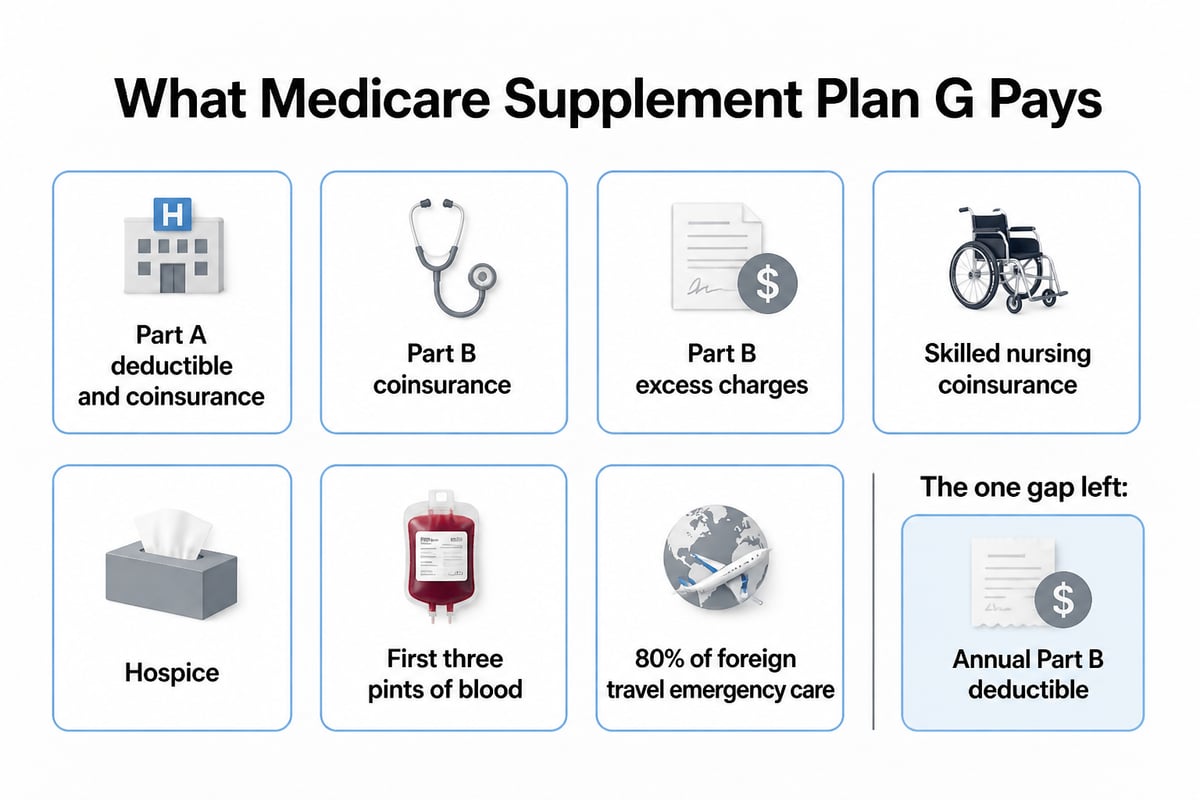
Plan G covers nearly every Medicare cost-sharing gap except the Part B deductible. According to Medicare’s benefit comparison, the standard plan includes the following:
- Part A hospital coinsurance: 100% of Part A coinsurance and hospital costs for up to 365 additional days after your Medicare hospital benefits are used.
- Part A deductible: 100% of the inpatient hospital deductible for each benefit period.
- Part B coinsurance and copayments: 100% of the 20% coinsurance for doctor visits, outpatient care and most other Part B services.
- Part B excess charges: 100% of the amount a provider may bill above the Medicare-approved rate, where allowed.
- Skilled nursing facility coinsurance: 100% of the daily coinsurance for covered stays.
- Hospice care: 100% of hospice coinsurance or copayments.
- Blood: the first three pints of blood each year.
- Foreign travel emergency care: 80% of emergency costs during the first 60 days of a trip abroad, subject to plan limits.
Plan G does not include prescription drug coverage, routine dental, vision exams or hearing aids. Medicare Part D handles prescriptions separately, and you can compare those choices through our overview of Medicare Part D plans.
Does AARP Plan G Cover the Medicare Deductible?
AARP AARP Plan G covers the Medicare Part A deductible but not the Part B deductible. That distinction matters because people often assume "deductible" refers to a single charge.
In 2026, the Part B deductible is $283, according to Medicare’s cost overview. You pay that amount yourself once each calendar year. After you meet it, Plan G picks up your Part B coinsurance for the rest of the year, so your medical costs for covered services are effectively zero.
The standard Part B monthly premium is $202.90 in 2026, though higher-income beneficiaries may pay more. Plan G does not pay the Part B premium, so keep that cost in your budget alongside your Medigap premium.
How the yearly costs add up
For a typical enrollee on Plan G, the predictable annual costs are:
- The Part B monthly premium, paid to Medicare.
- The Plan G monthly premium, paid to the insurance company.
- The one-time $283 Part B deductible.
- Prescription costs through a separate Part D plan, if you enroll in one.
That short list is the main appeal of Plan G. The expenses are known in advance, and a major surgery or extended hospital stay does not produce a surprise bill.
Who Qualifies for AARP Medicare Supplement Plan G?
To buy Plan G, you generally need to be enrolled in Original Medicare Part A and Part B. Medicare states that premiums vary by policy, location and other factors, so the same plan can be priced differently for two neighbors.
Qualification comes down to three conditions:
- You hold both Part A and Part B.
- You live in the plan's service area, which includes all of North Carolina for most Medigap carriers.
- You are within a window when the insurer must accept you, or you are willing to answer health questions.
Note that Medigap does not work with a Medicare Advantage plan. If you are enrolled in Advantage, you would need to return to Original Medicare before a Medigap policy could be used. Our comparison of Medicare Advantage vs. a supplement walks through that tradeoff in plain terms.
Does AARP have health plans for people under 65?
Medigap eligibility is tied to Medicare, so most Plan G enrollees are 65 or older. Some people under 65 qualify for Medicare because of a disability, and whether they can buy Medigap, and on what terms, varies by state and carrier. If you are under 65 and on Medicare, a licensed agent can confirm what is available in North Carolina before you apply.
When Can You Enroll Without Health Questions?
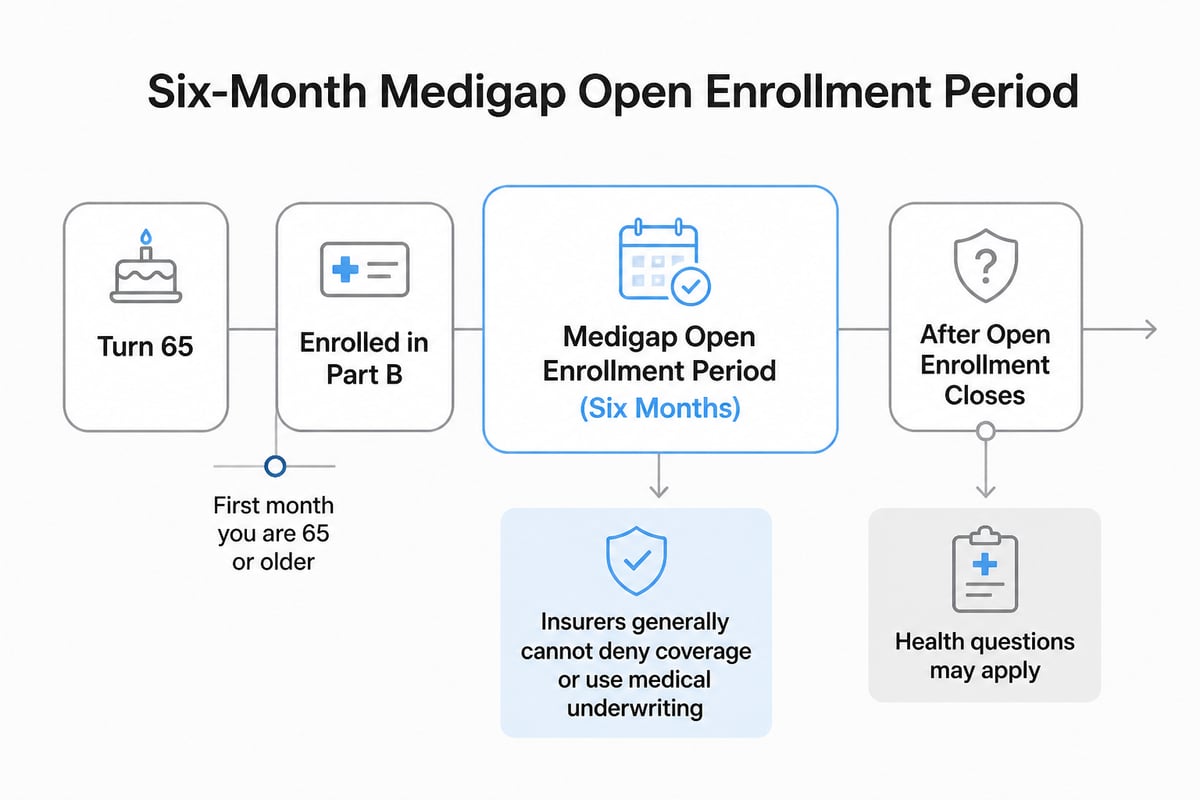
Your best opportunity to buy Plan G without medical underwriting is the Medigap Open Enrollment Period. Medicare explains that this six-month window begins the first month you are 65 or older and enrolled in Part B. During it, insurers generally cannot deny you coverage or charge more because of your health.
The timing is worth planning around. Hypothetical example: someone turning 65 who enrolls in Part B has six months from that start date to choose a Medigap plan with no health review. Once that window closes, an insurer in most situations may ask health questions and may decline an application.
Other situations can also open a guaranteed right to buy, such as losing certain employer coverage or moving out of a plan's service area. Ask a licensed agent about your specific circumstances rather than assuming either way.
How Much Does Plan G Cost?
Plan G premiums depend on your age, location, tobacco use and the carrier's rating method, so there is no single price to quote. The same benefits can be priced noticeably differently between companies, which is why comparing matters even though the coverage is standardized.
Carriers price Medigap in one of three ways:
- Attained-age: the premium rises as you get older.
- Issue-age: the premium is based on the age you were when you bought the policy.
- Community-rated: everyone pays roughly the same premium regardless of age.
A policy that looks inexpensive at 65 can become costly by 75 under attained-age pricing. Ask how each carrier handles future increases, not just the first-year number. Our overview of supplemental insurance plans for Medicare explains how to weigh those pricing models.
The high-deductible option
Some states offer a high-deductible version of Plan G. In 2026, you must pay $2,950 in covered Medicare costs before this version begins paying, according to Medicare. The premium is lower, but you carry more risk in a year with heavy medical use. Availability is limited to some states, so confirm whether it is offered where you live.

Plan G vs. Plan N and Medicare Advantage
Plan G offers the most complete coverage among Medigap plans still open to new enrollees, while Plan N costs less in exchange for small copayments. Plan N does not cover Part B excess charges and requires copays for some office visits and emergency room visits that do not result in admission. If you rarely see a doctor, Plan N's lower premium may come out ahead. If you want predictability, Plan G usually wins.
Medicare Advantage is a different structure altogether. Advantage plans replace Original Medicare, use provider networks and often include extras like dental or fitness benefits, but they set copays and out-of-pocket maximums rather than paying nearly everything. A supplement lets you see any provider that accepts Medicare nationwide, which suits people who split time between North Carolina and another state or who want freedom to choose specialists.
| Feature | Plan G | Plan N | Medicare Advantage |
|---|---|---|---|
| Part B deductible | You pay | You pay | Varies by plan |
| Office visit copay | None | Up to $20 | Varies by plan |
| Part B excess charges | Covered | Not covered | Varies by plan |
| Provider network | Any Medicare provider | Any Medicare provider | Usually network-based |
| Monthly premium | Higher | Lower | Often low or zero |
Can You Switch Plan G Carriers Later?
You can change Medigap carriers later, but outside of certain protected situations the new company may ask health questions. Medicare describes when you can switch Medigap policies and the limits that apply under federal law. North Carolina offers some additional consumer protections, and a licensed agent can tell you how they apply to your situation.
Because Plan G benefits are identical across carriers, many retirees review their premium each year and move only when the savings are meaningful and their health allows them to qualify. Keep your current policy active until the new one is approved, so there is no gap in protection.
Choosing Plan G in the Triad
Choosing the right Medigap plan is easier with someone who can compare carriers side by side. Moser Insurance Group Inc works with multiple insurance carriers, so Triad residents in Greensboro, Winston-Salem, High Point and Kernersville can see their options in one place. Our team stays neutral and explains the tradeoffs so you can decide with confidence, and we tell you which Medicare plan we would choose in your situation at no cost to you.
Our Medicare Supplement Plans page also outlines how these policies close the gaps in Original Medicare Part A and Part B.
We also check in during the year to review your plan and any Medicare changes, which matters because premiums and rules shift over time. Moser Insurance Group is one of the fastest growing independent insurance groups in Central North Carolina, and clients have shared their experiences in Google reviews.
FAQ
What is the main downside of Plan G?
The monthly premium is higher than Plan N or the high-deductible option, and you still pay the annual Part B deductible. For many people the higher premium is offset by having almost no cost-sharing for covered services.
Does Plan G cover prescription drugs?
No. Medigap plans sold today do not include drug coverage, so you need a separate Part D plan if you want prescription benefits. Our page on Medicare Part D plans outlines the options.
Is Plan G the same from every company?
The benefits are standardized by federal rules, so a lettered plan covers the same services from any carrier. Premiums, rating methods and customer service are what vary, which is why comparing carriers is worthwhile.
Your next step is to confirm your Part B start date, because that date sets the six-month window for buying Plan G without health questions. From there, Moser Insurance Group Inc can compare carriers for you and explain which option fits your budget and your doctors, serving the Triad area including Greensboro, Kernersville, High Point and Winston-Salem. You can reach us at moserinsurancegroup@gmail.com or through Moser Insurance Group Inc, and if you would like to talk it through, Call/Text Now (336) 862-1763 to speak with someone who will walk you through your choices without pressure.
Recent Comments