

Navigating the Medicare enrollment process can feel overwhelming, especially when you're approaching age 65 or transitioning from employer coverage. Understanding when you're eligible, which enrollment period applies to your situation, and how to complete the process correctly can save you from costly penalties and ensure you have the coverage you need when you need it. Whether you live in the Triad Area, including Greensboro, Kernersville, High Point, or Winston Salem, knowing the right steps for signing up for Medicare is essential for protecting your health and financial well-being.
Understanding Medicare Eligibility and Enrollment Periods
Before signing up for Medicare, you need to understand when you become eligible and which enrollment window applies to your specific circumstances. Most Americans qualify for Medicare when they turn 65, though some younger individuals with disabilities or specific medical conditions may also be eligible.
Who Qualifies for Medicare
Medicare eligibility typically begins at age 65 for U.S. citizens and legal permanent residents who have lived in the country for at least five consecutive years. If you or your spouse worked and paid Medicare taxes for at least 10 years (40 quarters), you qualify for premium-free Part A hospital insurance.
Younger individuals may qualify if they've received Social Security Disability Insurance (SSDI) for 24 months or have been diagnosed with End-Stage Renal Disease (ESRD) or Amyotrophic Lateral Sclerosis (ALS). Each situation has specific enrollment rules that determine when and how you should sign up.
The Initial Enrollment Period Explained
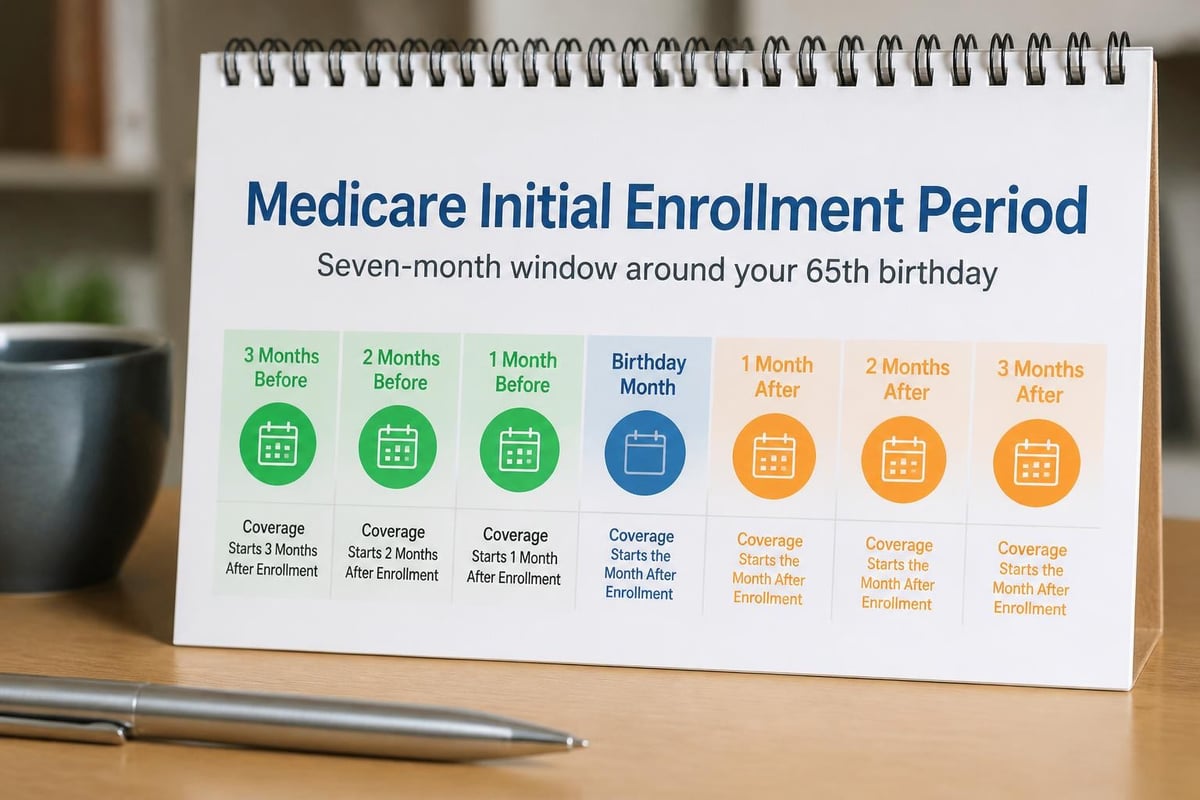
Your Initial Enrollment Period (IEP) is your first opportunity for signing up for Medicare and lasts seven months. This window includes the three months before your 65th birthday month, your birthday month itself, and the three months following your birthday month.
Timing matters significantly during your IEP:
- Enrolling during the three months before your birthday month means coverage starts on the first day of your birthday month
- Enrolling during your birthday month results in coverage beginning the following month
- Waiting until after your birthday month can delay coverage by two to three months
The official Medicare.gov enrollment guide provides detailed timelines for when coverage begins based on your enrollment date. Missing your Initial Enrollment Period can result in permanent late enrollment penalties for Part B and potential gaps in coverage.
Special Enrollment Periods for Unique Situations
If you have creditable coverage through an employer (yours or your spouse's), you may qualify for a Special Enrollment Period (SEP) when that coverage ends. This eight-month window allows you to enroll without penalties, even if you're past your Initial Enrollment Period.
Special Enrollment Periods apply when:
- You're covered by a group health plan based on current employment
- Your employer has 20 or more employees
- You or your spouse stop working or lose that coverage
- You're covered by COBRA and it ends
According to the CMS guidance on managed care eligibility, you should sign up during the last two months before your employer coverage ends or within eight months after it ends. Waiting longer than eight months after losing coverage means you'll face late enrollment penalties.
General Enrollment Period and Consequences
If you miss your Initial Enrollment Period and don't qualify for a Special Enrollment Period, you'll need to wait for the General Enrollment Period, which runs from January 1 through March 31 each year. Coverage doesn't begin until July 1, creating a potentially lengthy gap in your health insurance protection.
| Enrollment Period | Timeframe | Coverage Start | Penalty Risk |
|---|---|---|---|
| Initial Enrollment | 7 months around 65th birthday | Varies by enrollment month | None if enrolled on time |
| Special Enrollment | 8 months after coverage ends | 1st of enrollment month or following month | None with creditable coverage |
| General Enrollment | January 1 – March 31 annually | July 1 | Yes, plus coverage gap |
How to Complete the Medicare Enrollment Process
The actual mechanics of signing up for Medicare vary depending on your current situation with Social Security benefits. Some people are enrolled automatically, while others need to take active steps to ensure their coverage begins on time.
Automatic Enrollment Scenarios
If you're already receiving Social Security retirement benefits or Railroad Retirement Board benefits when you turn 65, you'll be automatically enrolled in Medicare Part A and Part B. You'll receive your Medicare card in the mail approximately three months before your 65th birthday.
Your Medicare card will show:
- Your Medicare number (not your Social Security number)
- Coverage start dates for Part A and Part B
- Your name exactly as it appears in Social Security records
You don't need to take any action if you want both Part A and Part B. However, if you're still working and have creditable employer coverage, you may choose to decline Part B to avoid paying premiums for coverage you don't need. The CMS Original Medicare enrollment guidance explains when declining Part B makes sense and how to re-enroll later without penalties.
Active Enrollment Methods
If you're not receiving Social Security benefits, you need to actively sign up for Medicare during your Initial Enrollment Period. This applies to people who are still working at 65 and haven't yet claimed retirement benefits.
You can enroll through three primary methods:
- Online through Social Security: Visit the Social Security website and complete the Medicare enrollment application digitally
- By phone: Call Social Security at 1-800-772-1213 (TTY 1-800-325-0778) between 8:00 a.m. and 7:00 p.m. local time, Monday through Friday
- In person: Schedule an appointment at your local Social Security office
The AARP Medicare enrollment preparation guide recommends gathering necessary documents before you begin the enrollment process, including your birth certificate, proof of citizenship or legal residency, and information about any current health coverage.

Coordinating with Employer Coverage
One of the most complex aspects of signing up for Medicare involves understanding how it coordinates with employer group health plans. The rules differ based on employer size and whether the coverage comes from current employment or retiree benefits.
For employers with 20 or more employees, the group health plan typically pays first (primary payer), and Medicare pays second. You can delay enrolling in Part B without penalty as long as you maintain creditable employer coverage. Once you or your spouse stop working or lose that coverage, you have eight months to enroll in Part B.
For employers with fewer than 20 employees, Medicare becomes the primary payer once you're eligible, even if you remain employed. In this situation, you should enroll in both Part A and Part B at 65 to avoid gaps in coverage and ensure claims are paid properly.
Key considerations for employer coverage:
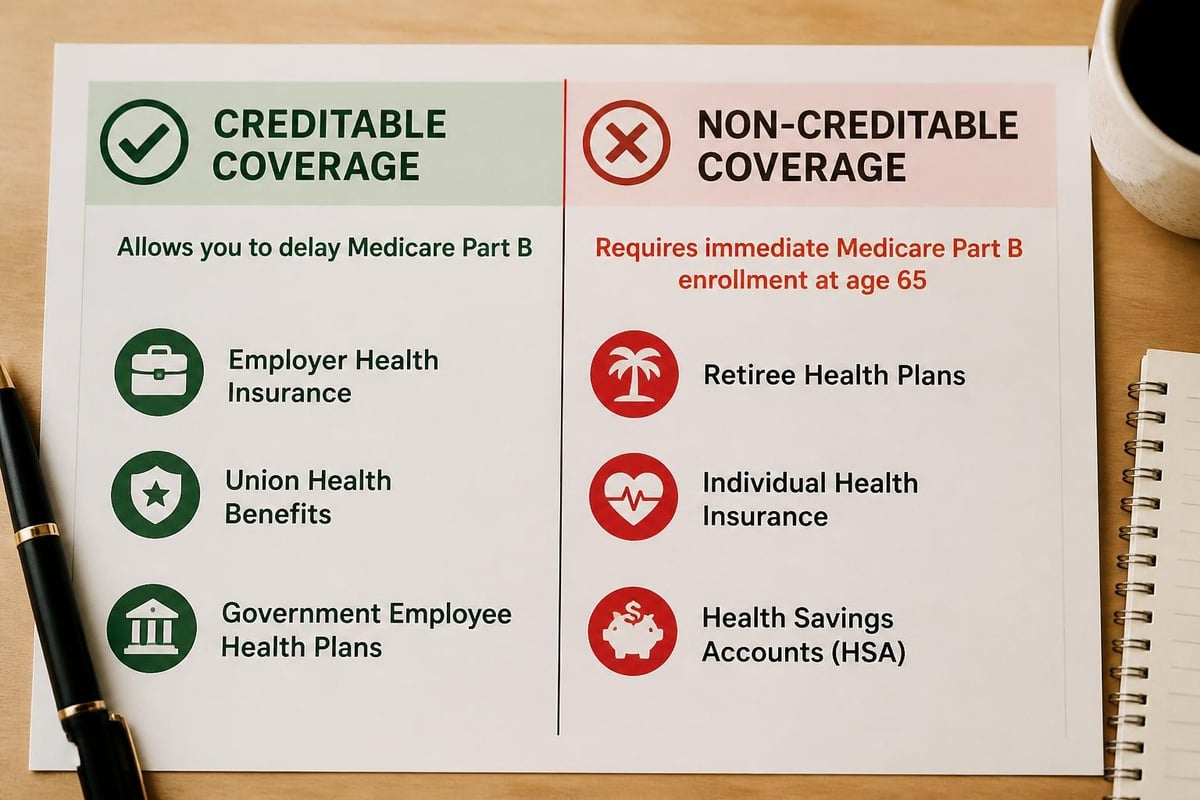
- COBRA is not considered creditable coverage for delaying Medicare enrollment
- Retiree coverage from a former employer may not be creditable
- Health Savings Accounts (HSAs) have special rules when enrolling in Medicare Part A
The IRS Publication 974 provides detailed information about how Medicare enrollment affects HSA eligibility and contribution limits, which is crucial for those planning their retirement healthcare strategy.
Choosing Your Medicare Coverage Options
Signing up for Medicare isn't just about enrolling in Parts A and B. You'll also need to decide whether to add prescription drug coverage (Part D) and whether to supplement Original Medicare with a Medigap plan or switch to a Medicare Advantage plan.
Original Medicare vs. Medicare Advantage
After enrolling in Original Medicare (Parts A and B), you face an important decision about how you'll receive your healthcare coverage going forward. You can stay with Original Medicare and add supplemental coverage, or you can choose a Medicare Advantage plan that bundles hospital, medical, and often prescription drug coverage into one plan.
Original Medicare allows you to see any doctor or specialist who accepts Medicare without network restrictions. However, it doesn't cover everything, leaving you responsible for deductibles, coinsurance, and copayments. Many beneficiaries choose to add Medicare Supplement plans to help cover these out-of-pocket costs.
Medicare Advantage plans, offered by private insurance companies approved by Medicare, provide all Part A and Part B benefits and often include prescription drug coverage, dental, vision, and hearing benefits. These plans typically have network restrictions but may offer lower out-of-pocket costs for those who stay within the network.
| Coverage Type | Provider Choice | Out-of-Pocket Costs | Additional Benefits | Monthly Premium |
|---|---|---|---|---|
| Original Medicare + Medigap | Any Medicare provider | Predictable, mostly covered | Limited | Part B + Medigap premium |
| Medicare Advantage | Network providers | Variable copays/coinsurance | Often includes extras | Part B + plan premium (if any) |
Adding Prescription Drug Coverage
If you choose Original Medicare, you should strongly consider enrolling in a standalone Part D prescription drug plan unless you have creditable drug coverage from another source. Without Part D or creditable coverage, you'll face a late enrollment penalty of 1% of the national base beneficiary premium for each month you go without coverage.
The Part D Initial Enrollment Period coincides with your Medicare Initial Enrollment Period. You can enroll in a Part D plan when you first become eligible for Medicare, during your Special Enrollment Period if you had creditable drug coverage, or during the Annual Election Period from October 15 to December 7 each year.
When evaluating Part D plans, consider:
- Monthly premiums and annual deductibles
- Which tier your medications fall into
- Whether your preferred pharmacy is in the network
- Coverage gap (donut hole) protection
- Total estimated annual costs based on your specific medications
Supplemental Coverage Considerations
For those residing in the Triad Area, including communities throughout Greensboro, Kernersville, High Point, and Winston Salem, understanding supplemental coverage options is essential for complete protection. Medigap policies are standardized across most states, making comparison relatively straightforward.
You have a guaranteed-issue right to buy a Medigap policy during your six-month Medigap Open Enrollment Period, which begins when you're 65 or older and enrolled in Part B. During this time, insurance companies cannot deny you coverage or charge higher premiums based on pre-existing health conditions.
Avoiding Common Enrollment Mistakes
Many people make preventable errors when signing up for Medicare that can cost thousands of dollars in penalties or leave them with inadequate coverage. Understanding these common pitfalls helps you navigate the enrollment process successfully.
Late Enrollment Penalties
The most expensive mistake is missing your enrollment deadlines without having creditable coverage. The Part B late enrollment penalty equals 10% of the standard premium for each full 12-month period you were eligible but didn't enroll. You'll pay this penalty for as long as you have Part B.
Example calculation:
If you delay Part B enrollment for 30 months (2.5 years), your penalty is 20% (2 full 12-month periods × 10%). With the 2026 standard Part B premium, this penalty adds a permanent surcharge to your monthly premium.
The Part D penalty calculation is more complex, equaling 1% of the national base beneficiary premium multiplied by the number of months without creditable coverage. Unlike the Part B penalty, the Part D penalty amount changes annually as the base premium changes.
Creditable Coverage Confusion
Not all health coverage counts as creditable for delaying Medicare enrollment. Many people incorrectly believe that any employer coverage, COBRA, or marketplace plan allows them to postpone signing up for Medicare without consequences.
Coverage types and creditable status:
- Group health plans from employers with 20+ employees: Creditable
- COBRA continuation coverage: Not creditable
- VA benefits: Generally creditable but complex
- TRICARE for Life: Requires Medicare Part A and Part B
- Marketplace/ACA plans: Not creditable for delaying Medicare
The Kaiser Family Foundation enrollment FAQ provides clear explanations of which coverage types are creditable and how to document your coverage to avoid penalties when enrolling later.
Part A-Only Enrollment Issues
Some people believe they should enroll in premium-free Part A while declining Part B if they have employer coverage. However, this strategy can backfire if you're still contributing to a Health Savings Account (HSA).
Once you enroll in any part of Medicare, including Part A, you can no longer make tax-deductible contributions to an HSA. Even more problematic, Part A enrollment is automatically backdated up to six months (but not before age 65), which can create a retroactive six-month period during which any HSA contributions were technically ineligible and may be subject to tax penalties.
If you're actively contributing to an HSA and want to continue doing so, you should carefully time your Medicare enrollment and stop HSA contributions at least six months before enrolling in Part A. For specific guidance on navigating Medicare enrollment in the Triad Area, working with an experienced local advisor can help you avoid these costly mistakes.
Special Situations and Enrollment Scenarios
Not everyone's path to signing up for Medicare follows the standard age-65 enrollment. Several special circumstances require different approaches and additional considerations.
Working Past Age 65
If you or your spouse work past 65 and have employer group health coverage, you generally want to enroll in premium-free Part A but may delay Part B. The key factor is employer size, as previously discussed.
Critical steps when working past 65:
- Verify your employer has 20 or more employees (coverage through smaller employers requires different handling)
- Confirm your coverage is creditable by requesting a letter from your employer or plan administrator
- Keep documentation of continuous creditable coverage for when you eventually enroll
- Contact Social Security to decline Part B if you're automatically enrolled but want to delay
- Mark your calendar for the coverage end date so you enroll in Part B during your Special Enrollment Period
Disability and Early Medicare Eligibility
Individuals under 65 who receive SSDI automatically receive Medicare after 24 months of disability benefits. This enrollment happens automatically, and you'll receive your Medicare card in the mail.
If you're working with disability and employer coverage, the same coordination of benefits rules apply, though the employer size threshold is different. For disability beneficiaries under 65, the employer must have 100 or more employees for the group plan to pay primary.
Moving to or from the United States
If you're living abroad when you become eligible for Medicare, you generally should still enroll in Part A if you're eligible for premium-free coverage. Part B enrollment is optional if you're living outside the U.S., as Medicare typically doesn't cover healthcare services received abroad.
When you return to the U.S. to live, you can enroll in Part B during a Special Enrollment Period without penalties. However, you'll need to provide documentation showing you lived outside the United States during the period you didn't have Part B.
Resources and Support for Medicare Enrollment
The Medicare.gov getting started guide serves as the official government resource for understanding your options and next steps. It provides comprehensive information about enrollment periods, coverage choices, and how to compare plans.
For personalized assistance understanding your Medicare options in Greensboro, Kernersville, High Point, Winston Salem, or anywhere in the Triad Area, reaching out to local insurance professionals who specialize in Medicare can provide clarity tailored to your specific situation.
Contact information for guidance:
- Phone: 336-862-1763
- Email: moserinsurancegroup@gmail.com
- Website: moserinsurancegroup.com
Questions to Ask Before Enrolling
Before completing your enrollment, ensure you can answer these essential questions:
- Do I need to actively enroll, or will I be automatically enrolled?
- Should I enroll in Part B now, or do I have creditable coverage that allows me to delay?
- What prescription drug coverage do I need?
- Would a Medicare Supplement plan or Medicare Advantage plan better suit my healthcare needs and budget?
- Do I have documentation of creditable coverage if I'm enrolling during a Special Enrollment Period?
- How will Medicare coordinate with my other insurance if I'm still working?
Taking time to understand these answers before signing up for Medicare ensures you make informed decisions that protect both your health and your finances throughout retirement.
Documentation You May Need
Gathering necessary documentation before beginning the enrollment process streamlines the experience and prevents delays:
- Birth certificate or proof of birth
- Proof of U.S. citizenship or legal residency
- Current health insurance information
- Employer coverage letters stating creditable coverage dates
- Social Security number
- Banking information if setting up automatic premium payments
Understanding Medicare Costs Beyond Premiums
While most people focus on monthly premiums when signing up for Medicare, understanding the full cost structure helps you budget accurately and choose the right supplemental coverage.
Part A Hospital Insurance Costs
Most beneficiaries pay no premium for Part A because they or their spouse paid Medicare taxes during their working years. However, Part A includes a deductible of $1,676 per benefit period in 2026, and extended hospital stays can trigger coinsurance charges.
A benefit period begins when you enter a hospital and ends when you've been out of the hospital or skilled nursing facility for 60 consecutive days. If you're readmitted after a new benefit period begins, you pay the deductible again.
Part B Medical Insurance Costs
The standard Part B premium for 2026 is adjusted annually based on inflation and program costs. Higher-income beneficiaries pay an Income-Related Monthly Adjustment Amount (IRMAA) in addition to the standard premium, based on tax returns from two years prior.
2026 Part B costs also include:
- Annual deductible before coverage begins
- 20% coinsurance for most doctor services and outpatient care
- Potential excess charges if you see providers who don't accept Medicare assignment
These out-of-pocket costs are why many beneficiaries choose to add supplemental coverage after signing up for Medicare. The predictability of Medicare Supplement insurance appeals to those who want to minimize unexpected medical bills.
Income-Related Premium Adjustments
If your modified adjusted gross income exceeds certain thresholds, you'll pay higher Part B and Part D premiums. These thresholds are indexed for inflation and affect individuals earning more than $106,000 and couples filing jointly earning more than $212,000 in 2024 (the income year that determines 2026 premiums).
| Income (Individual) | Income (Joint) | Part B IRMAA | Part D IRMAA |
|---|---|---|---|
| ≤ $106,000 | ≤ $212,000 | $0 | $0 |
| $106,001-$133,000 | $212,001-$266,000 | Tier 1 surcharge | Tier 1 surcharge |
| $133,001-$167,000 | $266,001-$334,000 | Tier 2 surcharge | Tier 2 surcharge |
| $167,001-$200,000 | $334,001-$400,000 | Tier 3 surcharge | Tier 3 surcharge |
| $200,001-$500,000 | $400,001-$750,000 | Tier 4 surcharge | Tier 4 surcharge |
| > $500,000 | > $750,000 | Tier 5 surcharge | Tier 5 surcharge |
If you experience a life-changing event that reduces your income (retirement, divorce, loss of income-producing property), you can request a redetermination of your IRMAA using Form SSA-44.
Successfully signing up for Medicare requires understanding your eligibility, choosing the right enrollment period, and selecting coverage that meets your healthcare needs and budget. The decisions you make during enrollment affect your coverage and costs for years to come, making it essential to get expert guidance tailored to your situation. Whether you're approaching 65, retiring with employer coverage, or helping a family member navigate Medicare for the first time, Moser Insurance Group Inc provides clear, personalized support to help you make confident decisions about your Medicare coverage. Contact us at 336-862-1763 or moserinsurancegroup@gmail.com to discuss your Medicare options and ensure you're enrolling in the coverage that's right for you.
Recent Comments