

Every business depends on certain individuals whose expertise, relationships, or leadership make them indispensable to daily operations and long-term success. When these critical employees face unexpected health challenges or pass away, the financial consequences can threaten the entire organization. Key man insurance provides a safety net that helps businesses maintain stability, cover recruitment costs, and protect their bottom line during difficult transitions. This specialized form of business insurance has become increasingly important as companies recognize that their most valuable assets often walk out the door each evening.
Understanding Key Man Insurance and Its Purpose
Key man insurance is a life insurance policy that a business purchases on the life of a critical employee, with the company named as the beneficiary. The policy compensates the organization for financial losses that occur when someone essential to operations dies or becomes disabled. Unlike traditional life insurance that protects families, key man insurance protects the business entity itself.
Businesses purchase these policies to address specific financial vulnerabilities. When a key person dies, companies often face immediate revenue decline, expensive recruitment processes, and potential loss of client relationships. The insurance payout helps bridge these gaps while leadership transitions or replaces the individual.
Who Qualifies as a Key Person
Not every employee qualifies as a key person for insurance purposes. The individual must be demonstrably critical to business operations or profitability. Common examples include:
- Company founders and owners who drive strategic vision
- Top revenue generators whose sales relationships are irreplaceable
- Specialized technical experts with unique skills
- Key executives whose leadership stabilizes operations
- Creative directors whose vision defines the brand
The employee's absence must create measurable financial hardship. Insurers evaluate factors like revenue contribution, replacement costs, and operational impact when underwriting policies.
Financial Protection and Coverage Amounts
Determining appropriate coverage amounts requires careful financial analysis. Businesses must calculate potential losses from multiple angles to establish adequate protection levels. Understanding key man insurance fundamentals helps companies make informed coverage decisions.
Revenue-Based Calculations
Many businesses use revenue multiples to determine coverage. If a salesperson generates $2 million annually, a policy might cover five to ten times that amount-between $10 million and $20 million. This approach accounts for immediate revenue loss and the time required to replace that production.
Cost-Based Calculations
Another method focuses on replacement expenses. Companies calculate recruitment costs, training investments, productivity gaps, and potential client losses. Adding these figures produces a comprehensive coverage target.

| Coverage Method | Calculation Approach | Typical Range |
|---|---|---|
| Revenue Multiple | Annual revenue × 5-10 years | $500K – $10M+ |
| Profit Contribution | Annual profit impact × 3-5 years | $300K – $5M |
| Replacement Cost | Recruitment + training + lost productivity | $100K – $2M |
| Debt Coverage | Outstanding business loans and obligations | Varies by debt level |
Policy Types and Structure Options
Key man insurance policies come in several formats, each serving different business needs and budget constraints. Choosing the right structure depends on coverage duration requirements and financial objectives.
Term Life Insurance for Key Employees
Term life insurance represents the most affordable option for key man coverage. Businesses select coverage periods-typically 10, 20, or 30 years-that align with expected retention timelines. Premiums remain fixed throughout the term, and the death benefit pays only if the insured person dies during the coverage period.
This approach works well for younger key employees or situations where the business expects to reduce dependency on specific individuals over time. The lower premiums allow companies to purchase higher coverage amounts within budget constraints.
Permanent Life Insurance Solutions
Permanent policies, including whole life and universal life options, provide lifetime coverage and build cash value over time. While premiums cost more initially, these policies offer financial flexibility. Companies can borrow against accumulated cash value for business needs or use the policy as a financial asset on balance sheets.
Permanent coverage makes sense for founders and long-term executives whose value extends throughout their careers. The cash value component creates an additional business asset that grows tax-deferred.
Implementation Process and Requirements
Securing key man insurance involves several steps that require coordination between business leadership, the insured employee, and insurance providers. The implementation process typically takes four to eight weeks from application to policy issuance.
Step-by-Step Implementation
- Identify key personnel and quantify their financial impact
- Obtain employee consent for medical underwriting and coverage
- Complete financial justification demonstrating insurable interest
- Submit applications with required business documentation
- Undergo medical examinations for underwriting review
- Review policy terms and approve final coverage details
- Execute ownership agreements establishing business as beneficiary
- Implement premium payment systems through business accounts
The business must demonstrate legitimate insurable interest, meaning the company would suffer measurable financial harm from the employee's death. Documentation includes financial statements, organizational charts, revenue attribution, and succession planning materials.
Medical Underwriting Considerations
Insurance companies evaluate the key person's health status, age, and lifestyle factors. Better health profiles result in lower premiums and easier approval. Businesses should prepare key employees for:
- Comprehensive medical examinations
- Blood and urine testing
- Medical history questionnaires
- Prescription medication reviews
- Lifestyle and occupation assessments
Pre-existing conditions don't automatically disqualify applicants but may increase premiums or reduce coverage amounts. Working with experienced insurance professionals helps navigate underwriting challenges. In the Triad Area, including Greensboro, Kernersville, High Point, and Winston Salem, businesses can connect with local expertise to guide the process.
Tax Implications and Financial Considerations
Key man insurance creates specific tax situations that differ from personal life insurance policies. Understanding these implications helps businesses structure coverage effectively and avoid unexpected tax consequences.
Premium Deductibility
Generally, businesses cannot deduct key man insurance premiums as business expenses. The IRS treats these payments as non-deductible investments in company protection. However, this limitation is offset by favorable death benefit treatment in many situations.
Death Benefit Taxation
When structured properly, death benefits from key man insurance arrive tax-free to the business. This tax-free status provides maximum financial relief during already difficult circumstances. However, improper policy ownership or beneficiary designations can trigger taxable events.
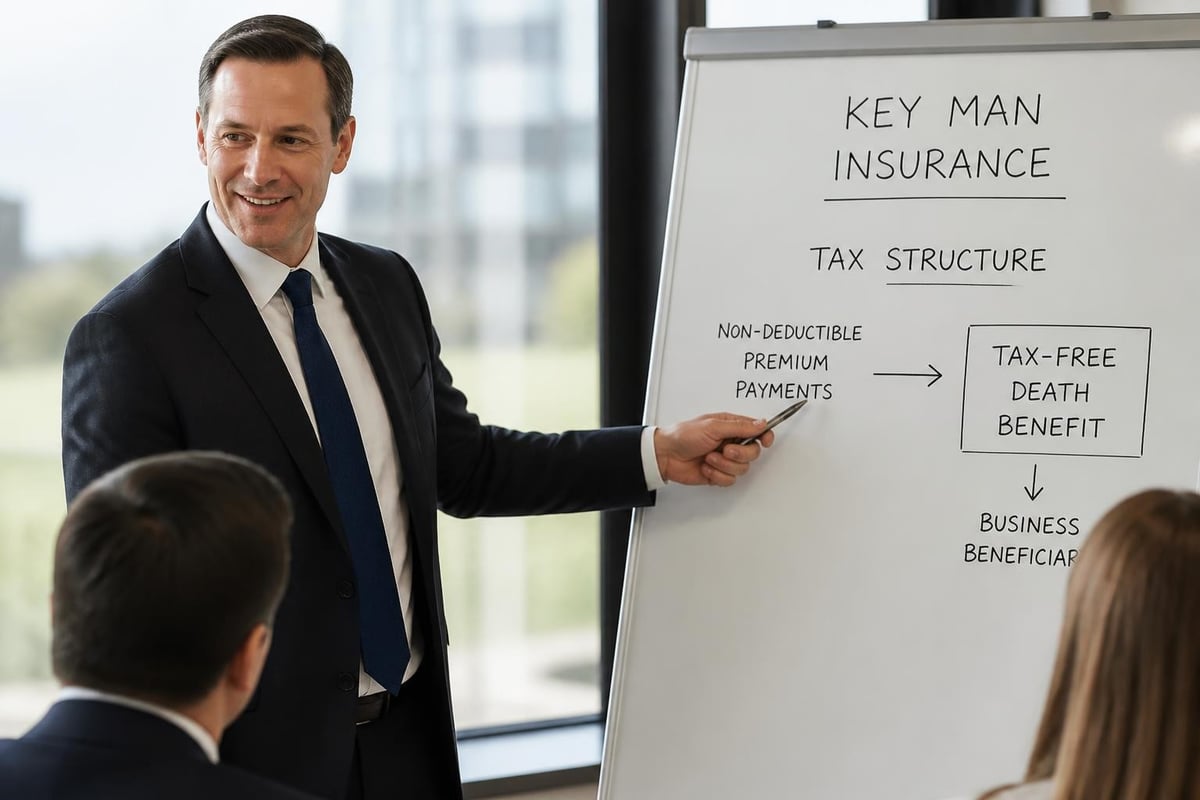
Businesses should consult tax professionals before implementing key man insurance to ensure compliance with current regulations and optimal tax treatment. Policy structures that seemed beneficial years ago may require updates based on changing tax laws.
Using Death Benefits Strategically
When tragedy strikes and a key person dies, the insurance payout provides critical resources during transition periods. Strategic use of death benefits helps companies maintain operations and emerge stronger.
Common Benefit Applications
- Revenue replacement during sales transition periods
- Recruitment and training costs for replacement personnel
- Debt service to maintain positive banking relationships
- Operational continuity covering temporary consultants or contractors
- Buy-sell funding purchasing ownership shares from estates
- Client retention investments in relationship management
- Business restructuring expenses during strategic pivots
The flexibility of death benefit usage allows companies to address their most pressing needs. Unlike restricted business loans, insurance proceeds can be deployed wherever leadership determines they'll provide maximum value.
Buy-Sell Agreement Integration
Many businesses combine key man insurance with buy-sell agreements to address ownership transition challenges. When key persons hold ownership stakes, their death creates both operational and ownership complications. Integrated planning addresses both dimensions simultaneously.
Cross-Purchase Arrangements
In cross-purchase structures, each owner purchases policies on other owners. When one owner dies, survivors use death benefits to purchase the deceased owner's shares from their estate. This approach works well for small partnerships with two to four owners.
Entity Purchase Plans
The business itself owns policies on each owner. When an owner dies, the company uses death benefits to buy back shares from the estate. This structure simplifies administration for larger ownership groups and reduces the total number of policies needed.
| Agreement Type | Policy Ownership | Best For | Complexity Level |
|---|---|---|---|
| Cross-Purchase | Individual owners | 2-4 partners | Moderate |
| Entity Purchase | Business entity | 5+ owners | Lower |
| Hybrid Approach | Mixed ownership | Complex structures | Higher |
Cost Factors and Premium Determinants
Key man insurance premiums vary significantly based on multiple underwriting factors. Understanding these variables helps businesses budget appropriately and structure policies cost-effectively.
Primary Cost Drivers
- Age of the insured key person
- Health status and medical history
- Coverage amount requested
- Policy type (term versus permanent)
- Occupation and associated risks
- Tobacco use and lifestyle factors
- Company financial stability
Younger, healthier key employees generate lower premiums for the same coverage amounts. A 35-year-old executive in excellent health might secure $1 million in 20-year term coverage for $1,000 annually, while a 55-year-old with health issues could pay $8,000 or more for identical coverage.
Premium Budget Planning
Businesses should budget one to three percent of the key person's annual compensation for term insurance premiums, though actual costs depend on individual circumstances. Permanent policies typically require two to five times higher premium commitments but build cash value that partially offsets costs over time.
For context, just as families protecting their loved ones might explore life insurance options to secure financial futures, businesses must protect their most valuable human assets through properly structured key man coverage.
Industry-Specific Applications
Different industries face unique vulnerabilities that key man insurance addresses effectively. Tailoring coverage to industry-specific risks ensures adequate protection.
Professional Services Firms
Law practices, accounting firms, and consulting companies depend heavily on individual client relationships and technical expertise. Partners who leave take relationships and revenue with them. Key man insurance helps these firms weather transitions while preserving client confidence.
Technology Companies
Startups and established tech firms often rely on visionary founders or specialized engineers whose innovations drive company value. Losing these individuals can destroy investor confidence and competitive advantages. Insurance proceeds support continuity during leadership searches.
Healthcare Practices
Medical practices, dental offices, and specialty clinics face unique challenges when key physicians depart. Patient relationships, specialized skills, and referral networks become vulnerable. Coverage helps practices maintain operations while recruiting replacement providers.
In regions like the Triad Area, including communities throughout Greensboro, Kernersville, High Point, and Winston Salem, local businesses across all sectors use key man insurance to protect against talent loss.
Multiple Key Person Strategies
Many businesses depend on several critical individuals rather than just one person. Implementing coverage across multiple key employees creates comprehensive protection but requires strategic planning.
Coverage Prioritization
When budget constraints limit total insurance spending, businesses must prioritize coverage. Consider these factors:
- Revenue impact – Who generates the most income?
- Replacement difficulty – Which skills are hardest to find?
- Institutional knowledge – Who holds critical information?
- Client relationships – Which individuals own key accounts?
- Strategic importance – Who drives competitive advantages?
Companies often implement tiered coverage, providing maximum protection for the most critical individuals while maintaining baseline coverage for secondary key persons.

Policy Ownership and Beneficiary Designation
Proper ownership structure ensures death benefits serve their intended purpose and receive favorable tax treatment. Mistakes in this area can create unintended consequences.
Corporate Ownership
The business entity should own and be named as the beneficiary on key man policies. This structure ensures death benefits flow directly to the company for business use. Corporate ownership also prevents personal creditors from accessing benefits and maintains control within business operations.
Split-Dollar Arrangements
Some companies use split-dollar arrangements that share benefits between the business and the employee's family. While more complex, these structures can help recruit or retain key talent who want personal coverage but cannot afford adequate insurance independently.
Regular Policy Reviews and Updates
Key man insurance requires ongoing attention to maintain effectiveness. Business circumstances change, and policies must evolve accordingly.
Annual Review Checklist
- Confirm key persons remain with the company
- Verify coverage amounts still match financial exposure
- Update beneficiary information after ownership changes
- Review premium payment status and budgets
- Assess whether new key persons need coverage
- Evaluate whether former key persons should be removed
- Consider policy performance for permanent insurance
- Adjust for salary increases or role changes
Companies should conduct formal reviews annually and after significant business events like acquisitions, major hires, or strategic pivots. Outdated coverage provides false security and wastes premium dollars.
Alternative Risk Management Strategies
While key man insurance provides valuable protection, businesses should implement complementary risk management strategies for comprehensive coverage.
Succession Planning Integration
Formal succession plans identify and develop potential replacements for key persons before crises occur. Cross-training, mentorship programs, and documented procedures reduce dependency on any single individual. Insurance proceeds become more effective when succession frameworks already exist.
Disability Income Protection
Key man life insurance only pays death benefits. Disability insurance protects against situations where key employees become unable to work but remain alive. Many businesses implement both coverages for comprehensive protection.
Knowledge Management Systems
Documenting critical processes, client relationships, and institutional knowledge reduces the impact of losing key personnel. While insurance provides financial resources, proper documentation preserves operational capabilities.
For comprehensive protection planning, businesses throughout Winston Salem and surrounding areas can connect with insurance professionals at 336-862-1763 or moserinsurancegroup@gmail.com to discuss integrated risk management approaches.
Common Implementation Mistakes
Understanding frequent pitfalls helps businesses avoid costly errors when establishing key man insurance programs.
Insufficient Coverage Amounts
Many companies underestimate potential losses and purchase inadequate coverage. Conservative projections may seem prudent initially but leave businesses vulnerable during actual crises. Thorough financial analysis prevents this mistake.
Forgetting Policy Updates
Businesses purchase policies, then neglect them for years. Meanwhile, key persons change roles, new critical employees join, and coverage amounts become outdated. Regular reviews prevent this common problem.
Improper Beneficiary Designation
Naming the wrong beneficiary or using unclear designations creates legal complications and delays benefit payments. Precise, properly executed beneficiary forms are essential.
Neglecting Employee Communication
Key employees sometimes resist participating in insurance programs because they misunderstand the purpose or fear implications. Clear communication about how coverage protects the business and their colleagues improves cooperation.
Claim Filing and Benefit Distribution
When the unthinkable happens, businesses must navigate the claims process efficiently to access death benefits quickly. Understanding procedures in advance reduces stress during difficult times.
Required Documentation
Insurance companies require specific documents before releasing death benefits:
- Official death certificate
- Completed claim forms
- Policy documentation
- Proof of beneficiary status
- Business entity verification
Most insurers pay claims within 30 to 60 days after receiving complete documentation. Delays typically result from missing paperwork rather than company resistance.
Distribution and Use Planning
Before receiving death benefits, business leadership should outline preliminary distribution plans. While circumstances may require adjustments, advance planning ensures funds address the most critical needs first. Priority typically flows toward immediate operational continuity, followed by recruitment efforts, and finally strategic investments.
Regulatory Compliance Considerations
Key man insurance operates within specific regulatory frameworks that businesses must understand and follow. Violations can result in denied claims or adverse tax consequences.
Insurable Interest Requirements
Companies must demonstrate legitimate insurable interest in the key person's life. This requirement prevents businesses from purchasing policies on individuals whose death wouldn't create financial harm. Documentation proving the person's value and potential loss establishes insurable interest.
State-Specific Regulations
Insurance regulations vary by state, affecting policy availability, premium costs, and procedural requirements. Businesses operating across multiple states must ensure compliance in all jurisdictions. Working with licensed professionals familiar with North Carolina regulations helps companies in moserinsurancegroup.com service areas maintain compliance.
International Considerations for Global Businesses
Companies with international operations or key persons working abroad face additional complexities when implementing key man insurance.
Cross-Border Coverage Challenges
Not all insurance policies provide coverage when key persons work in foreign countries. Businesses must verify whether standard policies extend internationally or whether separate international coverage is required. Some insurers exclude certain high-risk regions or charge additional premiums for global coverage.
Currency and Tax Complications
International key man insurance involves currency exchange considerations and varying tax treatments across jurisdictions. Multinational companies often work with specialized insurance brokers who understand cross-border implications and structure policies accordingly.
Future Trends in Key Man Insurance
The key man insurance landscape continues evolving as business models change and new risks emerge. Understanding emerging trends helps businesses stay ahead of protection needs.
Remote Work Implications
As remote work becomes permanent for many organizations, geographic boundaries matter less for recruitment. However, this shift also means key talent can work anywhere, potentially increasing turnover risks. Companies may need higher coverage amounts or broader protection as key person dependency evolves.
Technology-Driven Underwriting
Insurers increasingly use data analytics, wearable devices, and digital health records to assess risks and price policies. These technological advances may accelerate underwriting timelines and create more personalized premium structures based on real-time health data.
Specialized Coverage Products
Insurance companies develop specialized key man products for specific industries or business models. Tech startups, creative agencies, and professional practices may find tailored coverage options that address unique vulnerabilities more effectively than traditional policies.
Protecting your business from the financial impact of losing critical employees requires careful planning and appropriate insurance coverage. Key man insurance provides the financial resources companies need to maintain operations, recruit replacements, and preserve client relationships during difficult transitions. Whether you're exploring comprehensive business protection strategies or need guidance on life insurance options for your organization, Moser Insurance Group Inc provides clear, personalized support to help you make confident decisions. Contact us at 336-862-1763, email moserinsurancegroup@gmail.com, or visit Moser Insurance Group Inc to discuss how we can help protect your business and personal insurance needs throughout the Triad Area.
Recent Comments