

Navigating health insurance in North Carolina can feel overwhelming, whether you're looking for coverage through an employer, the Health Insurance Marketplace, Medicaid, or Medicare. With changes in healthcare regulations, premium costs, and plan availability occurring each year, understanding your options is essential for protecting your financial health and accessing quality medical care. This comprehensive guide explores the current landscape of health insurance in North Carolina, helping residents in Greensboro, Kernersville, High Point, Winston-Salem, and throughout the Triad Area make informed decisions about their coverage needs.
Understanding North Carolina's Health Insurance Landscape
North Carolina operates a federally facilitated Health Insurance Marketplace, meaning residents use HealthCare.gov to shop for individual and family plans rather than a state-run exchange. This system provides access to qualified health plans that meet Affordable Care Act (ACA) standards, offering essential health benefits and protections regardless of pre-existing conditions.
The state's approach to health insurance differs from some neighboring states in several key ways. North Carolina has not expanded Medicaid under the ACA provisions as of 2026, which affects coverage options for lower-income residents who fall into a coverage gap. Understanding these state-specific factors helps you identify which programs and plans apply to your situation.
Major Providers in the North Carolina Market
Several insurance carriers offer health insurance in North Carolina through various channels:
- Blue Cross Blue Shield of North Carolina: The largest insurer in the state with extensive provider networks
- UnitedHealthcare: Offers individual Marketplace plans and employer group coverage
- Ambetter: Provides competitively priced Marketplace options
- Cigna: Available for employer-sponsored plans and some individual coverage
- Aetna: Primarily serves group employer plans with growing individual options
Each carrier maintains different provider networks, premium structures, and coverage areas. The North Carolina Department of Insurance provides consumer resources for comparing these options and understanding your rights when purchasing coverage.

Types of Health Insurance Available in North Carolina
Individual and Family Marketplace Plans
The Health Insurance Marketplace offers four metal tiers of coverage, each balancing monthly premiums against out-of-pocket costs:
| Metal Tier | Premium Cost | Deductible | Best For |
|---|---|---|---|
| Bronze | Lowest | Highest ($6,000+) | Healthy individuals needing catastrophic protection |
| Silver | Moderate | Medium ($3,000-$5,000) | Most popular; qualifies for cost-sharing reductions |
| Gold | Higher | Lower ($1,000-$2,500) | Regular medical needs or prescriptions |
| Platinum | Highest | Lowest ($0-$1,000) | Frequent healthcare users or chronic conditions |
Premium tax credits (subsidies) are available for households earning between 100% and 400% of the federal poverty level. For 2026, enhanced subsidies through recent legislation have expanded eligibility and increased assistance amounts for middle-income families.
Residents can explore available plans through HealthCare.gov, where they can compare premiums, deductibles, and covered services specific to their county.
Employer-Sponsored Coverage
Most North Carolina residents with health insurance obtain coverage through their employer. Group health plans typically offer more comprehensive coverage at lower individual costs since employers contribute to premium payments.
Key advantages of employer coverage include:
- Pre-tax premium deductions reducing taxable income
- Larger provider networks negotiated at group rates
- No medical underwriting or pre-existing condition exclusions
- Often includes dental and vision benefits
If you have access to employer-sponsored coverage that meets minimum value and affordability standards, you generally won't qualify for Marketplace premium tax credits even if the employer plan is expensive.
Medicaid and NC Health Choice
North Carolina Medicaid provides health coverage for eligible low-income children, pregnant women, parents, seniors, and individuals with disabilities. The North Carolina Department of Health and Human Services administers several managed care plans that deliver Medicaid benefits.
Current Medicaid eligibility categories in North Carolina:
- Children under age 19 in families up to 211% of federal poverty level
- Pregnant women up to 196% of poverty level
- Parents and caretaker relatives up to 44% of poverty level
- Aged, blind, and disabled individuals meeting specific criteria
NC Health Choice extends coverage to children in families earning too much for Medicaid but still needing assistance. Without Medicaid expansion, childless adults generally don't qualify regardless of income level, creating a coverage gap for many working North Carolina residents.
Medicare for Seniors and Disabled Individuals
North Carolina residents age 65 and older, along with younger individuals with qualifying disabilities, access healthcare through Medicare rather than traditional health insurance in North Carolina. This federal program operates differently than commercial insurance, with separate parts covering hospital care (Part A), medical services (Part B), and prescription drugs (Part D).
Many Medicare beneficiaries enhance their coverage with Medicare Advantage Plans that bundle these benefits and often include additional services like dental and vision care. Alternatively, Medicare Supplement plans help cover the gaps in Original Medicare.
Navigating Open Enrollment and Special Enrollment Periods
Annual Open Enrollment
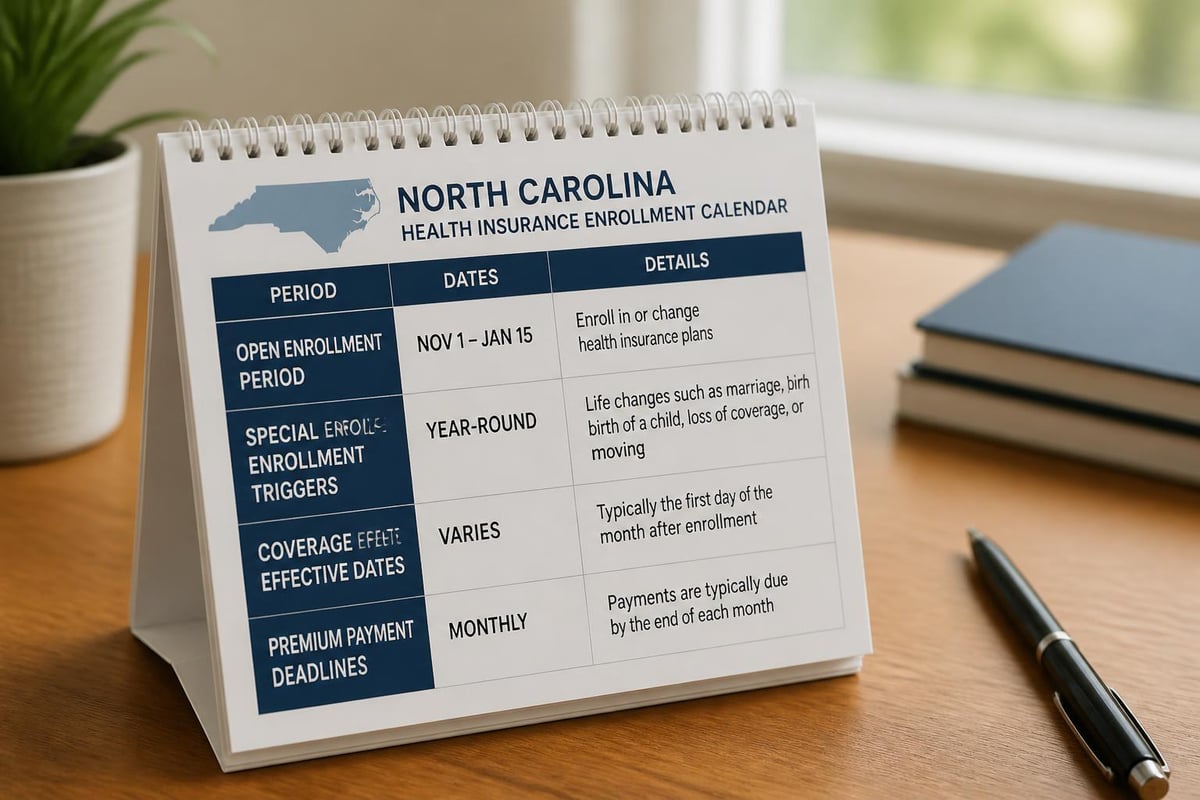
The primary opportunity to enroll in health insurance in North Carolina through the Marketplace occurs during the annual Open Enrollment Period, typically running from November 1 through January 15 each year. During this window, you can:
- Purchase a new Marketplace plan
- Switch to a different plan or metal tier
- Update household information affecting subsidies
- Drop coverage if no longer needed
Missing this deadline means waiting until the next year unless you qualify for a Special Enrollment Period. Planning ahead and reviewing options early in the enrollment window gives you time to compare plans thoroughly.
Special Enrollment Periods
Life changes triggering Special Enrollment Periods include:
- Loss of other coverage: Job loss, aging off parent's plan, divorce
- Marriage or domestic partnership: Adding spouse or partner
- Birth or adoption: Expanding family size
- Moving: Relocating to a new coverage area in North Carolina
- Gaining citizenship or lawful presence: Immigration status changes
You typically have 60 days from the qualifying event to enroll in coverage. Documentation proving the life change is required when applying.
Understanding Costs: Premiums, Deductibles, and Out-of-Pocket Maximums
Breaking Down Health Insurance Costs
Health insurance expenses extend beyond monthly premiums. Understanding the full cost structure helps you budget appropriately and choose the right plan.
Premium: Your monthly payment to maintain coverage, regardless of whether you use healthcare services. Premium tax credits reduce this amount for eligible households.
Deductible: The amount you pay out-of-pocket before insurance begins covering services. Many preventive services are covered before meeting your deductible under ACA plans.
Copayments and Coinsurance: Your share of costs after meeting the deductible. Copays are fixed amounts ($30 for primary care, $50 for specialists), while coinsurance is a percentage (typically 20-30%) of the service cost.
Out-of-Pocket Maximum: The annual cap on your cost-sharing. Once reached, insurance covers 100% of covered services for the remainder of the year.
Premium Tax Credits and Subsidies
Federal subsidies significantly reduce health insurance costs for eligible North Carolina residents. For 2026, enhanced subsidies continue making coverage more affordable across broader income ranges.
A family of four earning $90,000 annually may qualify for substantial premium assistance, while those earning below poverty level can access cost-sharing reductions that lower deductibles and copays on Silver plans.
The Centers for Medicare & Medicaid Services provides consumer assistance programs to help North Carolina residents understand subsidy eligibility and navigate the application process.
Health Insurance Networks and Provider Access
Network Types in North Carolina
Understanding network structures is crucial when selecting health insurance in North Carolina, especially in the Triad Area where provider availability varies by insurer.
-
HMO (Health Maintenance Organization): Requires choosing a primary care physician and getting referrals for specialists. Lower premiums but restricted to network providers except emergencies.
-
PPO (Preferred Provider Organization): Offers flexibility to see any provider, though using in-network doctors costs less. No referrals needed but higher premiums.
-
EPO (Exclusive Provider Organization): Covers only in-network care except emergencies, but no referrals required. Moderate premiums with network restrictions.
-
POS (Point of Service): Hybrid combining HMO referral requirements with PPO out-of-network options at higher cost.
Verifying Provider Networks
Before enrolling, confirm your preferred doctors and hospitals participate in the plan's network. Networks change annually, so providers covered last year may not accept your plan in 2026.
Check the insurer's online provider directory and call your doctor's office directly to verify they accept the specific plan you're considering. This step prevents unexpected out-of-network bills and ensures continuity of care.
State-Specific Programs and Resources
State Health Plan for Teachers and State Employees
The North Carolina State Health Plan covers teachers, state employees, retirees, and their dependents. This plan operates separately from commercial insurance and Marketplace options, offering comprehensive benefits with state subsidization.
Eligible members should compare State Health Plan options with available alternatives during their enrollment period, considering factors like premium costs, coverage levels, and provider networks.
Consumer Assistance and Advocacy
North Carolina provides several resources for residents navigating health insurance questions:
- Navigator Programs: Free, trained assisters help with Marketplace enrollment and subsidy applications
- SHIP (Seniors' Health Insurance Information Program): Counsels Medicare beneficiaries on coverage options
- Department of Insurance Consumer Services: Handles complaints and disputes with insurers
These resources prove especially valuable in Greensboro, Kernersville, High Point, and Winston-Salem, where local navigators understand regional provider networks and plan availability.
Supplemental Insurance Options
While major medical coverage forms the foundation of your healthcare protection, supplemental policies address specific gaps and needs that standard health insurance in North Carolina may not fully cover.
Hospital Indemnity Plans
A hospital indemnity plan pays cash benefits directly to you when hospitalized, helping cover deductibles, coinsurance, and non-medical expenses during recovery. These plans complement high-deductible health plans by providing cash when you need it most.
Critical Illness and Accident Insurance
These supplemental products provide lump-sum payments upon diagnosis of specified conditions (cancer, heart attack, stroke) or accidents requiring treatment. The cash helps with medical expenses and living costs during recovery periods.
Dental and Vision Coverage
Standard health insurance typically excludes routine dental and vision care. Standalone dental and vision plans provide coverage for preventive services, exams, and corrective treatments at affordable monthly costs.

Special Considerations for Different Life Stages
Young Adults and Coverage Options
North Carolina residents under age 26 can remain on their parents' health insurance plans, even if married, living independently, or financially self-sufficient. This option often provides the most comprehensive and affordable coverage for young adults.
Once aging off parental coverage, young adults qualify for a Special Enrollment Period to purchase their own Marketplace plan. Comparing catastrophic plans (available to those under 30) against Bronze plans helps determine the most cost-effective option.
Families with Children
Families should prioritize plans with comprehensive pediatric benefits, including well-child visits, immunizations, and developmental screenings. North Carolina requires all Marketplace plans to cover essential pediatric services, but network breadth and pediatric specialist access varies significantly.
NC Health Choice provides affordable coverage for children in families earning too much for Medicaid, bridging the gap between public and private insurance options.
Pre-Retirement Planning (Ages 55-64)
The years before Medicare eligibility at age 65 often bring higher health insurance costs and coverage concerns. If retiring before 65, carefully evaluate:
- COBRA continuation of employer coverage (expensive but comprehensive)
- Marketplace plans with subsidies based on retirement income
- Spouse's employer plan eligibility
- Bridge coverage strategies until Medicare begins
Working with knowledgeable advisors helps coordinate this transition period, ensuring no coverage gaps occur while managing costs effectively.
How to Choose the Right Health Insurance Plan
Assessing Your Healthcare Needs
Start by evaluating your family's anticipated medical needs for the coming year:
High medical needs indicators:
- Chronic conditions requiring regular specialist care
- Ongoing prescriptions, especially brand-name medications
- Planned surgeries or procedures
- Pregnancy or fertility treatments
Lower medical needs indicators:
- Generally healthy with no chronic conditions
- Minimal prescription medication use
- Infrequent doctor visits beyond preventive care
Match your healthcare utilization patterns to plan designs, balancing premium costs against out-of-pocket exposure.
Comparing Total Annual Costs
Rather than focusing solely on monthly premiums, calculate total anticipated annual costs including:
(Monthly Premium × 12) + Estimated Deductible + Estimated Copays/Coinsurance
A Silver plan with a $400 monthly premium and $3,000 deductible may cost less annually than a Bronze plan with a $300 premium but $7,000 deductible if you require regular medical care.
Prescription Drug Coverage
Check each plan's formulary (list of covered medications) to ensure your prescriptions are included and identify their tier level affecting copay amounts. Preferred generic drugs cost significantly less than non-preferred brand medications.
If taking specialty medications, verify the plan covers them and understand any prior authorization or step therapy requirements that might delay access.
Common Mistakes to Avoid
Overlooking Network Restrictions
Enrolling in a plan without verifying your doctors participate is the most common and costly mistake. Always confirm network status before selecting coverage, especially with HMO and EPO plans that don't cover out-of-network care.
Choosing Based Only on Premium
Low-premium plans attract attention, but high deductibles and out-of-pocket maximums can create financial hardship when medical needs arise. Balance monthly affordability with potential cost exposure.
Missing Enrollment Deadlines
Failing to enroll during Open Enrollment means waiting until the next year unless you qualify for a Special Enrollment Period. Mark calendar reminders and prepare necessary documentation early to avoid coverage gaps.
Ignoring Subsidy Eligibility
Many North Carolina residents who could qualify for premium tax credits never apply, assuming they earn too much or face complicated processes. The Marketplace application automatically determines eligibility, making it worth checking even if unsure.
Not Updating Life Changes
Marriage, divorce, childbirth, or income changes affect subsidy amounts and coverage needs. Report these changes promptly to avoid paying incorrect premiums or owing money at tax time.
Getting Expert Guidance
Navigating health insurance in North Carolina becomes simpler with professional assistance. Licensed insurance agents provide personalized guidance at no cost to consumers, as they're compensated by insurance carriers.
Benefits of working with an insurance professional:
- Unbiased comparison of all available plans in your area
- Clarification of complex insurance terminology and plan features
- Assistance with enrollment paperwork and subsidy applications
- Ongoing support for claims issues and coverage questions
- Coordination between health insurance, Medicare, and supplemental policies
For residents in the Triad Area seeking knowledgeable support, local experts understand regional provider networks and carrier availability specific to Greensboro, Kernersville, High Point, and Winston-Salem.
Contact information for personalized assistance:
- Phone: 336-862-1763
- Email: moserinsurancegroup@gmail.com
- Website: moserinsurancegroup.com
State Regulatory Environment and Consumer Protections
North Carolina maintains robust consumer protections for health insurance policyholders. The state Department of Insurance enforces regulations ensuring fair treatment, accurate advertising, and proper claims handling.
Your Rights as a Policyholder
Under state and federal law, you have the right to:
- Appeal denied claims through internal and external review processes
- Receive coverage for pre-existing conditions without exclusions or waiting periods
- Access emergency services without prior authorization
- Obtain preventive services without cost-sharing
- Receive clear information about coverage, costs, and network restrictions
The North Carolina official state portal provides comprehensive information about health and social services, including assistance programs and consumer rights.
Filing Complaints and Appeals
If you experience problems with your insurer, first follow the plan's internal appeals process. If unresolved, you can file a complaint with the North Carolina Department of Insurance Consumer Services Division or request external review by an independent third party.
Document all communications with your insurer, including dates, representatives spoken with, and outcomes of each interaction. This documentation supports your case during appeals or regulatory complaints.
Impact of Federal Policy on North Carolina Coverage
Federal healthcare policy directly affects health insurance in North Carolina through Marketplace regulations, subsidy funding, and Medicaid provisions. Changes in Washington can alter plan availability, premium costs, and coverage requirements.
Affordable Care Act Provisions
Core ACA protections remain in effect for 2026:
- Guaranteed issue regardless of health status
- Essential health benefits in all Marketplace plans
- No annual or lifetime coverage limits
- Dependent coverage until age 26
- Premium tax credits based on income
These federal standards ensure baseline coverage quality across all plans sold in North Carolina, though specific plan designs and costs vary by carrier and region.
Monitoring Policy Changes
Healthcare policy continues evolving through legislative and regulatory changes. Staying informed about federal and state policy developments helps you anticipate how your coverage options and costs might change in coming years.
Resources like the State Center for Health Statistics provide data on North Carolina's health landscape, helping contextualize policy discussions and coverage trends.
Planning Ahead: Long-Term Health Insurance Strategy
Building Comprehensive Protection
Effective health coverage planning extends beyond selecting an annual Marketplace plan. Consider how different insurance products work together:
Primary health insurance forms your foundation, covering medical expenses and protecting against catastrophic costs. As you approach age 65, understanding the transition to Medicare becomes crucial, including Medicare Supplement plans that work alongside Original Medicare.
Supplemental policies address specific gaps, from dental and vision care to hospital stays and critical illness diagnoses.
Life insurance protects your family's financial security if you pass away, ensuring they can maintain health coverage and living expenses. Products like Health Insurance provide comprehensive medical coverage during working years.
Reviewing Coverage Annually
Health insurance needs change as life circumstances evolve. Annual reviews during Open Enrollment allow you to:
- Reassess medical needs based on the past year's experience
- Update household size and income affecting subsidies
- Compare new plan options and carrier offerings
- Adjust coverage levels matching current requirements
- Verify provider networks include your doctors
This yearly evaluation ensures your coverage remains appropriate and cost-effective as your situation changes.
Regional Considerations in the Triad Area
Residents in Greensboro, Kernersville, High Point, and Winston-Salem have access to major medical centers and specialist networks, influencing plan selection and network adequacy.
Provider Concentration
The Triad Area features several major healthcare systems:
- Cone Health serving Greensboro and surrounding communities
- Wake Forest Baptist Health with extensive facilities in Winston-Salem
- High Point Regional Health System providing local care
- Novant Health maintaining presence across the region
Most health insurance in North Carolina plans maintain networks including these providers, but verifying specific facilities and physician participation remains essential before enrollment.
County-Specific Plan Availability
Guilford, Forsyth, and Randolph counties may have different carrier participation and plan options despite geographic proximity. When shopping for coverage, confirm you're viewing plans available in your specific county of residence.
Rural areas surrounding the Triad cities sometimes have more limited carrier participation, affecting choice and potentially increasing premiums due to reduced competition.
Financial Assistance Beyond Premium Subsidies
Cost-Sharing Reductions
Households earning between 100% and 250% of federal poverty level qualify for cost-sharing reductions that lower deductibles, copays, and out-of-pocket maximums on Silver plans. These reductions provide immediate savings each time you use healthcare services.
Unlike premium tax credits available across metal tiers, cost-sharing reductions only apply to Silver plans, making them the most valuable option for many low-to-moderate income families despite higher base premiums.
Free and Low-Cost Care Programs
North Carolina offers several programs providing healthcare access beyond traditional insurance:
- Community Health Centers: Federally qualified health centers offer sliding-fee scales based on income
- Free Clinics: Volunteer-staffed clinics provide basic care to uninsured patients
- Prescription Assistance Programs: Pharmaceutical manufacturers and nonprofits help with medication costs
- Hospital Financial Assistance: Most hospitals maintain charity care programs for qualifying patients
These resources supplement insurance coverage or provide care for those without coverage options, though they don't replace comprehensive health insurance protection.
Understanding health insurance in North Carolina requires navigating complex options from Marketplace plans to Medicaid, employer coverage, and Medicare transitions. Taking time to compare plans carefully, verify provider networks, and calculate total costs helps ensure you select coverage meeting your family's needs without overpaying for unnecessary features. If you're in the Triad Area and want personalized guidance through your health insurance decisions without pressure or confusion, Moser Insurance Group Inc provides clear explanations and support tailored to your specific situation. Call 336-862-1763 or email moserinsurancegroup@gmail.com to discuss your coverage options with knowledgeable professionals who prioritize your understanding and confidence.
Recent Comments