

Navigating Medicare coverage can feel overwhelming, especially when you're trying to understand which supplemental plan best fits your needs. Medicare Plan G has emerged as one of the most popular Medigap options in 2026, offering comprehensive coverage that fills nearly all the gaps in Original Medicare. For beneficiaries in Greensboro, Winston Salem, High Point, Kernersville, and throughout the Triad Area, understanding the specifics of this plan can make a significant difference in both healthcare access and financial protection. This guide breaks down everything you need to know about medicare plan g, from what it covers to how it compares with other options.
What Medicare Plan G Covers
Medicare plan g is a standardized Medigap policy that supplements Original Medicare (Parts A and B) by covering many out-of-pocket costs. Unlike Medicare Advantage plans, Medigap policies work alongside Original Medicare rather than replacing it.
Comprehensive Benefit Coverage
The comprehensive coverage provided by Plan G includes several critical components that protect beneficiaries from unexpected medical expenses. This plan covers Medicare Part A coinsurance and hospital costs for up to an additional 365 days after Medicare benefits are exhausted. It also handles the Part B coinsurance or copayment, which can add up quickly with frequent doctor visits or outpatient procedures.
Key benefits included in medicare plan g:
- Part A deductible ($1,676 in 2026)
- Skilled nursing facility care coinsurance
- Part B excess charges (up to 15% above Medicare-approved amounts)
- Foreign travel emergency care (up to plan limits)
- Part A hospice care coinsurance or copayment
- Blood transfusions (first three pints per year)
What Plan G Doesn't Cover
Understanding the limitations is equally important when evaluating medicare plan g. The only significant gap in this plan's coverage is the Part B annual deductible, which stands at $257 in 2026. Once you meet this deductible, Plan G covers virtually everything else that Original Medicare approves.

The plan does not cover prescription drugs, so beneficiaries typically need to enroll in a separate Part D prescription drug plan. Additionally, like all Medigap policies, it doesn't cover dental, vision, or hearing care unless those services are covered by Original Medicare.
Eligibility and Enrollment Requirements
Enrolling in medicare plan g requires meeting specific eligibility criteria and understanding the optimal enrollment windows. Most people become eligible for Medigap plans when they turn 65 and enroll in Medicare Part B.
Open Enrollment Period Advantages
The Medigap Open Enrollment Period is a six-month window that begins the month you turn 65 and are enrolled in Part B. During this time, insurance companies cannot deny you coverage or charge higher premiums based on pre-existing health conditions. This guaranteed issue right represents the most favorable time to purchase medicare plan g.
For residents throughout the Triad Area, including those in Greensboro, Winston Salem, and High Point, this enrollment period provides crucial protections. If you miss this window, you may face medical underwriting, which could result in higher premiums or coverage denials.
| Enrollment Scenario | Guaranteed Issue? | Medical Underwriting? |
|---|---|---|
| During Open Enrollment | Yes | No |
| After Open Enrollment | Limited situations | Usually yes |
| Trial Right Period | Yes | No |
Special Enrollment Situations
Certain circumstances trigger guaranteed issue rights outside the standard enrollment period. If you're leaving a Medicare Advantage plan within the first year of joining after your Initial Enrollment Period, you have special protections. Additionally, if your current coverage ends through no fault of your own, you may qualify for guaranteed issue rights.
Understanding when you become eligible for Medicare helps ensure you don't miss these critical enrollment windows.
Cost Considerations for Medicare Plan G
The premium structure for medicare plan g varies significantly based on several factors, making it essential to compare options carefully. In the Triad Area, including Kernersville and surrounding communities, prices can differ between insurance carriers offering the same standardized benefits.
Premium Pricing Methods
Insurance companies use three primary methods to price Medigap policies:
Community-rated (no-age-rated): Everyone pays the same premium regardless of age, though prices may increase for inflation and other factors.
Issue-age-rated: Premiums are based on your age when you purchase the policy and typically don't increase as you age, only for inflation.
Attained-age-rated: Premiums increase as you get older, in addition to inflation adjustments.
Most medicare plan g policies in North Carolina use attained-age rating, which means your premiums will likely increase annually. In 2026, average monthly premiums for Plan G range from $125 to $220, depending on your location, age, and chosen carrier.
Comparing Total Healthcare Costs
When evaluating medicare plan g costs, consider the total annual expense including premiums and the Part B deductible. This approach provides a clearer picture of your actual out-of-pocket commitment.
| Age Group | Average Monthly Premium | Annual Premium + Deductible |
|---|---|---|
| 65-69 | $130-$160 | $1,817-$2,177 |
| 70-74 | $155-$185 | $2,117-$2,477 |
| 75-79 | $175-$210 | $2,357-$2,777 |
| 80+ | $200-$240 | $2,657-$3,137 |
These figures represent typical ranges in the Greensboro and Triad Area markets. Individual quotes may vary based on your specific circumstances and the carriers available in your zip code.
Medicare Plan G Versus Plan N
Comparing different Medigap options helps you identify which plan delivers the best value for your situation. The choice between medicare plan g and Plan N represents one of the most common decisions beneficiaries face in 2026.
Coverage Differences That Matter
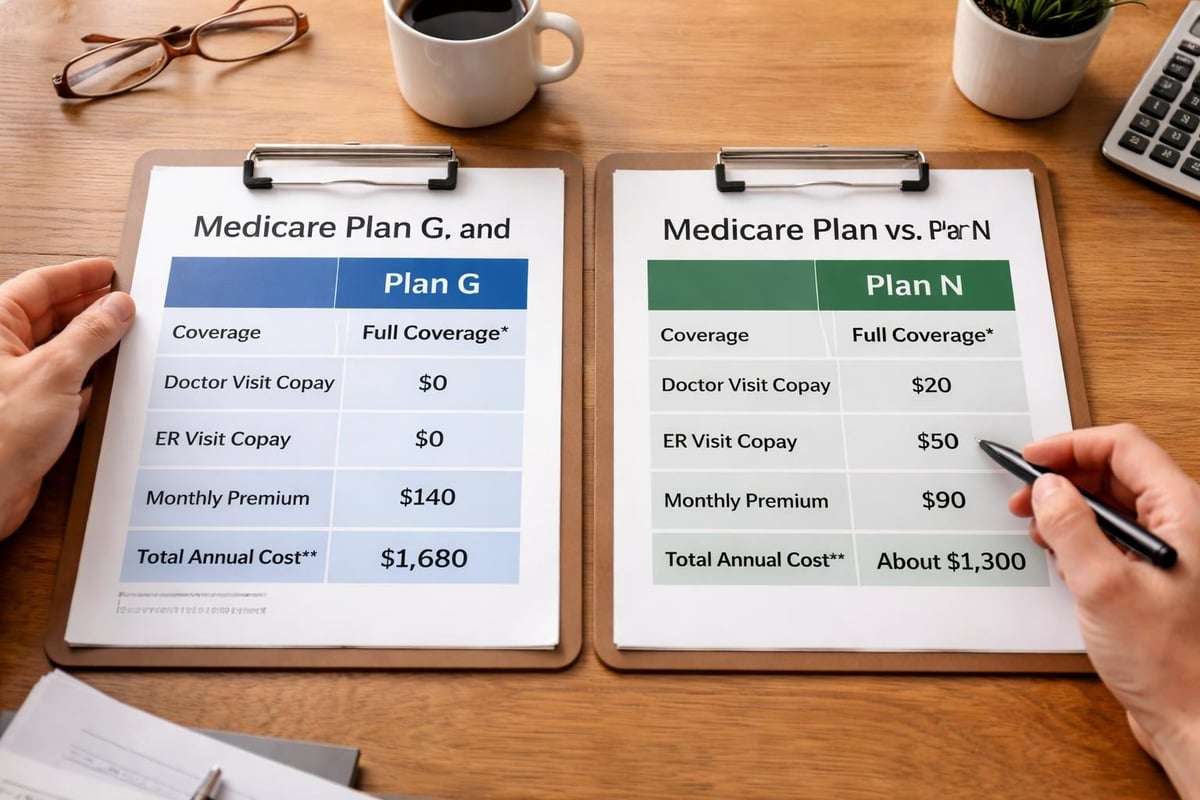
Plan N offers slightly less comprehensive coverage than medicare plan g but comes with lower premiums. The comparison of Medigap plan benefits shows that Plan N requires copayments of up to $20 for doctor visits and $50 for emergency room visits that don't result in admission.
Additionally, Plan N doesn't cover Part B excess charges, which occur when doctors who accept Medicare charge up to 15% more than the Medicare-approved amount. In North Carolina, excess charges are relatively uncommon, making Plan N more attractive for some Triad Area residents.
Which Plan Offers Better Value?
The value proposition depends on your healthcare utilization patterns and financial preferences. If you visit doctors frequently or want complete predictability in your costs, medicare plan g provides superior peace of mind. The comprehensive coverage means you'll only pay the Part B deductible annually, making budgeting straightforward.
However, if you're relatively healthy and visit doctors infrequently, Plan N's lower premiums might offset the occasional copayments. The annual premium difference typically ranges from $300 to $600, which can fund the copayments for numerous doctor visits.
Medicare Plan G and High-Deductible Options
For beneficiaries seeking lower monthly premiums, a high-deductible version of medicare plan g presents an alternative worth considering. This option appeals to those comfortable with more financial risk in exchange for reduced premium costs.
How High-Deductible Plan G Works
The high-deductible Plan G requires you to pay $2,800 (2026 amount) in out-of-pocket costs before the plan begins covering Medicare-approved expenses. Once you meet this deductible, the plan covers everything that standard medicare plan g covers.
Monthly premiums for high-deductible Plan G typically range from $45 to $75 in the Triad Area, representing significant savings compared to standard Plan G. However, you must be prepared to cover the full deductible if you experience significant medical needs.
Ideal candidates for high-deductible Plan G:
- Healthy individuals with minimal medical needs
- Those with sufficient emergency savings
- Beneficiaries who prefer lower fixed monthly costs
- People comfortable with financial uncertainty
Break-Even Analysis
Determining whether high-deductible or standard medicare plan g makes financial sense requires calculating your break-even point. If the annual premium savings exceed your expected out-of-pocket costs under the high-deductible plan, it may represent the better choice.
For example, if standard Plan G costs $175 monthly ($2,100 annually) and high-deductible Plan G costs $60 monthly ($720 annually), you save $1,380 in premiums. As long as your medical expenses don't trigger the full $2,800 deductible, you come out ahead financially.
Provider Access and Network Flexibility
One of medicare plan g's most valuable features is the freedom to see any healthcare provider who accepts Medicare, without network restrictions or referral requirements. This flexibility proves particularly beneficial for residents across Greensboro, Winston Salem, High Point, and Kernersville who may seek specialized care.
Nationwide Coverage Benefits
Because Medigap policies work with Original Medicare, your coverage travels with you throughout the United States. Whether you're visiting family in another state or spending winters in warmer climates, medicare plan g provides consistent coverage wherever Medicare is accepted.
This contrasts sharply with Medicare Advantage plans, which typically restrict coverage to specific network providers and geographic areas. Understanding what Original Medicare covers helps clarify how Plan G supplements these benefits regardless of location.
Specialist Access Without Referrals
Under medicare plan g, you can visit specialists directly without obtaining referrals from primary care physicians. This streamlined access to care means less administrative burden and faster access to specialty services when you need them.
For beneficiaries managing chronic conditions or requiring ongoing specialist care, this flexibility often justifies the higher premiums compared to Medicare Advantage alternatives.
Making the Right Decision for Your Healthcare Needs
Selecting medicare plan g requires careful evaluation of your personal healthcare situation, financial resources, and coverage priorities. The decision becomes easier when you break down the key factors systematically.
Assessing Your Healthcare Utilization
Consider how frequently you visit doctors, whether you take multiple medications, and if you have chronic conditions requiring ongoing management. Higher healthcare utilization generally favors comprehensive coverage like medicare plan g, where predictable costs prevent financial surprises.
Those who rarely visit doctors might find the guaranteed coverage excessive, making Plan N or high-deductible Plan G more economically sensible. However, remember that healthcare needs often increase with age, and switching plans later may be difficult without guaranteed issue rights.
Financial Planning Considerations
Evaluate your budget's capacity for both monthly premiums and potential out-of-pocket costs. Medicare plan g provides maximum budget predictability because you'll only pay the Part B deductible beyond your premiums for Medicare-covered services.
| Coverage Priority | Best Plan Choice | Key Advantage |
|---|---|---|
| Maximum Coverage | Standard Plan G | Comprehensive benefits |
| Lowest Premiums | High-Deductible Plan G | Reduced monthly costs |
| Balanced Approach | Plan N | Moderate premiums with manageable copays |
| Complete Predictability | Standard Plan G | Minimal out-of-pocket variance |
Getting Personalized Guidance
Navigating Medicare decisions becomes much easier with expert assistance. The guidance on comparing Medigap policies from Medicare.gov provides valuable baseline information, but personalized consultation addresses your specific circumstances.

Working with licensed insurance professionals who understand the Triad Area market ensures you receive quotes from multiple carriers and can make informed comparisons. These experts help you evaluate not just premiums but also company financial strength, customer service ratings, and claim processing efficiency.
For residents throughout Greensboro, Winston Salem, High Point, and Kernersville, local expertise proves invaluable because insurance professionals understand regional healthcare systems and provider networks. They can explain how medicare plan g works with local hospitals, specialty clinics, and healthcare providers.
Questions to Ask During Consultation
When speaking with insurance advisors about medicare plan g, come prepared with specific questions that address your concerns:
- How do premiums increase over time with different carriers?
- Which companies have the best track record for rate stability?
- What household discounts or special programs might reduce costs?
- How does the claims process work if I travel frequently?
- What happens if I want to change plans in the future?
Understanding the answers to these questions helps you feel confident in your decision and ensures your coverage aligns with both current and anticipated future needs.
State-Specific Considerations in North Carolina
Medicare plan g operates under federal standards, but state regulations influence certain aspects of how these policies work in North Carolina. Understanding these nuances helps Triad Area residents make fully informed decisions.
North Carolina Medigap Regulations
North Carolina doesn't require insurance carriers to offer guaranteed issue rights beyond the federal minimums, making the initial six-month Open Enrollment Period especially critical. The state does mandate a 30-day free-look period, allowing you to cancel your policy for a full refund if you're unsatisfied.
The state insurance department regulates rate increases, providing some consumer protection against excessive premium hikes. However, carriers can still implement annual increases, making it worthwhile to review your medicare plan g costs periodically.
Regional Healthcare Considerations
The Triad Area's healthcare landscape includes major medical centers like Wake Forest Baptist Health, Cone Health, and Novant Health. Medicare plan g works seamlessly with all these systems because they accept Medicare assignment, meaning they agree to Medicare's approved amounts for services.
For beneficiaries who frequently use these facilities or prefer specific providers within these networks, the universal provider access that medicare plan g provides ensures uninterrupted care regardless of which specialists or hospitals you need.
Understanding medicare plan g and how it fits your healthcare and financial needs represents an important step in securing your Medicare coverage. Whether you're approaching 65, currently in your Open Enrollment Period, or reconsidering your existing coverage, having comprehensive information empowers better decisions. At Moser Insurance Group Inc, we help individuals and families throughout the Triad Area navigate Medicare options with personalized guidance and clear explanations. Contact us at 336-862-1763, email moserinsurancegroup@gmail.com, or visit Moser Insurance Group Inc to discuss which Medicare supplement plan aligns best with your unique situation and ensure you have the coverage that provides true peace of mind.
Recent Comments